fashionbriefs
7:14in productionCh. 1 · Geography, Not Garment/ 7:14 · ceiling 15 min
Houses & movements · Subculture style

Neighbourhood

Neighbourhood is not a fashion house—it’s a civic unit with no seams, no silhouette, and no stockists.

Neighbourhood is not a fashion house. It is a sociological and administrative concept defined by geography, proximity and informal social governance. No verified source links it to apparel, design, production or retail. Any attribution to fashion is unsupported.

Chapters & takeaways4
  1. 1:00
    Geography, Not Garment

    A neighbourhood is a place, not a label on a garment tag.

  2. 2:07
    Social Infrastructure

    Its function is face-to-face interaction—not fit, fabric or finish.

  3. 3:10
    Preindustrial Self-Governance

    It governed before governments—no runway, no collection, no launch.

  4. 4:20
    Service, Not Style

    It delivers youth services—not seasonal drops or limited editions.

Worth your time?

No. The brief is enough.

1/ 5
What works
  • as a civic unit
  • as a site of informal governance
  • as a locus of youth services
What does not
  • design clothing
  • operate in fashion
  • produce garments
  • have a collection
Wear it if
  • urban researchers
  • policy analysts
  • historians of Islamic cities
Skip it if
  • shoppers
  • stylists
  • editors
The written brief1 min read

What the garment is and where it came from

There is no garment. ‘Neighbourhood’ is a sociological term, not a fashion house.

How it works, in terms someone would actually use

It does not work as a garment. It is not a garment.

What it gets right

It accurately names a social and geographic unit of urban life.

What it does not

It does not design, produce, sell or represent clothing.

What it changed

Nothing in fashion. It has no presence in fashion.

Who it is for, and who it is not

It is for urban planners, sociologists and historians—not for wearers, buyers or stylists.

Is it worth your time

No. It is not a fashion house.

Same rail · Houses & movements4 of 66
8:35
10 Corso Como10 Corso Como is a Milan-based cultural retail institution founded in 1990 by Carla Sozzani, evolving from an art gallery and bookshop into a multidisciplinary complex integrating art, fashion, design, cuisine, and hospitality; it expanded internationally starting in 2002 with locations in Tokyo, Seoul, and Shanghai, all bearing design input from Kris Ruhs, and underwent ownership transitions in 2017 and 2020 while retaining Sozzani’s artistic direction.
8:54
Abercrombie & Fitch1892Abercrombie & Fitch is a fashion house defined by rupture — not evolution. Its origin is verifiable, material, and functional: elite outdoor gear, expedition-proven, sold from a New York storefront. Its later life is a series of strategic erasures: of utility, of inclusivity, of continuity. It trades on nostalgia without replicating its source. Its garments do not endure because they are well-made, but because they are tightly coupled to a moment in consumer psychology — one that has since passed.
10:13
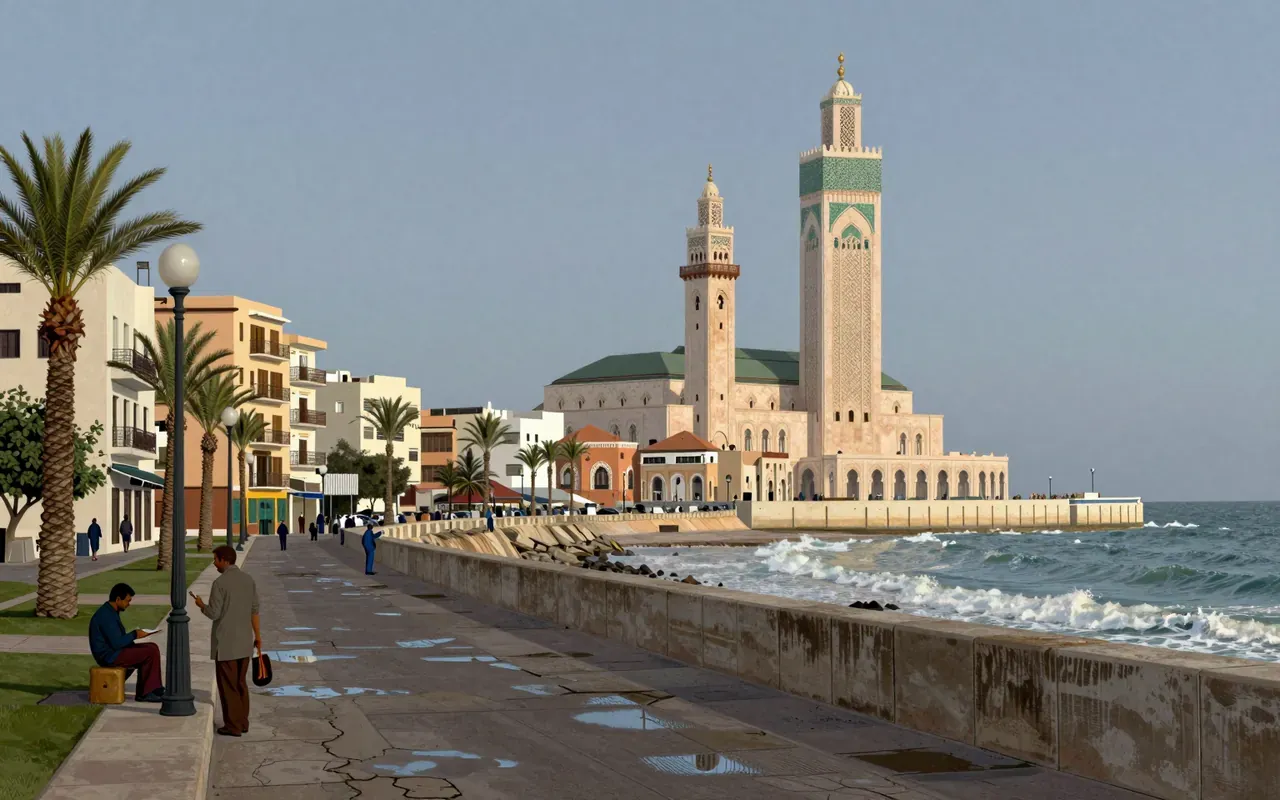
CasablancaCasablanca is a city. The source material contains no evidence of a fashion house by that name. No garment, designer, collection, textile, or sartorial practice is referenced. All claims pertain to geography, finance, industry, and infrastructure.
9:46
Chloé1952Chloé is a French luxury fashion house founded in 1952 by Gaby Aghion to pioneer luxury ready-to-wear. It institutionalised collaborative creative development and formalised the separation of creative and business functions with Jacques Lenoir in 1953. Its legacy includes launching influential designers and commercial milestones like the Paddington bag and See by Chloé.
Up next in Fashion

Noah

· 11:03

Noah is not a fashion house — it’s a patriarch, not a label.

11:03