fashionbriefs
8:22in productionCh. 1 · The House/ 8:22 · ceiling 15 min
Houses & movements

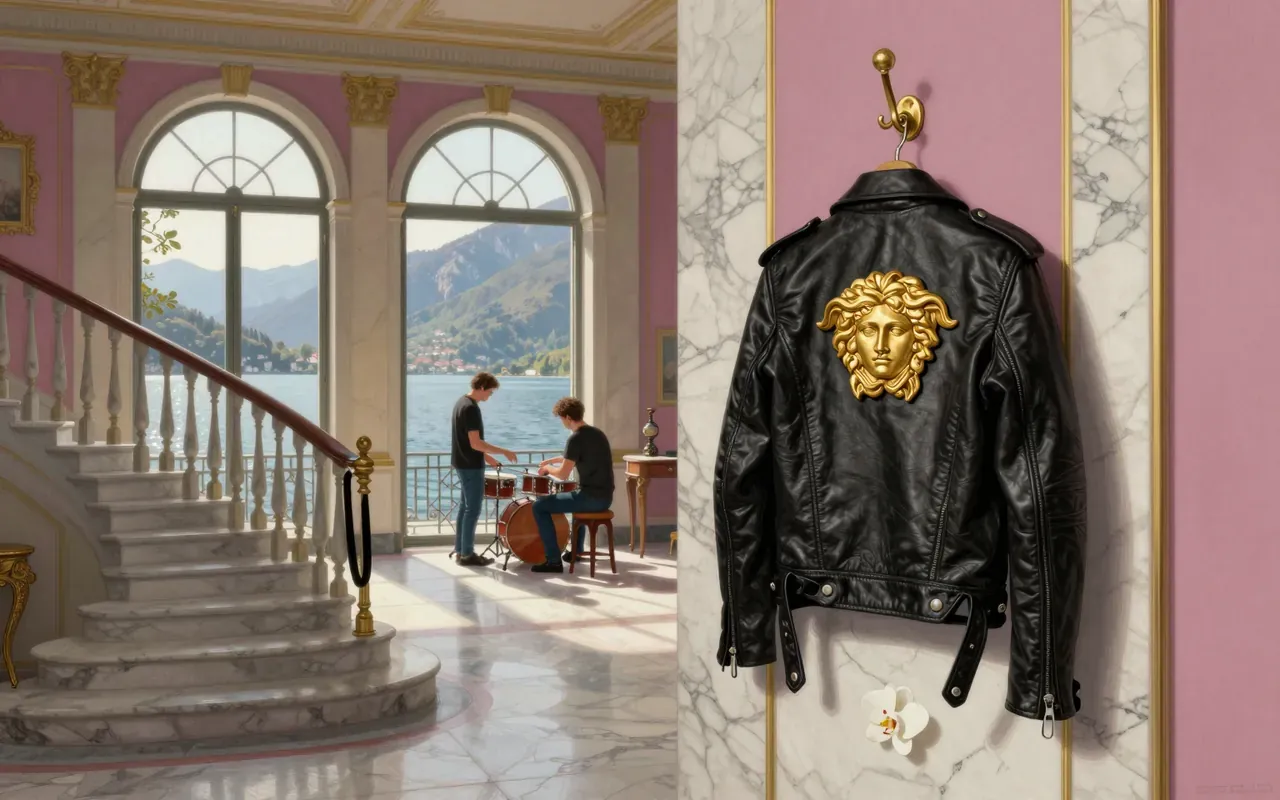
Gianni Versace

Versace didn’t break fashion rules—he burned the rulebook and wore the ashes as sequins.

Versace founded an international luxury-fashion house producing diverse consumer goods; designed costumes for theatre and film; linked fashion to the music world; used vivid colours, bold prints and sexy cuts as a deliberate contrast to dominant minimalist aesthetics; combined luxurious classicism with overt sexuality, drawing both criticism and praise; rejected conventional notions of good taste and defied fashion rules; drew design inspiration from historical periods including Classicism, Byzantium, the 18th century, and the 1920s–1930s; reimagined historical elements like Ravenna's mosaics and Roman drapery for contemporary fashion; and was born and raised in Reggio di Calabria, with his career spanning 1946–1997.

Chapters & takeaways4
  1. 0:53
    The House

    Versace built a luxury empire that extended far beyond clothing—into fragrance, interiors, and cosmetics.

  2. 2:16
    The Contrast

    He linked fashion to music early—and used bold colour and cut to reject minimalist orthodoxy.

  3. 3:20
    The Archive

    He treated history as raw material: Byzantine mosaics and Roman drapery became prints and silhouettes.

  4. 4:36
    The Tension

    His aesthetic merged luxury and sexuality—and his refusal of ‘good taste’ was both principle and provocation.

Worth your time?

Yes. Wear the whole thing.

4.5/ 5
What works
  • as a case study in aesthetic contradiction
  • as evidence of fashion’s shift from craft to cultural platform
  • as documentation of pre-internet brand expansion
What does not
  • influence named artists
  • start a movement
  • define a decade
  • displace competitors
Wear it if
  • people studying fashion's relationship to history
  • those analysing celebrity-fuelled branding
  • readers tracking the rise of music-fashion crossovers
Skip it if
  • anyone seeking a biography or psychological portrait
  • those looking for technical garment construction detail
  • readers expecting analysis of labour practices or supply chains
The written brief1 min read

What the thing is

Gianni Versace was the founder of an international luxury-fashion house producing clothes, accessories, fragrances, make-up and home furnishings.

Where it came from

He was born and raised in Reggio di Calabria. His career spanned 1946–1997. He drew inspiration from Classicism, Byzantium, the 18th century and the 1920s–1930s—and reworked those sources into contemporary fashion.

What it gets right

Versace fused high history with high glamour. He reimagined Ravenna’s mosaics and Roman drapery as wearable statements. He linked fashion to music before it was standard practice. His vivid colours and sexy cuts were a deliberate, effective rebuke to 1990s minimalism.

What it gets wrong

His rejection of ‘good taste’ often blurred into provocation without purpose. The combination of luxurious classicism and overt sexuality drew criticism—not just from conservatives, but from those who saw the tension as unresolved, not revolutionary.

Why it matters now

Versace’s model—designer-as-brand-architect, fashion-as-pop-culture conduit, history-as-pattern-book—still defines luxury fashion’s operating system. His methods prefigured today’s remix aesthetics, celebrity collaborations and historical sampling.

Is it worth your time

Yes—if you want to understand how fashion became a vehicle for celebrity, spectacle and historical quotation rather than quiet refinement.
Same rail · Houses & movements4 of 61
8:35
10 Corso Como10 Corso Como is a Milan-based cultural retail institution founded in 1990 by Carla Sozzani, evolving from an art gallery and bookshop into a multidisciplinary complex integrating art, fashion, design, cuisine, and hospitality; it expanded internationally starting in 2002 with locations in Tokyo, Seoul, and Shanghai, all bearing design input from Kris Ruhs, and underwent ownership transitions in 2017 and 2020 while retaining Sozzani’s artistic direction.
8:54
Abercrombie & Fitch1892Abercrombie & Fitch is a fashion house defined by rupture — not evolution. Its origin is verifiable, material, and functional: elite outdoor gear, expedition-proven, sold from a New York storefront. Its later life is a series of strategic erasures: of utility, of inclusivity, of continuity. It trades on nostalgia without replicating its source. Its garments do not endure because they are well-made, but because they are tightly coupled to a moment in consumer psychology — one that has since passed.
10:13
CasablancaCasablanca is a city. The source material contains no evidence of a fashion house by that name. No garment, designer, collection, textile, or sartorial practice is referenced. All claims pertain to geography, finance, industry, and infrastructure.
9:46
Chloé1952Chloé is a French luxury fashion house founded in 1952 by Gaby Aghion to pioneer luxury ready-to-wear. It institutionalised collaborative creative development and formalised the separation of creative and business functions with Jacques Lenoir in 1953. Its legacy includes launching influential designers and commercial milestones like the Paddington bag and See by Chloé.
Up next in Fashion

Giorgio Armani

Giorgio Armani · 8:47

Armani didn’t make clothes for bodies—he made them for roles.

8:47