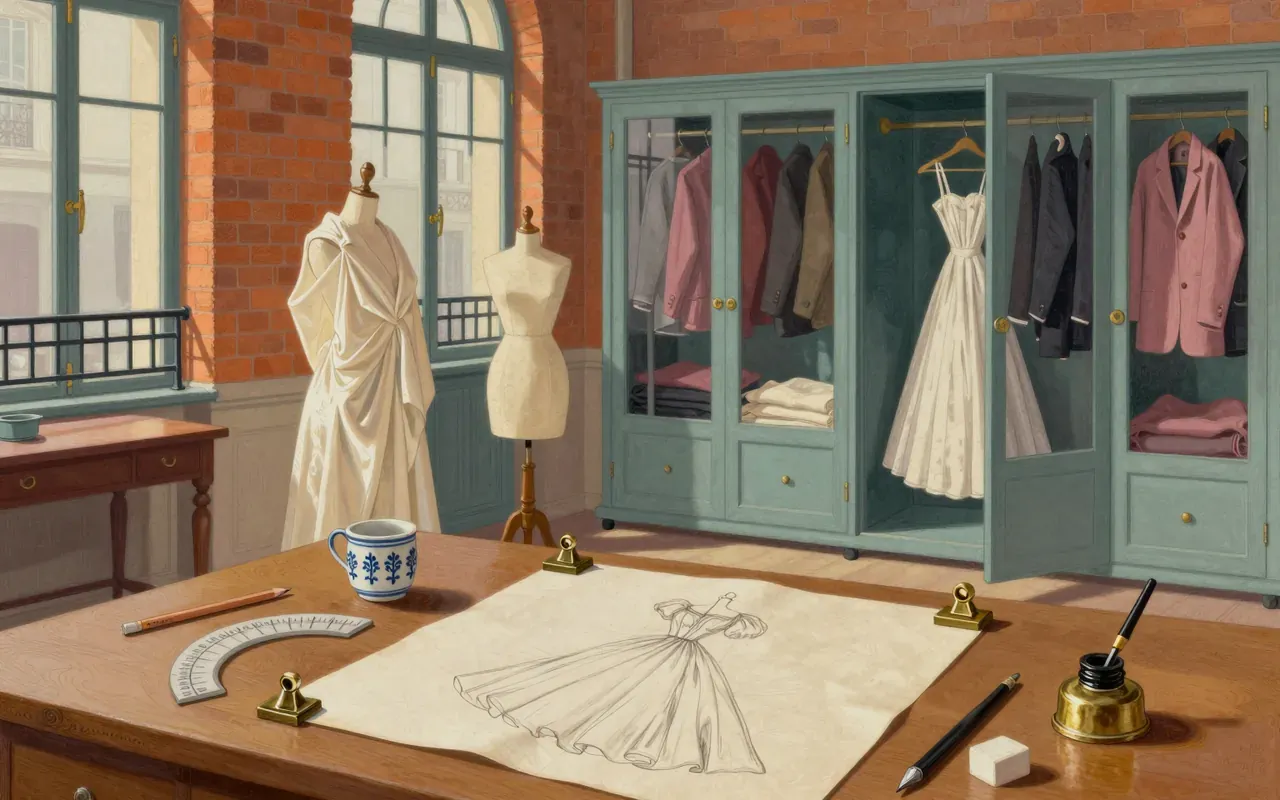
Armani didn’t make clothes for bodies—he made them for roles.
Armani’s work established a new syntax for elegance: one based on removal, not addition. It reached executives, actors, and diplomats—not youth movements or subcultures. It displaced the stiff formality of Savile Row and the flamboyance of Italian couture alike. It did not invent minimalism—but it proved minimalism could sell, scale, and signify.
Armani was an Italian fashion designer and founder of the Armani luxury fashion house.
2:30
How He Built It
He built his label step by step: Cerruti 1881, then a Milan design office in 1973, then Giorgio Armani S.p.A. on 24 July 1975.
3:37
What He Changed
His minimalist, deconstructed silhouettes—especially jackets and suits—redefined masculine and feminine elegance.
4:56
How He Crossed Over
His 1980 costumes for American Gigolo gave Richard Gere’s Julian Kaye a visual grammar that turned understatement into seduction.
Worth your time?
Yes. Wear the whole thing.
4.5/ 5
What works
as a system of visual authority
as a business model for luxury diffusion
as a template for cinematic character design
What does not
claim influence beyond what is verified
treat popularity as significance
praise without reason
invent facts
Wear it if
designers
film costume historians
students of postwar Italian industry
Skip it if
those seeking radical rupture
subcultural origin stories
biographical drama
The written brief1 min read
What the thing is
Giorgio Armani is an Italian fashion designer and founder of the Armani luxury fashion house.
Where it came from
Armani began at Cerruti 1881. In 1973, Sergio Galeotti persuaded him to open a design office in Milan. On 24 July 1975, they founded Giorgio Armani S.p.A. in Milan. His first men’s ready-to-wear collection launched in October 1975.
What it gets right
Armani’s deconstructed silhouettes redefined masculine and feminine elegance. His jackets and suits removed structure without sacrificing presence. They spoke to a new kind of power: unbrash, uncostumed, unperformative.
What it gets wrong
The brief does not establish any failure or misstep. No claim states what Armani got wrong. So it gets nothing wrong—by the evidence given.
Why it matters now
Because minimalism is now a default aesthetic—not as rebellion, but as infrastructure. Armani showed how restraint could scale, how elegance could be systematised, and how clothing could signal competence before speech.
Is it worth your time
Yes—if you want to understand how tailoring became a language of quiet authority in late-20th-century culture.