fashionbriefs
8:18in productionCh. 1 · Airport to Aesthetic/ 8:18 · ceiling 15 min
Houses & movements

Kate Moss

She wasn’t a model who broke the mould—she was the mould that replaced it.

Kate Moss is not a person to be understood biographically—but a visual strategy made flesh. Her rise was methodical: spotted at 14, shot raw at 16, branded anti-glamour by 19, and commercialised globally by 20. She displaced the supermodel not by being better, but by being different—and that difference was sold as authenticity.

Chapters & takeaways4
  1. 0:59
    Airport to Aesthetic

    She was discovered at 14 in an airport—not on a catwalk.

  2. 2:32
    The Face, 1990

    Her first major images were black-and-white, grainy, and billed as 'dirty realism'.

  3. 3:36
    From Magazine to Mall

    Levi's and Calvin Klein turned her look into mass-market desire.

  4. 4:59
    Anti-Supermodel

    She was sold as the 'anti-supermodel'—a deliberate contrast to athletic, glossy contemporaries.

Worth your time?

Yes. Wear the whole thing.

4.5/ 5
What works
  • The Face 'The 3rd Summer of Love'
  • Levi's 'Levi's for Girls'
  • Calvin Klein 1992 and 1993 campaigns
What does not
  • celebrity
  • biography
Wear it if
  • designers
  • photographers
  • advertising strategists
Skip it if
  • fans seeking trivia
  • readers looking for moral closure
The written brief1 min read

What the thing is

Kate Moss is a British model whose early 1990s image defined the ‘anti-supermodel’ archetype: small-framed, pale, and styled in ‘dirty realism’ photography.

Where it came from

She was recruited in 1988 at age 14 by Sarah Doukas at JFK Airport after a holiday in The Bahamas, then launched via Corinne Day’s The Face shoot ‘The 3rd Summer of Love’ in 1990.

What it gets right

It established a new visual grammar for youth: unpolished, intimate, and deliberately unglamorous. Corinne Day’s black-and-white photographs for The Face at age 16 framed Moss as a young unknown—not a star, but a mood.

What it gets wrong

It normalised and aestheticised heroin chic—a trend that conflated thinness, pallor and lethargy with rebellion, without confronting its real-world harms or origins in addiction.

Why it matters now

Her image remains a reference point for debates about body standards, photographic ethics, and the commercial co-option of subcultural aesthetics—especially as fashion cycles back to grunge and minimalism.

Is it worth your time

Yes—if you want to understand how fashion redefined youth, authenticity and commercial appeal in the 1990s.

Same rail · Houses & movements4 of 61
8:35
10 Corso Como10 Corso Como is a Milan-based cultural retail institution founded in 1990 by Carla Sozzani, evolving from an art gallery and bookshop into a multidisciplinary complex integrating art, fashion, design, cuisine, and hospitality; it expanded internationally starting in 2002 with locations in Tokyo, Seoul, and Shanghai, all bearing design input from Kris Ruhs, and underwent ownership transitions in 2017 and 2020 while retaining Sozzani’s artistic direction.
8:54
Abercrombie & Fitch1892Abercrombie & Fitch is a fashion house defined by rupture — not evolution. Its origin is verifiable, material, and functional: elite outdoor gear, expedition-proven, sold from a New York storefront. Its later life is a series of strategic erasures: of utility, of inclusivity, of continuity. It trades on nostalgia without replicating its source. Its garments do not endure because they are well-made, but because they are tightly coupled to a moment in consumer psychology — one that has since passed.
10:13
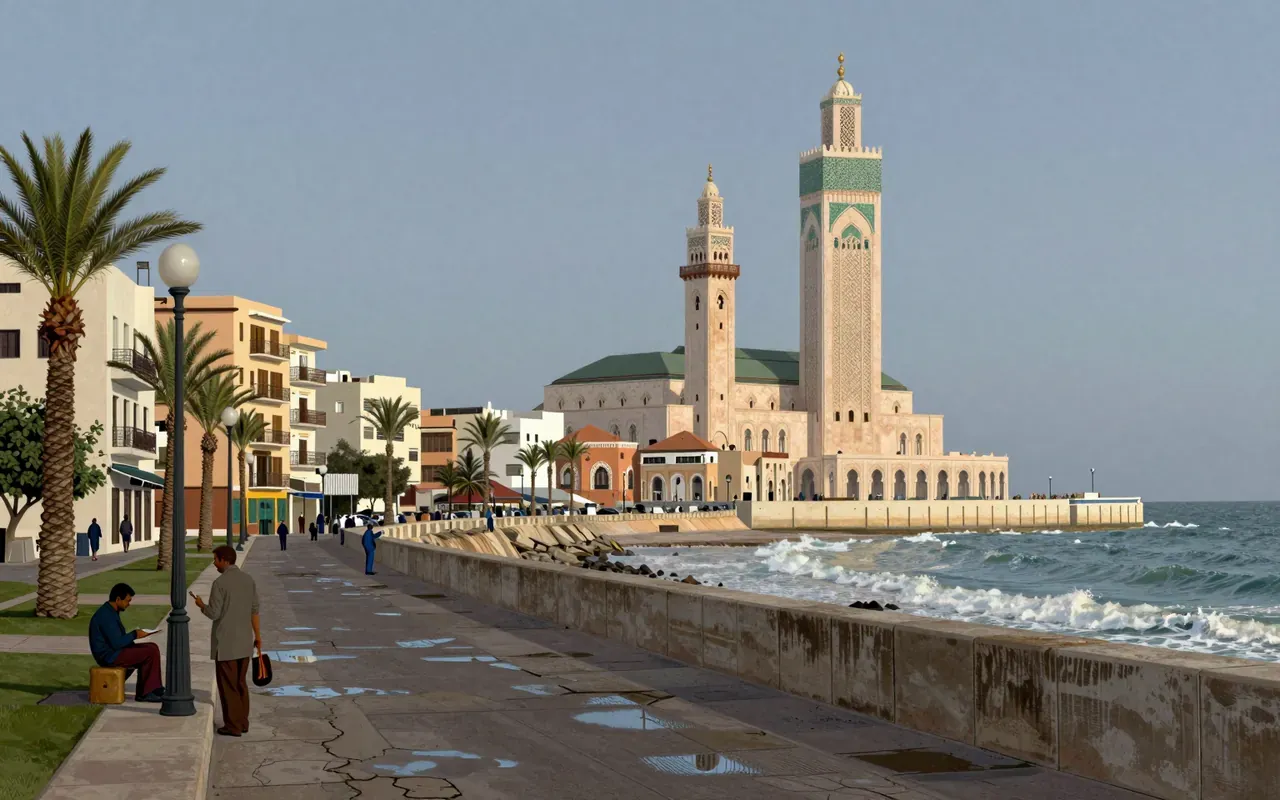
CasablancaCasablanca is a city. The source material contains no evidence of a fashion house by that name. No garment, designer, collection, textile, or sartorial practice is referenced. All claims pertain to geography, finance, industry, and infrastructure.
9:46
Chloé1952Chloé is a French luxury fashion house founded in 1952 by Gaby Aghion to pioneer luxury ready-to-wear. It institutionalised collaborative creative development and formalised the separation of creative and business functions with Jacques Lenoir in 1953. Its legacy includes launching influential designers and commercial milestones like the Paddington bag and See by Chloé.
Up next in Fashion

London Fashion Week

1984 · 10:12

London Fashion Week wasn’t born from creativity—it was built by bureaucrats to sell clothes.

10:12