fashionbriefs
10:12in productionCh. 1 · A Trade Show, Not a Festival/ 10:12 · ceiling 15 min
Houses & movements

London Fashion Week

1984

London Fashion Week wasn’t born from creativity—it was built by bureaucrats to sell clothes.

London Fashion Week is a state-supported trade infrastructure—not a spontaneous creative movement. Its 1984 launch solved a coordination problem for British designers, not a lack of visibility. It prioritised buyers and press over public engagement or artistic risk. Its later cultural branding obscures its bureaucratic origins.

Chapters & takeaways6
  1. 0:59
    A Trade Show, Not a Festival

    It was a trade show from day one—not a cultural event.

  2. 2:30
    Who Made the Schedule?

    Lynne Franks and the British Fashion Council created coordination where there had been chaos.

  3. 3:42
    How Big Was It, Right Away?

    Scale was immediate: 250+ designers, 5,000+ buyers and press, £100M+ orders.

  4. 5:02
    The Public Came Later

    Its public-facing Festival is a later addition—not part of the 1984 model.

  5. 6:01
    Where It Happened Was Functional

    Even venue choices—like Brewer Street car park—were logistical, not aesthetic.

  6. 7:06
    Who It Was Really For

    It succeeded by serving retailers and press—not designers or audiences.

Worth your time?

Yes. Wear the whole thing.

3.5/ 5
What works
  • scaling British design exports
  • centralising media access
  • justifying public funding through economic metrics
What does not
  • celebrity
  • artistic innovation
  • public participation
  • subcultural emergence
Wear it if
  • buyers
  • press
  • taxpayers
Skip it if
  • general public
  • emerging designers without commercial backing
  • critics seeking avant-garde work
The written brief1 min read

What the thing is

London Fashion Week is a biannual clothing trade show. It is not a public festival, nor a creative showcase by default. It is a scheduled commercial infrastructure.

Where it came from

It began in February 1984, organised by the British Fashion Council for the London Development Agency, with support from the Department for Business, Innovation, and Skills. Lynne Franks helped generate the idea of scheduling London’s shows collectively.

What it gets right

It established a coordinated, taxpayer-backed platform for British designers to access global trade and press. It replaced fragmented shows with a single, scalable event.

What it gets wrong

It was never primarily for the public or creative experimentation. Its framing as a cultural festival came decades later—retrofitting spectacle onto a trade mechanism.

Why it matters now

Because its original model—state-aided, trade-first, press-adjacent—still defines how fashion is funded, evaluated, and scaled in Britain, long after its public-facing spin-offs were added.

Is it worth your time

Yes—if you need to understand how British fashion consolidated institutional power in the 1980s, not how it looked on the catwalk.
Same rail · Houses & movements4 of 66
8:35
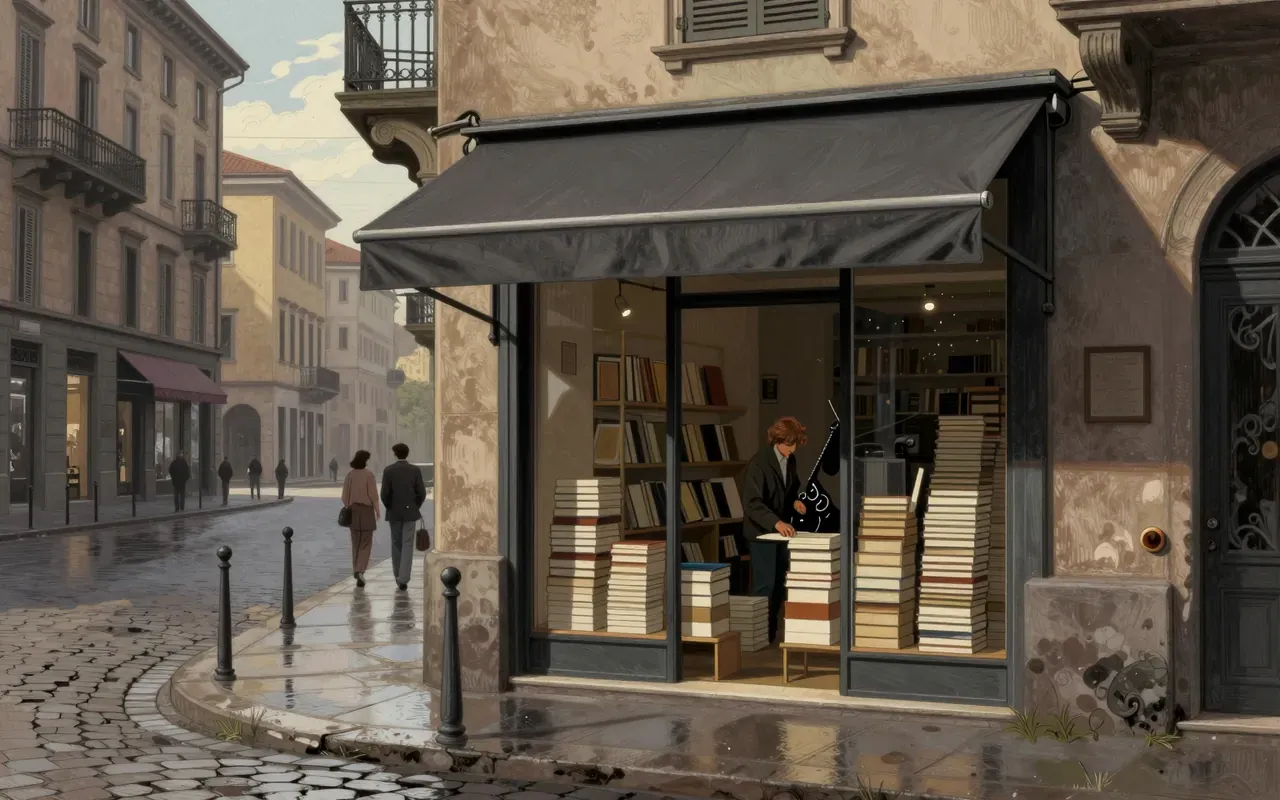
10 Corso Como10 Corso Como is a Milan-based cultural retail institution founded in 1990 by Carla Sozzani, evolving from an art gallery and bookshop into a multidisciplinary complex integrating art, fashion, design, cuisine, and hospitality; it expanded internationally starting in 2002 with locations in Tokyo, Seoul, and Shanghai, all bearing design input from Kris Ruhs, and underwent ownership transitions in 2017 and 2020 while retaining Sozzani’s artistic direction.
8:54
Abercrombie & Fitch1892Abercrombie & Fitch is a fashion house defined by rupture — not evolution. Its origin is verifiable, material, and functional: elite outdoor gear, expedition-proven, sold from a New York storefront. Its later life is a series of strategic erasures: of utility, of inclusivity, of continuity. It trades on nostalgia without replicating its source. Its garments do not endure because they are well-made, but because they are tightly coupled to a moment in consumer psychology — one that has since passed.
10:13
CasablancaCasablanca is a city. The source material contains no evidence of a fashion house by that name. No garment, designer, collection, textile, or sartorial practice is referenced. All claims pertain to geography, finance, industry, and infrastructure.
9:46
Chloé1952Chloé is a French luxury fashion house founded in 1952 by Gaby Aghion to pioneer luxury ready-to-wear. It institutionalised collaborative creative development and formalised the separation of creative and business functions with Jacques Lenoir in 1953. Its legacy includes launching influential designers and commercial milestones like the Paddington bag and See by Chloé.
Up next in Fashion

Martin Margiela

Martin Margiela · 8:36

Margiela didn’t hide from fashion—he hollowed it out and let the light in.

8:36