New Balance wasn’t born in sport—it was born in the foot.
New Balance is a footwear company whose origin lies in biomechanical correction—not sport. Its founding premise was specific, functional, and local. Its later expansion into performance and lifestyle markets introduced contradictions it failed to reconcile—most visibly in its 2012 toning-shoe settlement. It matters now because it shows how medical authority gets repackaged as consumer identity—and how easily that packaging outlives its justification.
New Balance started as a Boston-area arch support company—not a shoe brand.
2:09
The chicken that built the brand
Riley copied the chicken’s foot to make a three-point support system.
3:19
How it moved off the shelf
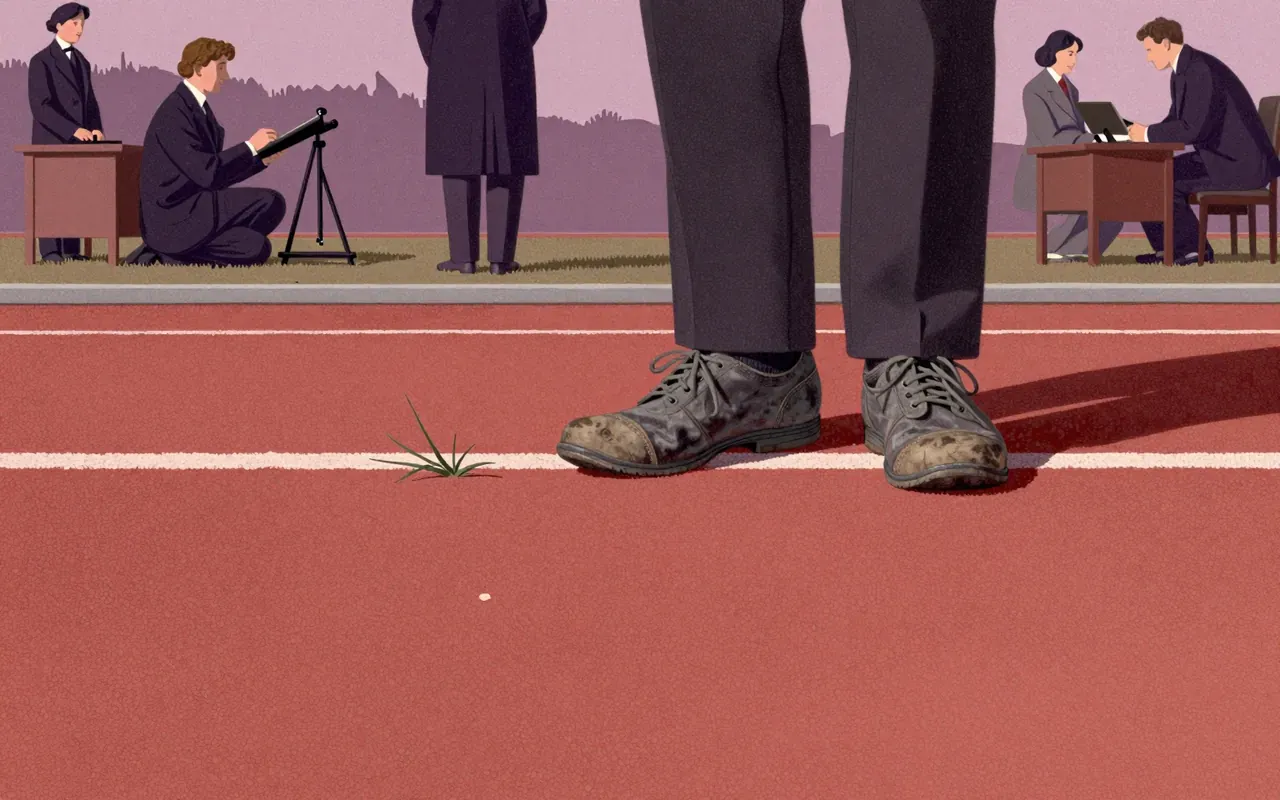
The Trackster spread through YMCA programs and college cross-country teams—not retail or celebrity.
4:31
When balance became fiction
New Balance paid $2.3 million in 2012 to settle false claims about toning shoes.
Worth your time?
Yes. Wear the whole thing.
3.5/ 5
What works
as a case study in product-led branding
as a cautionary example of health-washing
What does not
culture/arts
culture/ideas
culture/movements-and-scenes
Wear it if
designers
marketing professionals
consumers of wellness products
Skip it if
athletes seeking performance data
historians of sport
collectors of vintage sneakers
The written brief1 min read
What the thing is
New Balance began as the New Balance Arch Support Company in 1906. It was a medical-adjacent hardware firm, not a sportswear brand.
Where it came from
William J. Riley, an Irish immigrant, founded it in the Boston area to manufacture arch supports and fit accessories.
What it gets right
It solved a real biomechanical problem: uneven weight distribution in shoes. Riley’s three-point arch support directly addressed balance, not aesthetics or status.
What it gets wrong
It claimed toning benefits for its footwear without evidence—settling a false advertising lawsuit in 2012 for $2.3 million.
Why it matters now
It reveals how consumer health claims migrate from clinical tools to mass-market fashion—and how easily they detach from evidence.
Is it worth your time
Yes—if you care about how orthopaedic pragmatism shaped athletic footwear, not hype.