fashionbriefs
8:06in productionCh. 1 · Not a garment, but a boundary/ 8:06 · ceiling 15 min
Garments

Hijab

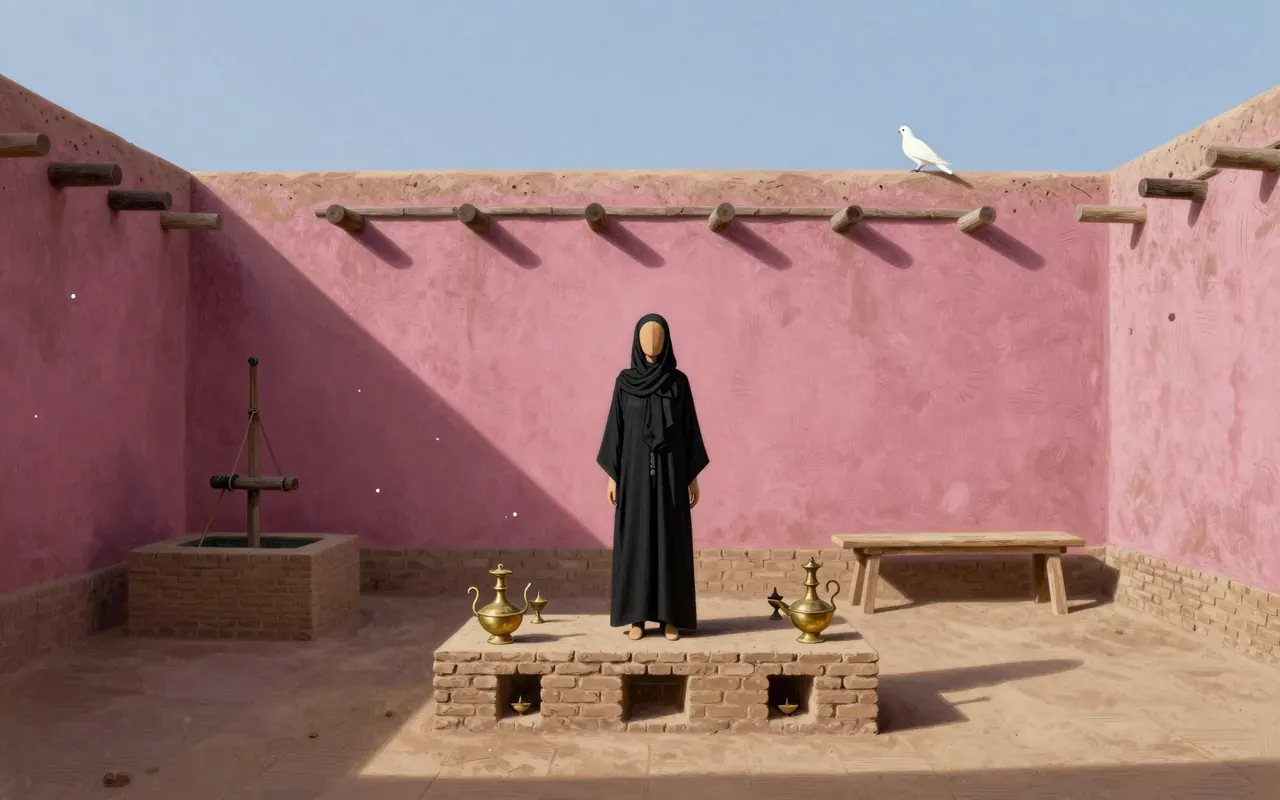
Hijab isn’t in the Qur’an as clothing—it’s a curtain that got turned into a scarf.

Hijab is a contested term whose modern clothing usage obscures its original meaning as a metaphysical or spatial barrier—not a garment—and whose adoption as dress draws on pre-Islamic elite veiling traditions. It matters now because it operates simultaneously as personal practice, political symbol, and legal flashpoint—yet its Qur’anic absence as clothing instruction remains unacknowledged in public debate.

Chapters & takeaways4
  1. 0:58
    Not a garment, but a boundary

    Hijab means ‘curtain’—not ‘scarf’—and in the Qur’an, it names barriers between realms, not garments.

  2. 2:21
    The Qur’an doesn’t say ‘hijab’ for clothing

    The Qur’an prescribes khimar and jilbab for dress—not hijab. That shift happened through later interpretation.

  3. 3:41
    Veiling is older than Islam

    Veiling predates Islam by millennia—and began as elite status wear in Mesopotamia, Greece, and Persia.

  4. 5:01
    Modesty begins inside

    Today hijab refers to a headscarf—but its Islamic meaning remains rooted in haya: inner modesty, not just coverage.

Worth your time?

Yes. Wear the whole thing.

4.5/ 5
What works
  • as a corrective to linguistic confusion
  • as a lens on how pre-modern practices get rebranded in global movements
What does not
  • culture/fashion
  • culture/subcultures
Wear it if
  • readers tracking how words acquire political weight
  • educators confronting curriculum gaps on Islamic terminology
  • policymakers drafting religious attire legislation
Skip it if
  • those seeking style guidance or trend analysis
  • devotional readers assuming hijab is a Qur’anic mandate
The written brief1 min read

What the thing is

Hijab is a headscarf covering hair, neck, and ears—but linguistically, it is a ‘curtain’ or ‘barrier’ rooted in Arabic concepts of concealment and separation.

Where it came from

It originated as a spatial or metaphysical partition in the Qur’an—separating divine from mortal, believer from unbeliever—not as clothing. Its use for dress emerged centuries later, drawing on pre-Islamic elite veiling in Mesopotamia, Greece, Persia, and Byzantium.

What it gets right

It anchors modesty in haya—an internal ethical posture—not just fabric. It signals agency for many women who choose it as an assertion of faith, culture, or autonomy.

What it gets wrong

It misattributes Qur’anic command to the term hijab itself. The Qur’an uses khimar and jilbab—not hijab—for dress. Hijab was never scriptural clothing instruction.

Why it matters now

Because hijab has become a lightning rod for laws, education bans, and debates about secularism, gender, and belonging—while its history reveals how religious vocabulary gets repurposed by politics and fashion.

Is it worth your time

Yes—if you want to understand how a word’s semantic drift became a global marker of identity, resistance, and regulation.
Same rail · Garments4 of 66
10:13
CasablancaCasablanca is a city. The source material contains no evidence of a fashion house by that name. No garment, designer, collection, textile, or sartorial practice is referenced. All claims pertain to geography, finance, industry, and infrastructure.
9:05
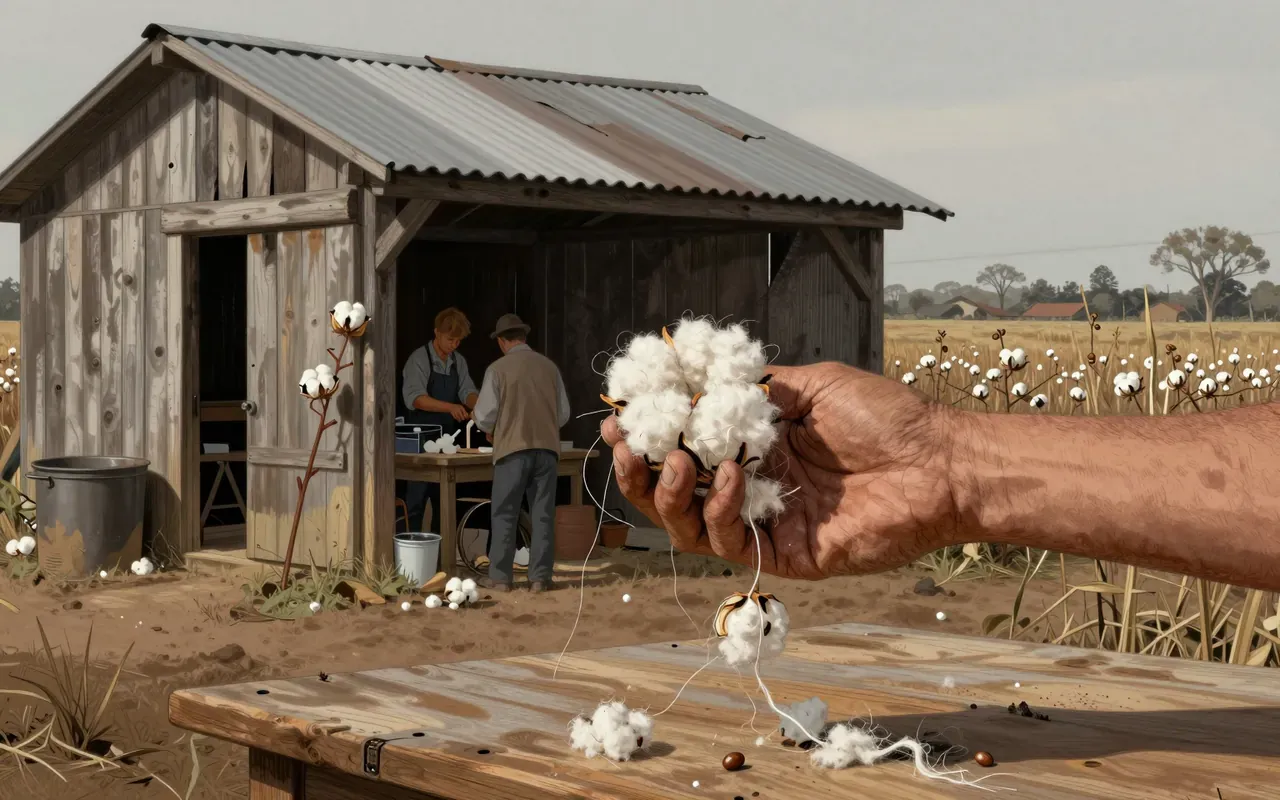
CottonCotton is a naturally occurring, soft, fluffy staple fiber derived from the bolls of Gossypium plants—shrubs native to tropical and subtropical regions across the Americas, Africa (including Egypt), and India. It is nearly pure cellulose, with minor waxes, fats, pectins, and water, and its bolls aid seed dispersal. Domesticated independently in both Old and New Worlds, cotton has been used for textiles since prehistoric times, with archaeological evidence from Peru (7th–6th millennia BC) and Pakistan (6th millennium BC). It is most commonly spun into yarn or thread to produce soft, breathable, durable fabrics.
9:48
DistressingDistressing is a surface-altering technique used on furniture and instruments to mimic age. It relies on controlled destruction of finishes — sanding, stripping, chiselling — to reveal substrate and layer history. It works best on solid pine. It does not occur on garments. It signals curated history, not lived time.
10:34
Dover Street MarketDover Street Market is a retail institution founded in 2004 by Rei Kawakubo and Adrian Joffe on Dover Street in Mayfair, London. It was conceived as a curated, art-integrated space inspired by Kensington Market, defined by Kawakubo’s phrase 'beautiful chaos'. It stocks Comme des Garçons and other selected brands, collaborates with Frieze Art Fair, Michael Hoppen Gallery and ICA, and relocated in 2016 to the former Burberry building on Haymarket.
Up next in Fashion

Hoodie

· 13:47

A garment built for warmth became a screen for society’s anxieties about who belongs — and who must be watched.

13:47