What the garment is and where it came from
A permanently wearable bracelet designed by Aldo Cipullo in 1969 for Cartier. Early versions were gold-plated. Later ones use solid 18k yellow, rose or white gold. Platinum was offered but discontinued.
How it works, in terms someone would actually use
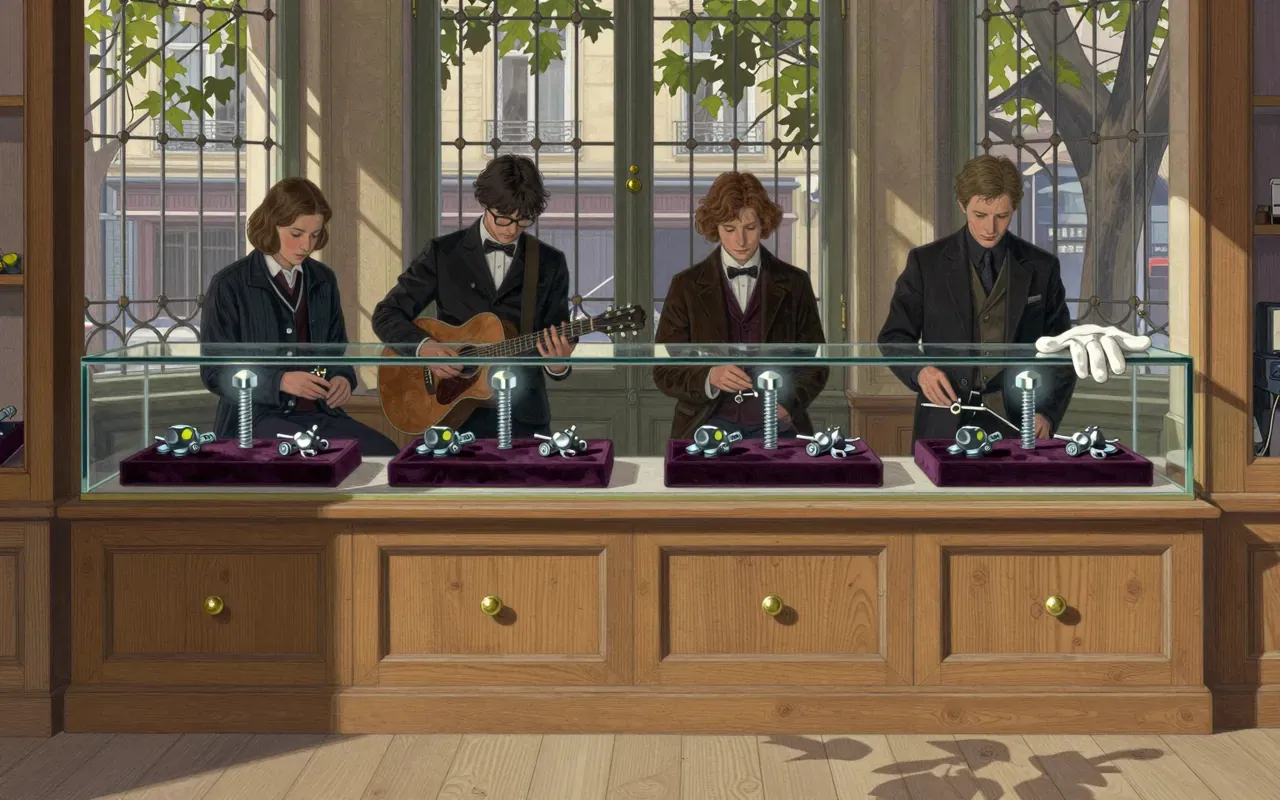
It screws shut with a supplied tool. It does not slip on. It does not open without that tool. The screwdriver doubles as a necklace — one person wears the bracelet, another wears the key.
What it gets right
It makes commitment visible and mechanical. It uses industrial logic — screw, thread, torque — to express intimacy. It refuses to vanish into the wrist.
What it does not
It does not accommodate swelling, injury, or sudden change. It does not allow for anonymous gifting. It does not function without its paired tool.
What it changed
It redefined luxury jewellery as relational infrastructure. It turned a fastening into a vow. It made the act of locking inseparable from the object.
Who it is for, and who it is not
It is for people who treat adornment as binding. It is not for people who value adjustability, anonymity, or ease of removal.
Is it worth your time
It is worth your time if you want a piece of jewellery that enforces ritual over convenience. It is not worth your time if you expect daily removal or silent wear.