fashionbriefs
10:56in productionCh. 1 · Tokyo, 1969/ 10:56 · ceiling 15 min
Houses & movements

Comme des Garçons

Comme des Garçons didn’t expand fashion—it declared war on its assumptions.

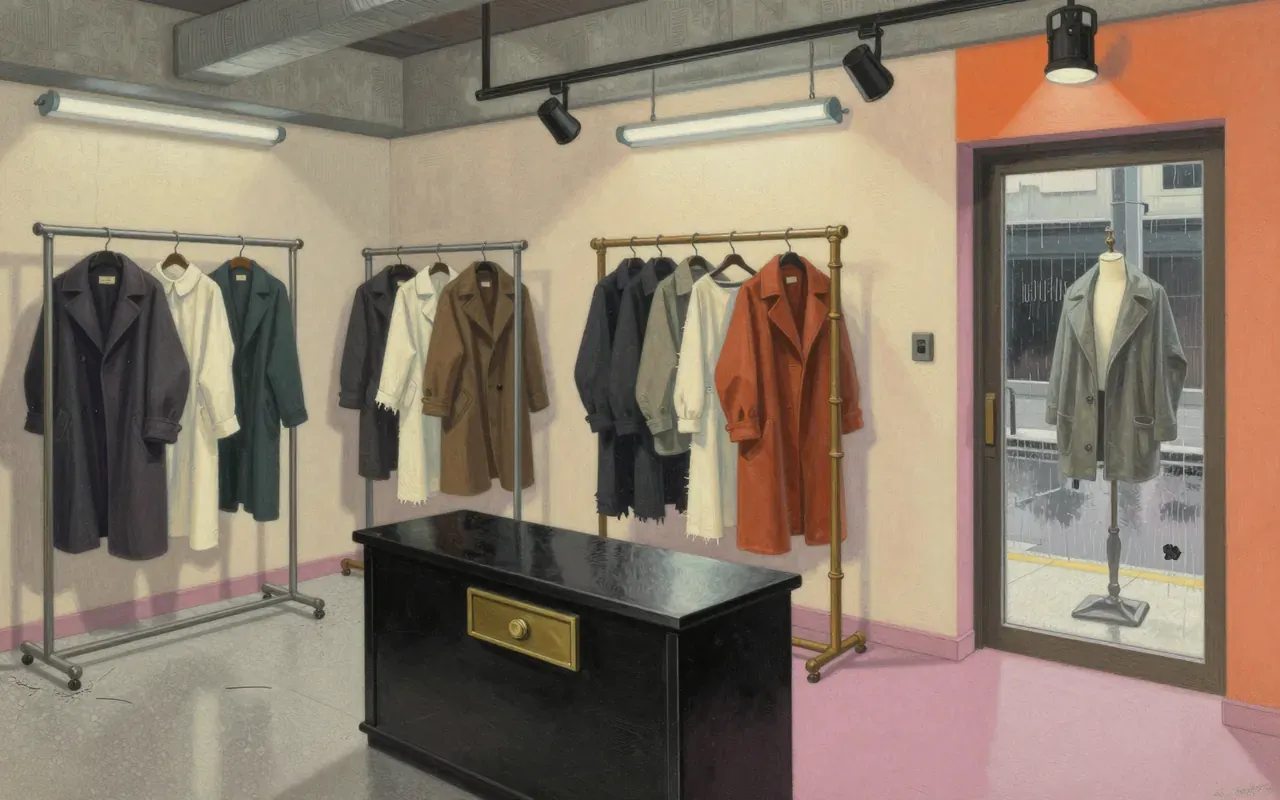
Comme des Garçons is a Japanese fashion label founded by Rei Kawakubo in Tokyo in 1969. It is anti-fashion, austere, sometimes deconstructed—and deliberately rejects consensus notions of beauty, history, and fit.

Chapters & takeaways6
  1. 0:58
    Tokyo, 1969

    Comme des Garçons began in Tokyo in 1969—not Paris, not Milan—as a self-contained enterprise with its own boutique by 1975.

  2. 2:05
    Paris, 1981

    Its 1981 Paris debut wasn’t celebrated—it provoked outrage, with journalists labelling the clothes 'Hiroshima chic'.

  3. 3:18
    Destroy, 1982

    The 1982 'Destroy' collection was met with condemnation: Women's Wear Daily called it the 'Hiroshima bag lady look'; the Associated Press dubbed Kawakubo the 'high priestess of the Jap wrap'.

  4. 4:20
    From Zero

    Kawakubo treated clothing, graphics, advertising and shop interiors as one vision—and in 1982, she rejected all prior fashion history to start 'from zero'.

  5. 5:32
    Anti-Fashion

    Its garments used black distressed fabrics, unfinished seams, organic forms and protrusions—and discarded standard sizing to propose new ideas of beauty.

  6. 7:13
    Expansion Without Assimilation

    It launched a men's line in 1978, presented in Paris each season from 1981, and opened a Paris boutique in 1982—expanding without assimilating.

Worth your time?

Yes. Wear the whole thing.

4.5/ 5
What works
  • redefining beauty
  • unified branding
  • radical novelty
What does not
  • groundbreaking
  • iconic
  • timeless
  • seminal
Wear it if
  • designers
  • critics
  • students of visual culture
Skip it if
  • casual shoppers
  • trend-followers
  • historical costume enthusiasts
The written brief1 min read

What the thing is

Comme des Garçons is a Japanese fashion label founded in 1969. It produces anti-fashion, austere, sometimes deconstructed garments.

Where it came from

It was founded by Rei Kawakubo in Tokyo in 1969. It opened its first boutique there in 1975. It incorporated as a company in 1973.

What it gets right

It redefined beauty through organic forms, protrusions, and non-standard sizing. It treated graphic design, advertising, and shop interiors as inseparable from clothing. It committed to radical novelty by rejecting 1920s–30s fashion and folkloric references in 1982.

What it gets wrong

Its early Paris presentations provoked hostile misreadings—‘Hiroshima chic’, the ‘Hiroshima bag lady look’—that conflated aesthetic rupture with cultural trauma. Its austerity and deconstruction were dismissed as negation, not proposition.

Why it matters now

It matters now because its insistence on starting ‘from zero’—rejecting inherited references to make work with a ‘strong image’—remains a rare, uncompromising model of authorial autonomy in an era of algorithmic trend-chasing and historical pastiche.

Is it worth your time

Yes—if you want to understand how fashion can reject consensus, not court it.
Same rail · Houses & movements4 of 61
8:35
10 Corso Como10 Corso Como is a Milan-based cultural retail institution founded in 1990 by Carla Sozzani, evolving from an art gallery and bookshop into a multidisciplinary complex integrating art, fashion, design, cuisine, and hospitality; it expanded internationally starting in 2002 with locations in Tokyo, Seoul, and Shanghai, all bearing design input from Kris Ruhs, and underwent ownership transitions in 2017 and 2020 while retaining Sozzani’s artistic direction.
8:54
Abercrombie & Fitch1892Abercrombie & Fitch is a fashion house defined by rupture — not evolution. Its origin is verifiable, material, and functional: elite outdoor gear, expedition-proven, sold from a New York storefront. Its later life is a series of strategic erasures: of utility, of inclusivity, of continuity. It trades on nostalgia without replicating its source. Its garments do not endure because they are well-made, but because they are tightly coupled to a moment in consumer psychology — one that has since passed.
10:13
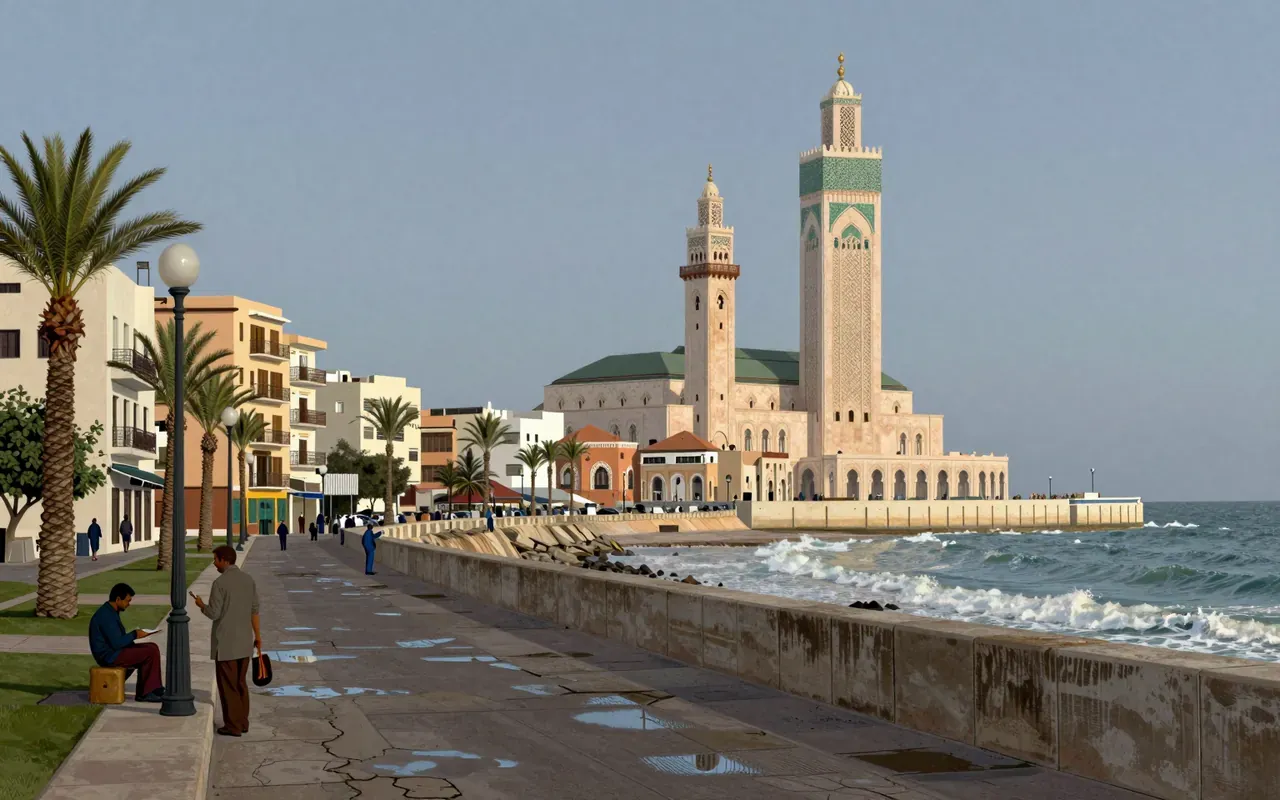
CasablancaCasablanca is a city. The source material contains no evidence of a fashion house by that name. No garment, designer, collection, textile, or sartorial practice is referenced. All claims pertain to geography, finance, industry, and infrastructure.
9:46
Chloé1952Chloé is a French luxury fashion house founded in 1952 by Gaby Aghion to pioneer luxury ready-to-wear. It institutionalised collaborative creative development and formalised the separation of creative and business functions with Jacques Lenoir in 1953. Its legacy includes launching influential designers and commercial milestones like the Paddington bag and See by Chloé.
Up next in Fashion

Converse (brand)

Marquis Mills Converse · 1910 · 8:41

Converse didn’t make culture—it made shoes, and culture wore them anyway.

8:41