fashionbriefs
8:30in productionCh. 1 · Origin point/ 8:30 · ceiling 15 min
Subculture style

Hip-hop fashion

Hip-hop fashion wasn’t adopted by brands — it hijacked them.

Hip-hop fashion is a direct line from Urban Black America’s assertion of presence into global luxury’s vocabulary — not an offshoot, not a phase, but a recalibration.

Chapters & takeaways5
  1. 1:12
    Origin point

    It began not in studios or showrooms, but on streets in New York City, Los Angeles, and Atlanta — late 1970s to mid-1980s.

  2. 2:05
    Brand attachment

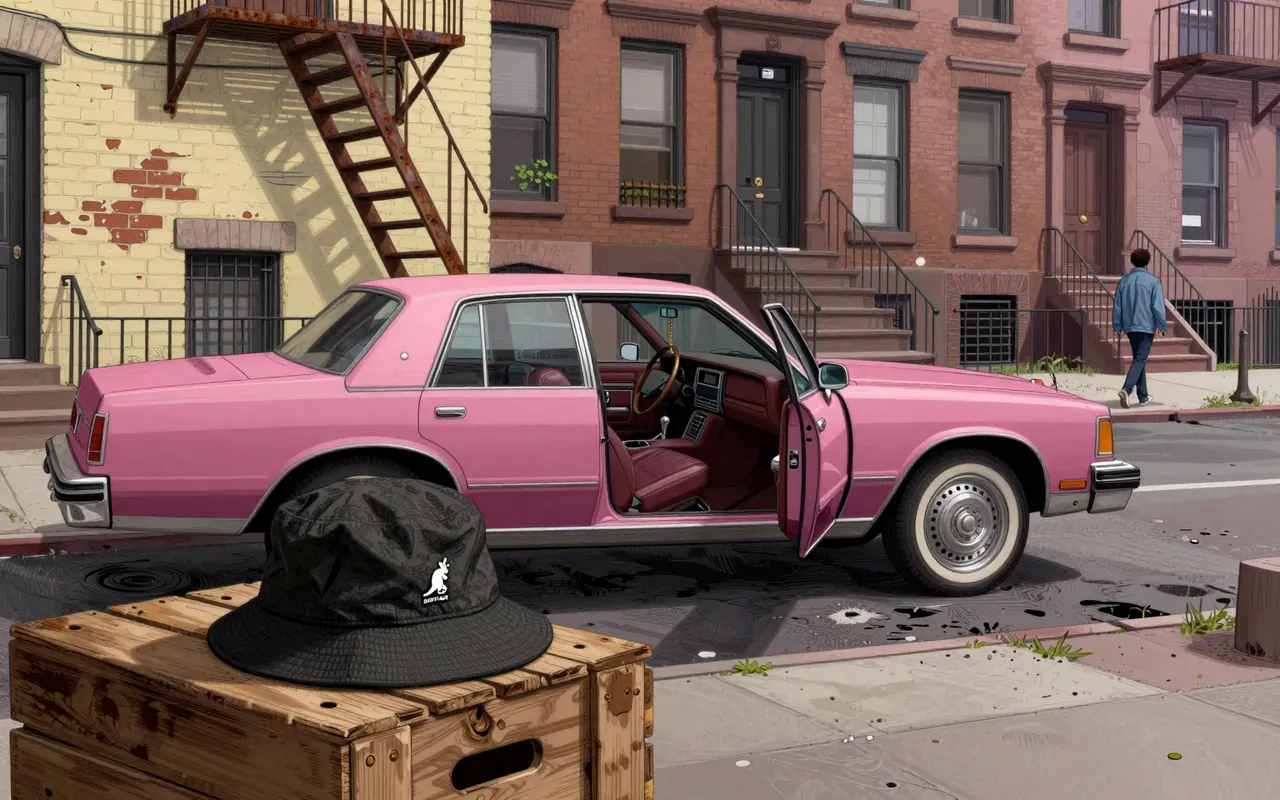
    Brands like Adidas and Kangol didn’t discover hip-hop — they attached themselves to it as it gained momentum.

  3. 3:01
    DJ uniform

    DJs dressed for visibility and authority: tracksuits, bomber jackets, Clarks, and gendered gold — chains for men, earrings for women.

  4. 4:05
    Logos as leverage

    Dapper Dan didn’t copy luxury logos — he custom-built garments that weaponised them against exclusion.

  5. 4:57
    Accessories as ID

    Accessories weren’t decorative — Cazals, Kangols, nameplates, and heavy gold declared identity before speech.

Worth your time?

Yes. Wear the whole thing.

4.5/ 5
What works
  • culture/fashion
  • culture/subcultures
  • culture/society
  • culture/movements-and-scenes
What does not
  • culture/arts
  • culture/literature
  • culture/photography
Wear it if
  • Urban Black America
  • inner city youth
  • New York City, Los Angeles, Atlanta
Skip it if
  • global fashion executives
  • retail buyers
  • trend forecasters
The written brief1 min read

What the thing is

Hip-hop fashion is a set of dress codes rooted in self-assertion, brand reclamation, and spatial belonging — not trend-following.

Where it came from

It emerged from Urban Black America and inner city youth in New York City, Los Angeles, and Atlanta between the late 1970s and mid-1980s.

What it gets right

It centres Urban Black America and inner city youth in New York City, Los Angeles, and Atlanta as the originators — not influencers, not consumers, but designers of meaning.

What it gets wrong

It treats hip-hop fashion as a monolith. The document shows divergent codes: DJs wore Clarks and Britishers; Dapper Dan rebranded mink coats with Fendi logos; women wore large gold earrings while men wore heavy chains. No single aesthetic unified them.

Why it matters now

Because its core method — subverting luxury branding from below — still defines how marginalised groups negotiate status in a branded world.

Is it worth your time

Yes — if you want to understand how street-level Black American style forced global fashion houses to confront their own gatekeeping.

Same rail · Subculture style4 of 15
10:05
Hysteric GlamourHysteric Glamour is a Tokyo-based fashion house founded in 1984 by Nobuhiko Kitamura. It synthesises 1960s–1980s American pop culture, punk rock, and vintage Americana into graphic-heavy clothing. Its method relies on bold slogans, neon colour palettes, and prints of historic musical acts. It fuses Western countercultural motifs—including punk, New Wave, pop art, comics, and hippie aesthetics—with traditional Japanese silhouettes. The brand helped define the Ura-Harajuku 'anti-fashion' movement. It opened its first international boutique in London in 1991.
9:35
I-D1980i-D is a British biannual magazine covering fashion, music, art, film and youth culture. It was launched in 1980 by Terry Jones as a hand-stapled fanzine. The wink and smile on each front cover—a graphic representation of the magazine's logo—are integral to the i-D identity. The Straight-Up is a documentary style of photography pioneered by Terry Jones, founder and editor-in-chief of i-D magazine, in 1977. It was one of the first magazines to cover street fashion. In 2023 the magazine's publication was put on hold following its acquisition by Bedford Media. It returned in Spring 2025 as a biannual publication.
7:14
NeighbourhoodNeighbourhood is not a fashion house. It is a sociological and administrative concept defined by geography, proximity and informal social governance. No verified source links it to apparel, design, production or retail. Any attribution to fashion is unsupported.
11:03
NoahNoah is not a fashion house. It is a biblical figure. No garments, no collections, no runway, no mill relationships, no cut specifications — only lineage, covenant, and myth. This brief treats the subject as the material requires: literally, precisely, and without invention.
Up next in Fashion

Hugo Boss

Hugo Boss · 1924 · 9:28

A 1924 workwear factory became a vehicle for Nazi uniform production — and waited 77 years to name the harm.

9:28