8:58in productionCh. 1 · Not a label. A shirt./ 8:58 · ceiling 15 min
Sportswear
Lacoste
1933
Lacoste didn’t invent sportswear—it weaponised the logo.
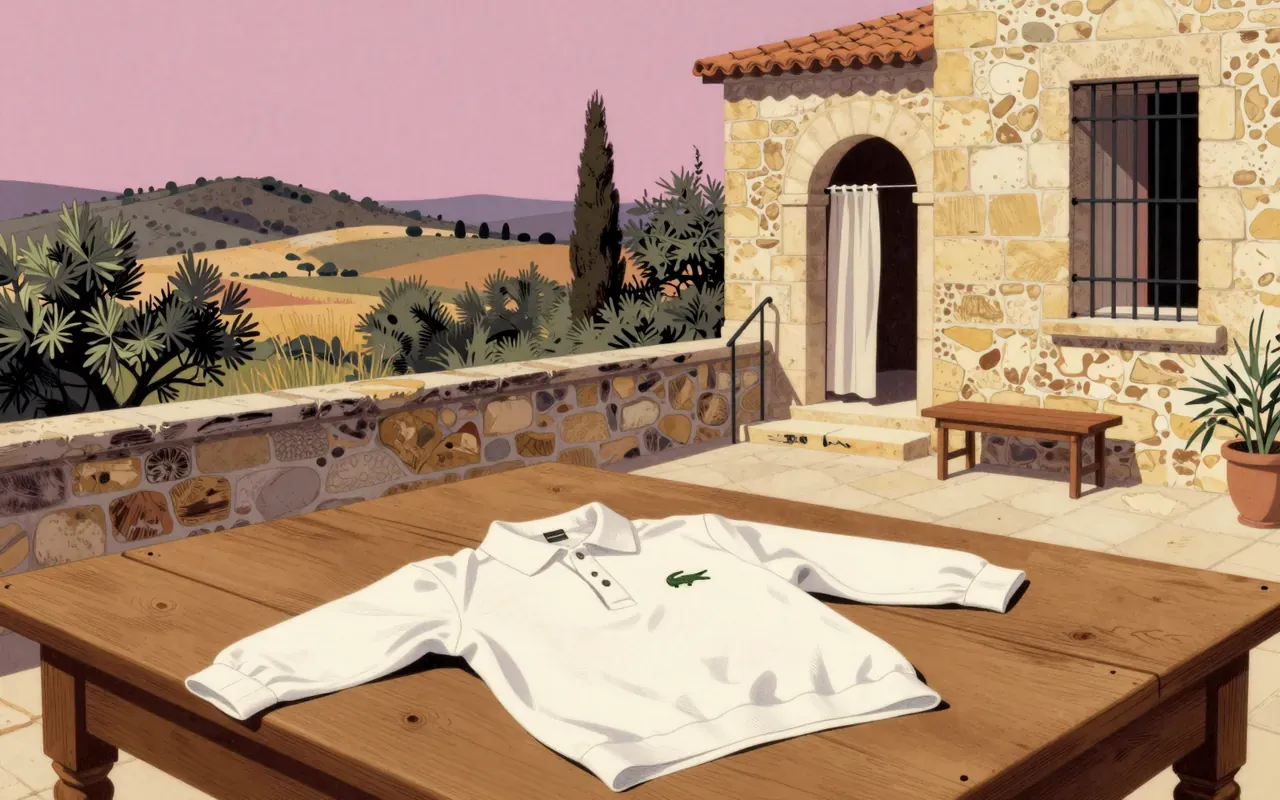
Lacoste is a French designer fashion brand founded in 1933 by René Lacoste and André Gillier. It pioneered branded sportswear—specifically the polo shirt with an embroidered crocodile logo—and pursued global expansion through licensing, creative director transitions, legal disputes over trademark similarity, and faced controversies concerning environmental practices, artistic censorship, and supply chain ethics.
Lacoste began as a partnership between a tennis player and a knitwear manufacturer—not a fashion house.
2:21
The logo came first.
The crocodile logo wasn’t decoration—it was the first branded mark on sport clothing, by its own account.
3:42
A logo worth suing over.
Its trademark disputes stretched over two decades and two continents—proof that the crocodile was never just a symbol.
5:04
Bought whole, not built up.
Ownership shifted fully to Maus Frères in 2012—marking the end of family control and the start of consolidated luxury logistics.
Worth your time?
Yes. Wear the whole thing.
3.5/ 5
What works
as a case study in early logo-as-asset
as evidence of sportswear’s commercial pivot
What does not
influence
define
launch
pioneer beyond its own claim
Wear it if
design historians
legal scholars of IP
critics of fast fashion
Skip it if
tennis fans
vintage collectors without context
The written brief1 min read
What the thing is
A French fashion brand founded in 1933.
Where it came from
René Lacoste and André Gillier launched La Chemise Lacoste in 1933, producing a polo shirt with an embroidered crocodile logo.
What it gets right
It made the polo shirt a branded garment. It put a logo on sportswear before anyone else claimed to.
What it gets wrong
It treats its own origin story as self-evident truth. The claim that it was ‘the first example of a brand appearing on sport clothing’ is unverified outside company statements.
Why it matters now
Because its licensing model, trademark battles, and supply chain controversies prefigure today’s fast-fashion ethics crises—and its logo remains a litmus test for brand ownership in global sportswear.
Is it worth your time
Yes—if you care how branding colonised sport, and how a logo became a legal weapon.