fashionbriefs
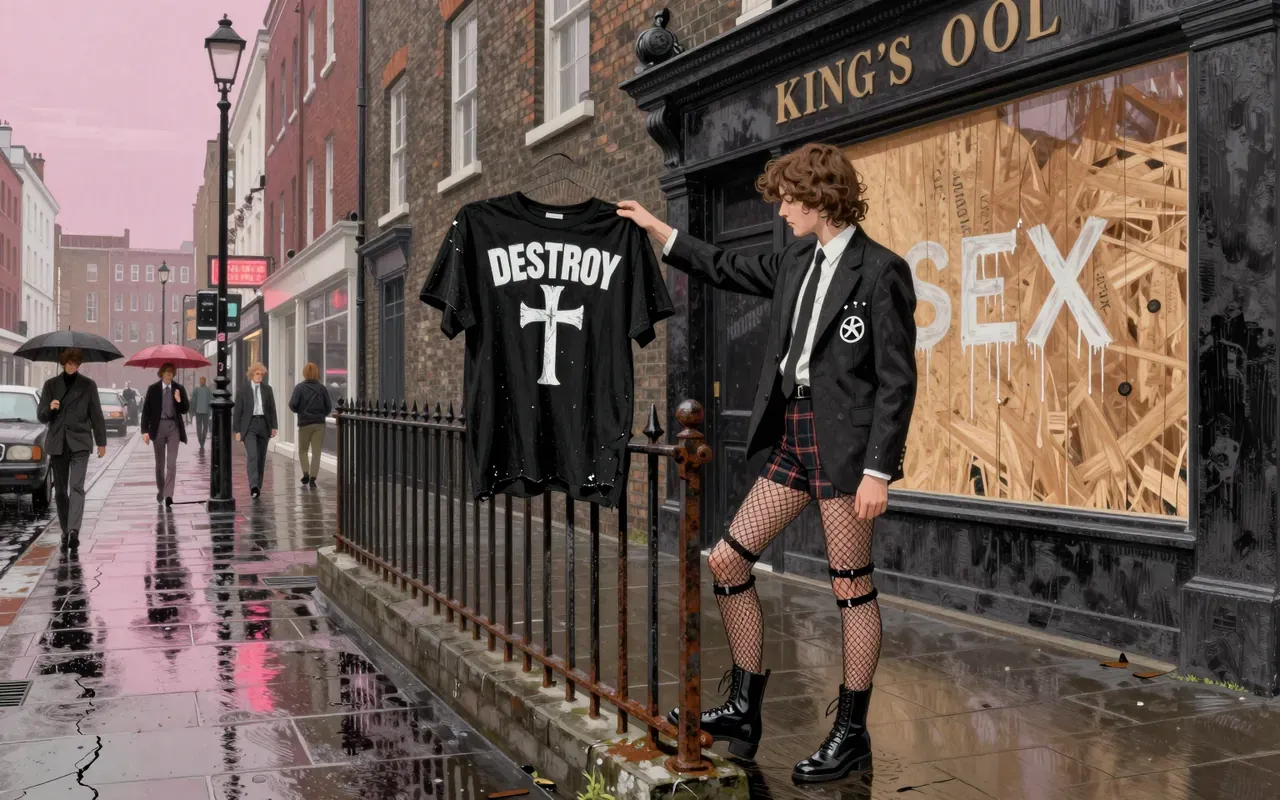
11:12in productionCh. 1 · The Boutiques Were the Movement/ 11:12 · ceiling 15 min
Subculture style

Punk fashion

Punk fashion wasn’t rebellion — it was sabotage, sewn by hand.

Vivienne Westwood’s punk fashion was a targeted assault on British cultural authority — materially crude, politically charged, and commercially savvy. It succeeded in making dissent wearable. It failed when its symbols were stripped of context and sold back as style.

Chapters & takeaways6
  1. 1:06
    The Boutiques Were the Movement

    Westwood’s shops weren’t stores — they were command centres for a fashion-based insurgency.

  2. 2:47
    Provocation Was the Pattern

    Offensive imagery wasn’t edgy — it was calibrated to rupture British middle-class complacency.

  3. 4:09
    Imperfection Was the Doctrine

    DIY imperfection — slashed T-shirts, exposed seams, unravelling knit — mirrored punk music’s rejection of polish and perfection.

  4. 5:11
    Disruption Was the Design Brief

    Westwood saw punk as systemic disruption — not a look to be licensed, but a lever to jam the gears.

  5. 6:28
    Bodies Were Billboards

    Johnny Rotten and Sid Vicious didn’t wear Westwood’s clothes — they wore her arguments.

  6. 7:47
    Clothing Was Political Syntax

    Fetish hardware and straight-jacket tops weren’t costume — they were metaphors for constraint, control, and resistance.

Worth your time?

Yes. Wear the whole thing.

4.5/ 5
What works
  • bondage trousers
  • DESTROY T-shirt
  • God Save the Queen shirt
  • unravelling mohair jumper
What does not
  • iconic
  • groundbreaking
  • seminal
  • timeless
Wear it if
  • students of design history
  • critics of fast fashion
  • anyone who thinks clothing is neutral
Skip it if
  • those seeking nostalgic celebration
  • readers who conflate visibility with significance
The written brief1 min read

What the thing is

Punk fashion was a deliberate, anti-materialist countercultural practice — clothing, hairstyles, jewellery, and body modifications designed to provoke, destabilise, and politicise.

Where it came from

It emerged in mid-1970s London through Vivienne Westwood and Malcolm McLaren’s successive boutiques — Let It Rock, Too Fast To Live Too Young To Die, Sex, and Seditionaries — which functioned as physical hubs and commercial engines for the scene.

What it gets right

It exposed the hypocrisy of British class and monarchy using offensive, handmade, anti-commercial clothing. It made provocation material: swastikas, inverted crucifixes, bondage straps, and ripped mohair jumpers were tools, not ornaments.

What it gets wrong

It normalised Nazi imagery as mere shock value, divorcing it from historical accountability while claiming political intent. Its rejection of craft became indistinguishable from laziness in later adoptees.

Why it matters now

Because its core tension — between radical intent and rapid commercial absorption — is the template for every subcultural aesthetic co-opted by mainstream fashion, from grunge to streetwear.

Is it worth your time

Yes — if you want to understand how fashion can be weaponised as political speech, not just style.
Same rail · Subculture style4 of 19
Up next in Fashion

Raf Simons

Raf Simons · 9:08

He didn’t dress youth—he reverse-engineered its grammar into seams.

9:08