fashionbriefs
9:08in productionCh. 1 · From wood to wool/ 9:08 · ceiling 15 min
Houses & movements

Raf Simons

He didn’t dress youth—he reverse-engineered its grammar into seams.

Raf Simons is a Belgian menswear label launched in 1995 by a furniture-trained designer who rejected runway conventions, used video and street casting, fused divergent youth cultures into coherent silhouettes, and paused the label in 2000 after Confusion—before shifting focus from subcultural code to pure form.

Chapters & takeaways4
  1. 0:54
    From wood to wool

    Furniture training shaped a designer who treated clothing as constructed object, not costume.

  2. 2:13
    No runway, then one runway

    No catwalks. No models on rotation. Just video, street casting, and a runway debut built from American college, English schoolboy, New Wave, and Punk.

  3. 3:56
    Subcultures as syntax

    MENSA students and Gabba ravers shared the same silhouette. Richey Edwards and Kraftwerk occupied the same season.

  4. 5:24
    A sabbatical, not a pause

    He shut down the label after Confusion—not for burnout, but because the method had run its course.

Worth your time?

Yes. Wear the whole thing.

4.5/ 5
What works
  • as-a-method-for-translating-youth-culture-into-clothing
  • as-a-rejection-of-fashion-spectacle
  • as-a-model-for-designing-with-music-as-structure
What does not
  • groundbreaking
  • iconic
  • seminal
  • timeless
Wear it if
  • designers
  • students-of-fashion-history
  • people-who-watch-videos-instead-of-runways
Skip it if
  • those-who-need-a-logo-to-feel-secure
  • fast-fashion-shoppers
  • retrospective-consensus-hunters
The written brief1 min read

What the thing is

Raf Simons is a Belgian menswear label launched in 1995, defined by video presentations, hybrid archetypes, and music-infused collections—not runway theatrics.

Where it came from

Simons began in furniture design. His first collection was a Fall–Winter 1995 video with two street models. He showed only videos or presentations until his first Paris runway in Fall–Winter 1997.

What it gets right

Simons treats youth culture as material, not muse. He synthesises MENSA students and Gabba ravers, Ian Curtis and Kraftwerk, into garments that hold contradiction without flattening it.

What it gets wrong

His pivot from youth codes to shape after A/W 04–05 abandons the very tension—between intellect and rebellion, control and chaos—that gave his early work its charge.

Why it matters now

Because fast fashion has flattened youth signifiers into logos, Simons’ method—treating subculture as structural logic, not surface reference—feels newly urgent and precise.

Is it worth your time

Yes—if you care how clothing translates subcultural syntax into cut, and how a designer’s refusal to stage fashion as spectacle reshaped menswear’s grammar.
Same rail · Houses & movements4 of 61
8:35
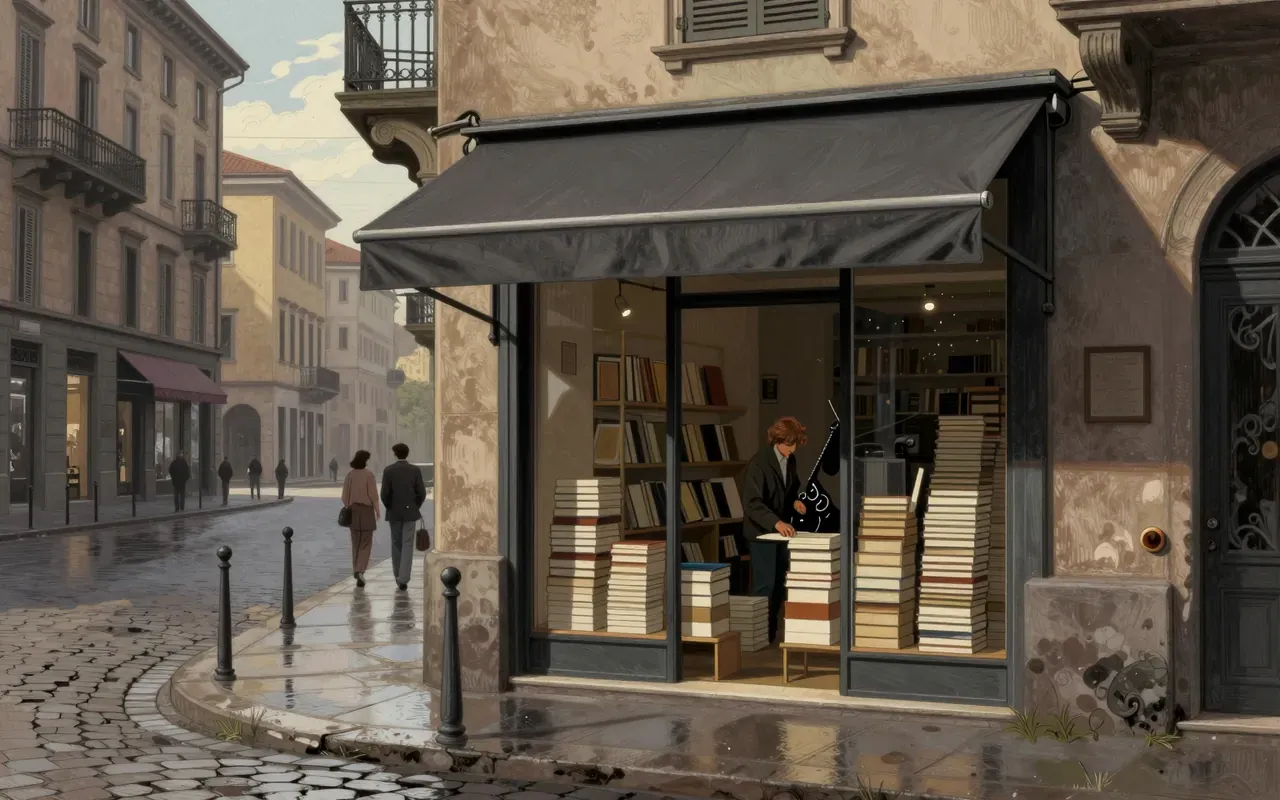
10 Corso Como10 Corso Como is a Milan-based cultural retail institution founded in 1990 by Carla Sozzani, evolving from an art gallery and bookshop into a multidisciplinary complex integrating art, fashion, design, cuisine, and hospitality; it expanded internationally starting in 2002 with locations in Tokyo, Seoul, and Shanghai, all bearing design input from Kris Ruhs, and underwent ownership transitions in 2017 and 2020 while retaining Sozzani’s artistic direction.
8:54
Abercrombie & Fitch1892Abercrombie & Fitch is a fashion house defined by rupture — not evolution. Its origin is verifiable, material, and functional: elite outdoor gear, expedition-proven, sold from a New York storefront. Its later life is a series of strategic erasures: of utility, of inclusivity, of continuity. It trades on nostalgia without replicating its source. Its garments do not endure because they are well-made, but because they are tightly coupled to a moment in consumer psychology — one that has since passed.
10:13
CasablancaCasablanca is a city. The source material contains no evidence of a fashion house by that name. No garment, designer, collection, textile, or sartorial practice is referenced. All claims pertain to geography, finance, industry, and infrastructure.
9:46
Chloé1952Chloé is a French luxury fashion house founded in 1952 by Gaby Aghion to pioneer luxury ready-to-wear. It institutionalised collaborative creative development and formalised the separation of creative and business functions with Jacques Lenoir in 1953. Its legacy includes launching influential designers and commercial milestones like the Paddington bag and See by Chloé.
Up next in Fashion

Ralph Lauren

Ralph Lauren · 9:26

Ralph Lauren didn’t sell clothes—he sold an English country estate you could wear.

9:26