10:16in productionCh. 1 · The Player/ 10:16 · ceiling 15 min
Sportswear
Sergio Tacchini
Tacchini didn’t invent sportswear fashion—he weaponised it against tennis tradition, then lost control of the brand he built.
Tacchini was a credible elite player who used that status to challenge tennis’s sartorial conservatism. His brand succeeded where others stayed monochrome—but failed to institutionalise its design ethos or manage growth. Its later history shows how quickly athlete-founded labels lose coherence without ongoing creative stewardship.
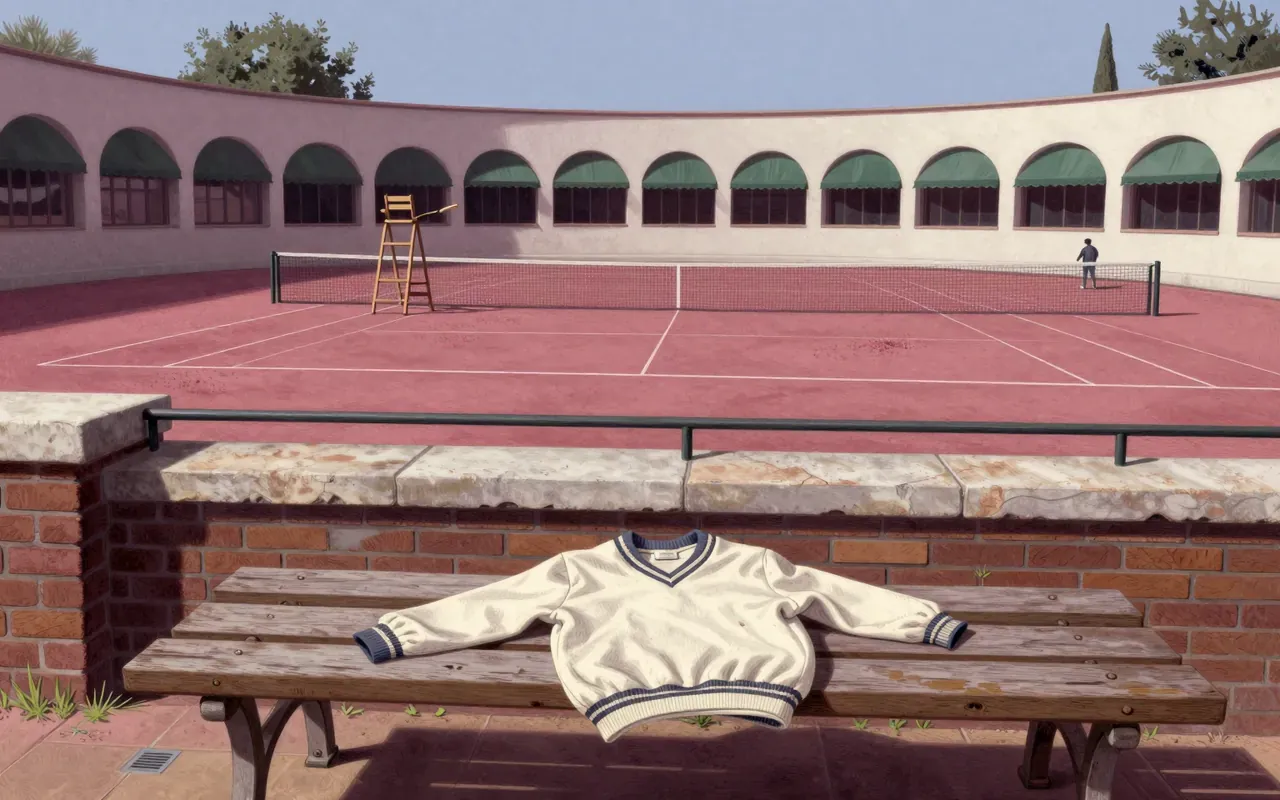
Tacchini was a top-tier Italian player whose Davis Cup record and national titles gave him authority to redesign tennis dress.
2:45
The Launch
He founded Sandys S.p.A. in 1966 to replace white tenniswear with elegant, coloured, fabric-experimental alternatives.
4:40
The Collapse
The company collapsed in 2007 and was bought in 2008—not by a sportswear conglomerate, but by a Hong Kong-based investor with no tennis background.
6:27
The Sponsorship Failure
Djokovic’s 2009 deal was framed as a 10-year commitment—but ended after three years due to payment failures triggered by his rising profile.
Worth your time?
Yes. Wear the whole thing.
3.5/ 5
What works
1960s tennis apparel
Djokovic's early career sponsorship
What does not
influence
define
start
pioneer
Wear it if
tennis players
1960s–70s European leisure consumers
Skip it if
contemporary streetwear audiences
technical apparel engineers
The written brief1 min read
What the thing is
Sergio Tacchini is a tennis player turned founder of an Italian sportswear brand launched in 1966.
Where it came from
He began playing professionally at 17 with the Tennis Club of Milan in 1955. His on-court success—including the 1960 Italian Championship and two Italian doubles titles with Pietrangeli—gave him credibility to launch Sandys S.p.A. in 1966.
What it gets right
Tacchini broke tennis’s white uniform orthodoxy with colour and fabric innovation. He designed for elegance first, function second—unlike rivals who prioritised sweat-wicking before style.
What it gets wrong
The brand overextended into generic sports and leisure wear. It failed to sustain elite sponsorship beyond short-term deals, as shown by Djokovic’s contract collapse in 2012.
Why it matters now
Tacchini’s arc—from athlete-led design to bankruptcy and acquisition—exposes the fragility of heritage sportswear when decoupled from consistent technical leadership or cultural anchoring.
Is it worth your time
Yes—if you care about how sportswear brands pivot between elite performance and mass leisure, and how sponsorship deals fracture under pressure.