fashionbriefs
13:03in productionCh. 1 · Not ornament. Architecture./ 13:03 · ceiling 15 min
Garments

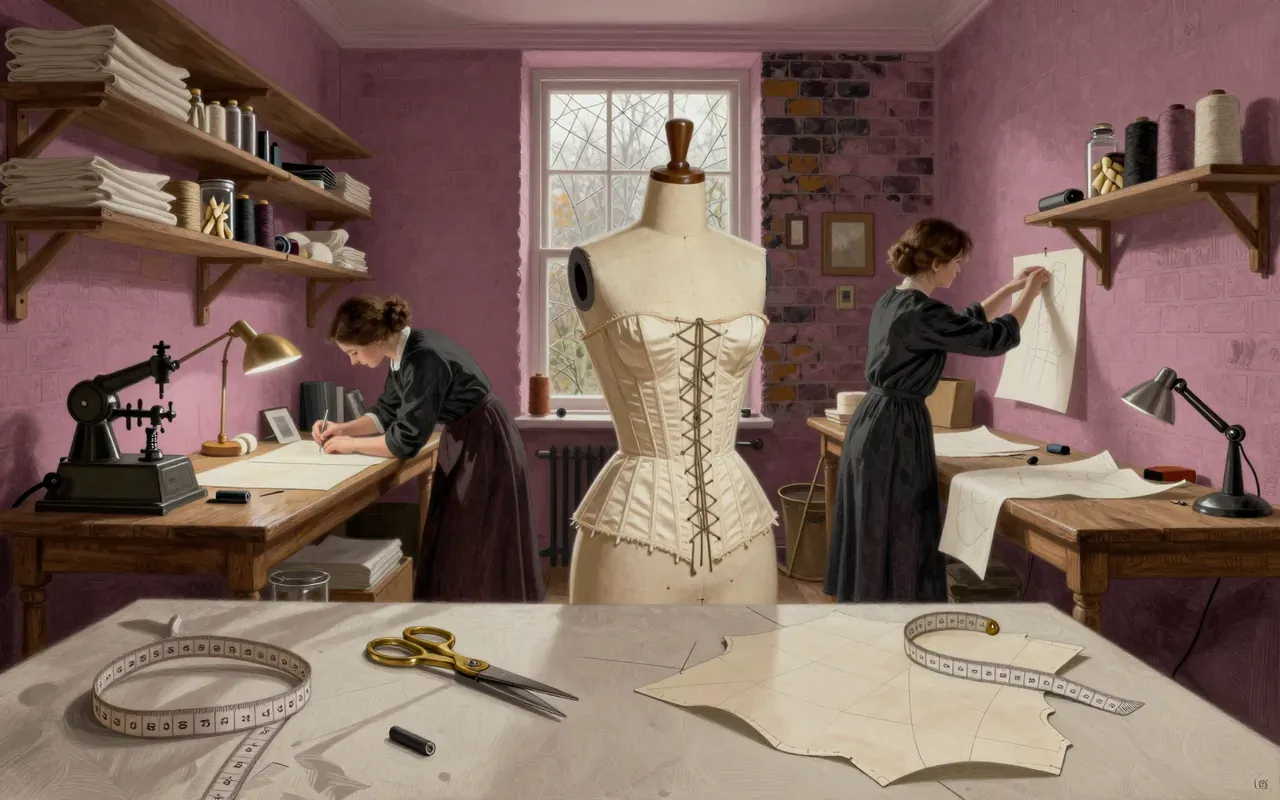
Corset

A garment that shaped bodies, then language, then medicine—and never stopped enforcing ideals under the guise of support.

A garment built to constrain. A word that outgrew its purpose. A form that migrated from fashion to orthopaedics without losing its authority.

Chapters & takeaways4
  1. 1:09
    Not ornament. Architecture.

    It was not costume. It was infrastructure—worn daily by European women for 300 years to enforce shape and posture.

  2. 2:38
    From cone to curve

    Its shape changed from rigid cone to soft curve—tracking shifts in ideals of femininity, not just fashion.

  3. 4:18
    Discarded—not abolished

    It vanished not because it was rejected as harmful, but because women moved, wars rationed steel, and fashion adapted.

  4. 5:41
    From stays to braces

    The word outlived the thing: now naming both fashion copies and medical devices that treat back pain.

Worth your time?

Yes. Wear the whole thing.

4/ 5
What works
  • as a functional undergarment
  • as a linguistic extension
  • as a medical orthotic
What does not
  • liberation
  • rebellion
  • empowerment
  • innovation
Wear it if
  • women in Europe, 17th–early 20th c.
  • patients with mild to moderate back pain
  • contemporary fashion consumers
Skip it if
  • men
  • children
  • non-European societies (per source)
The written brief1 min read

What the thing is

A structured support garment worn to constrict the torso into a desired shape and posture.

Where it came from

It originated in Minoan Crete. The word ‘corset’ derives from Old French ‘cors’ (‘body’) and entered general English usage in the 18th century.

What it gets right

It enforced posture and torso shape with mechanical consistency. It anchored women’s fashion for three centuries. It created a visual grammar of silhouette that still signals formality or constraint.

What it gets wrong

It conflated bodily control with moral virtue. It displaced mobility and breath for aesthetic conformity. Its decline was not liberation alone—it was also material scarcity and war-driven pragmatism.

Why it matters now

Because its logic persists: aesthetic imitation replaces function; medical braces borrow its form; and ‘corset’ now names garments that signal discipline, nostalgia, or rebellion—without requiring constriction.

Is it worth your time

Yes—if you want to understand how a garment shaped posture, gendered labour, and medical orthotics in one continuous line.
Same rail · Garments4 of 66
10:13
CasablancaCasablanca is a city. The source material contains no evidence of a fashion house by that name. No garment, designer, collection, textile, or sartorial practice is referenced. All claims pertain to geography, finance, industry, and infrastructure.
9:05
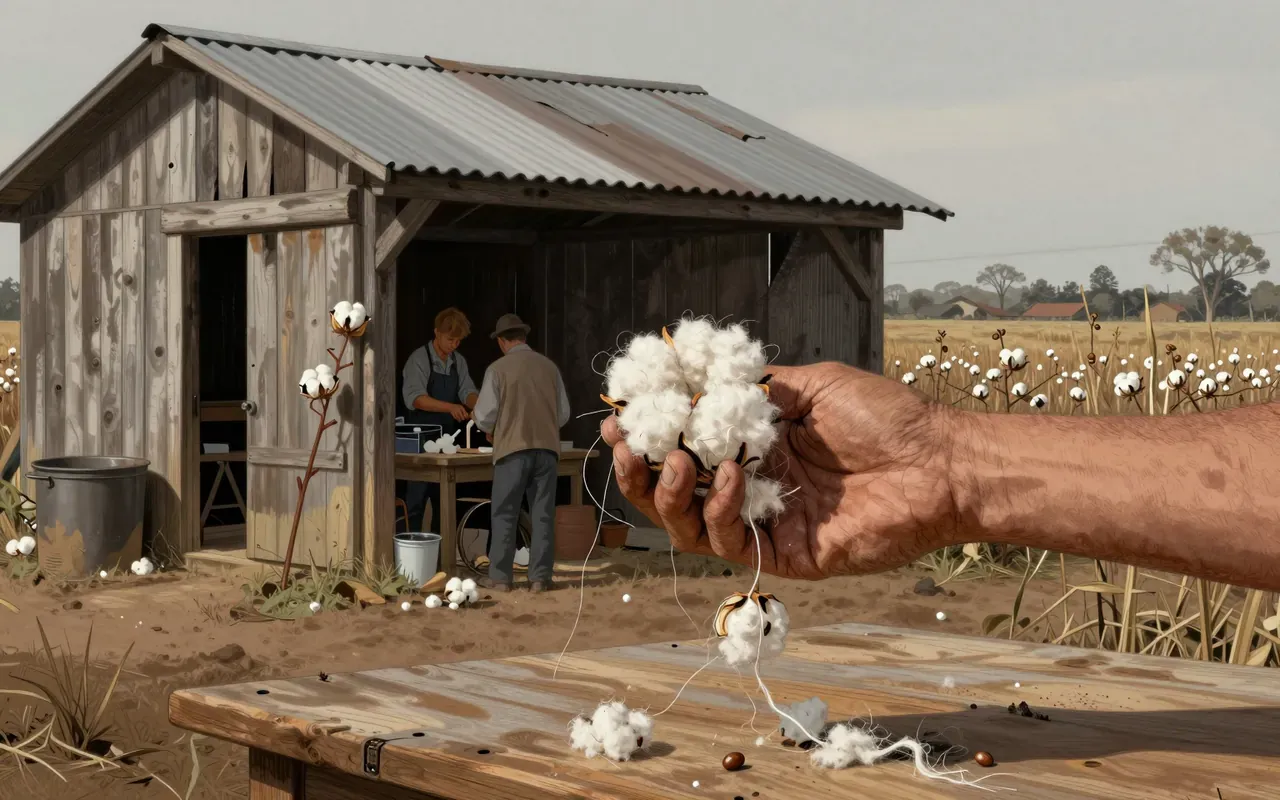
CottonCotton is a naturally occurring, soft, fluffy staple fiber derived from the bolls of Gossypium plants—shrubs native to tropical and subtropical regions across the Americas, Africa (including Egypt), and India. It is nearly pure cellulose, with minor waxes, fats, pectins, and water, and its bolls aid seed dispersal. Domesticated independently in both Old and New Worlds, cotton has been used for textiles since prehistoric times, with archaeological evidence from Peru (7th–6th millennia BC) and Pakistan (6th millennium BC). It is most commonly spun into yarn or thread to produce soft, breathable, durable fabrics.
9:48
DistressingDistressing is a surface-altering technique used on furniture and instruments to mimic age. It relies on controlled destruction of finishes — sanding, stripping, chiselling — to reveal substrate and layer history. It works best on solid pine. It does not occur on garments. It signals curated history, not lived time.
10:34
Dover Street MarketDover Street Market is a retail institution founded in 2004 by Rei Kawakubo and Adrian Joffe on Dover Street in Mayfair, London. It was conceived as a curated, art-integrated space inspired by Kensington Market, defined by Kawakubo’s phrase 'beautiful chaos'. It stocks Comme des Garçons and other selected brands, collaborates with Frieze Art Fair, Michael Hoppen Gallery and ICA, and relocated in 2016 to the former Burberry building on Haymarket.
Up next in Fashion

Dashiki

· 13:02

The dashiki is not African-American heritage—it’s a Dutch-printed garment that became a symbol because it looked like one.

13:02