fashionbriefs
9:29in productionCh. 1 · Structure/ 9:29 · ceiling 15 min
Garments

Hanbok

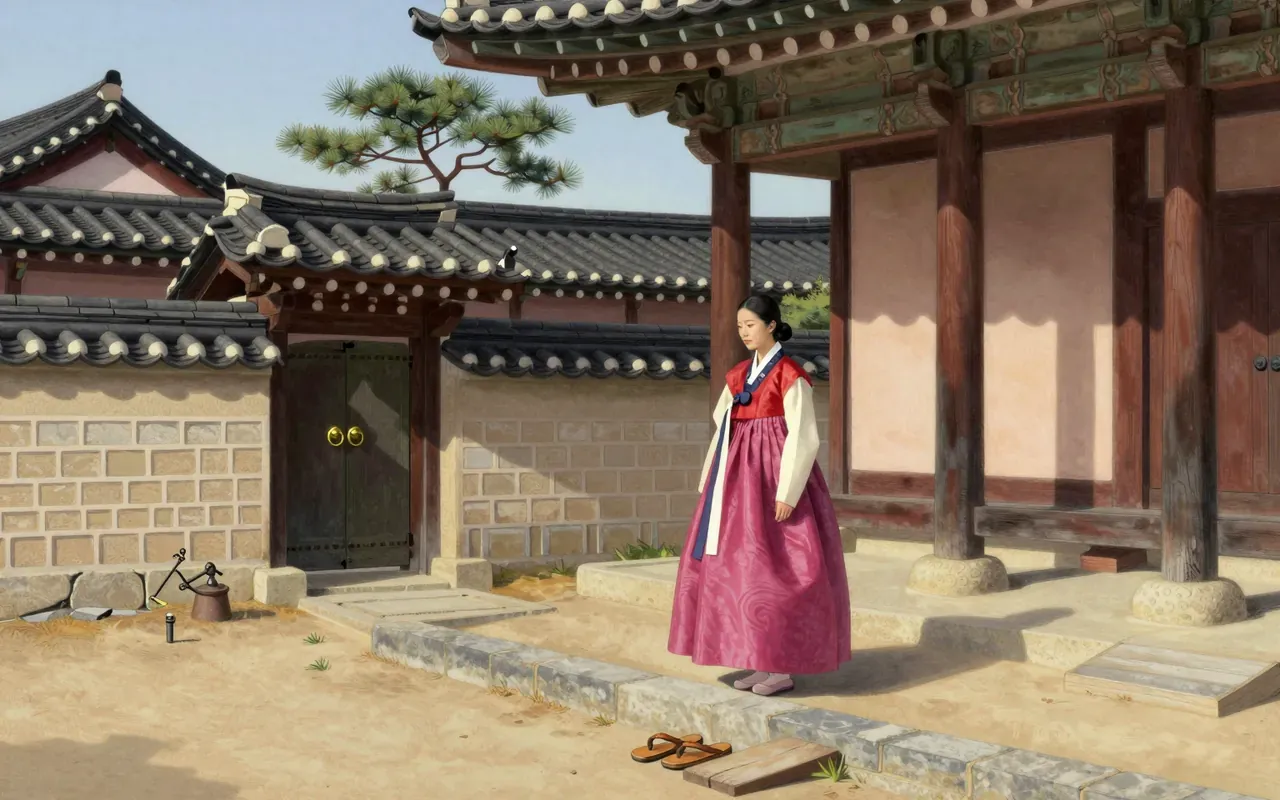
Hanbok is not ancient tradition—it’s a 19th-century label applied to a much older structure.

Hanbok is a structural constant dressed in a late-arriving name. Its form predates the term by over a millennium. Its modern meaning was built in response—not inheritance.

Chapters & takeaways5
  1. 0:52
    Structure

    Four pieces define it: jeogori, baji, chima, and po.

  2. 1:52
    Antiquity

    Its visual form dates to the Three Kingdoms—and its core shape was fixed by the Goguryeo period.

  3. 3:10
    Name

    The word 'hanbok' first appeared in 1881—not in antiquity, but in late Joseon resistance to foreign dress.

  4. 4:19
    Division

    North and South versions diverged only after 1945—not from ancient difference, but enforced separation.

  5. 5:46
    Use

    Today it is ceremonial: worn at weddings and festivals, not daily life.

Worth your time?

Yes. Wear the whole thing.

4/ 5
What works
  • as a precise counterweight to vague claims about 'timeless dress'
  • as evidence that national symbols often emerge late—and retroactively claim deep roots
What does not
  • culture/arts
  • culture/literature
  • culture/movements-and-scenes
Wear it if
  • students of material culture
  • designers researching historical garments
  • readers tracking how nationalism reshapes tradition
Skip it if
  • those seeking origin myths
  • viewers expecting streetwear evolution
  • anyone assuming 'traditional' means unbroken usage
The written brief1 min read

What the thing is

Hanbok is the traditional clothing of the Korean people, composed of jeogori, baji, chima, and po.

Where it came from

Its earliest visual forms appear in Three Kingdoms period (57 BCE–668 CE) tomb art, rooted among ancestors in northern Korea and Manchuria.

What it gets right

It preserves structural continuity across two millennia. The jeogori, baji, chima, and po remain recognisable from Goguryeo tomb murals to today’s wedding ceremonies.

What it gets wrong

It implies unity where there was divergence. The term ‘hanbok’ did not exist until 1881—and regional variation between North and South Korea emerged only after 1945 isolation.

Why it matters now

It functions as ceremonial shorthand—worn for weddings, festivals, and ceremonies—but its modern identity was forged in reaction to Japanese and Western dress, not inherited intact.

Is it worth your time

Yes—if you want to understand how a garment becomes a national symbol without ever being everyday wear.
Same rail · Garments4 of 66
10:13
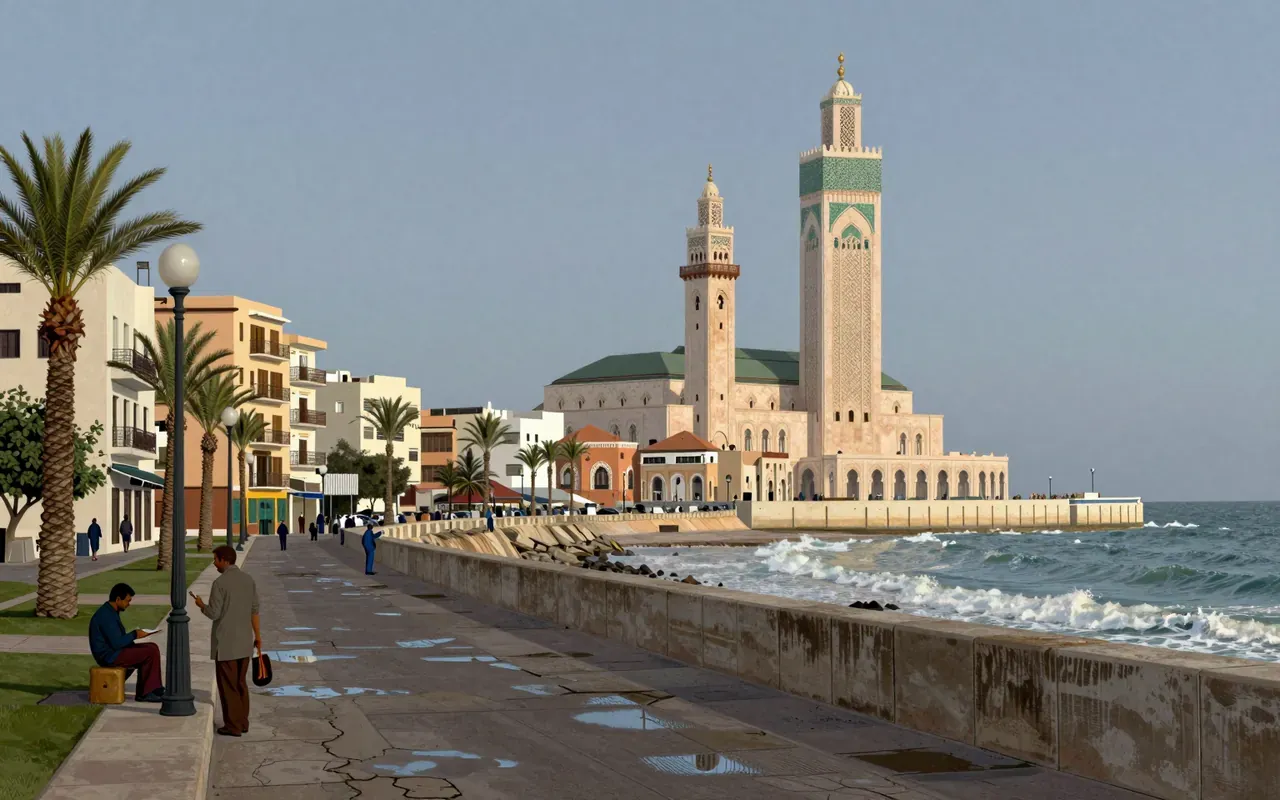
CasablancaCasablanca is a city. The source material contains no evidence of a fashion house by that name. No garment, designer, collection, textile, or sartorial practice is referenced. All claims pertain to geography, finance, industry, and infrastructure.
9:05
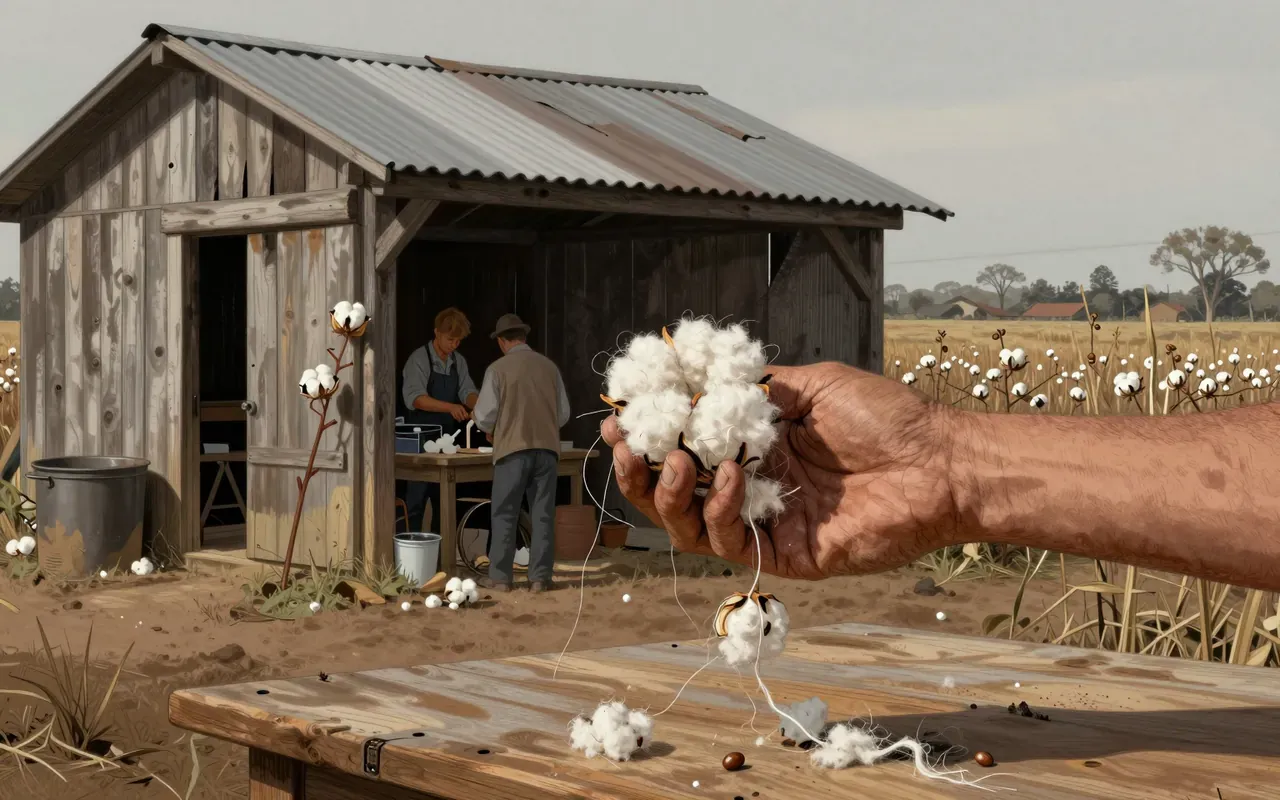
CottonCotton is a naturally occurring, soft, fluffy staple fiber derived from the bolls of Gossypium plants—shrubs native to tropical and subtropical regions across the Americas, Africa (including Egypt), and India. It is nearly pure cellulose, with minor waxes, fats, pectins, and water, and its bolls aid seed dispersal. Domesticated independently in both Old and New Worlds, cotton has been used for textiles since prehistoric times, with archaeological evidence from Peru (7th–6th millennia BC) and Pakistan (6th millennium BC). It is most commonly spun into yarn or thread to produce soft, breathable, durable fabrics.
9:48
DistressingDistressing is a surface-altering technique used on furniture and instruments to mimic age. It relies on controlled destruction of finishes — sanding, stripping, chiselling — to reveal substrate and layer history. It works best on solid pine. It does not occur on garments. It signals curated history, not lived time.
10:34
Dover Street MarketDover Street Market is a retail institution founded in 2004 by Rei Kawakubo and Adrian Joffe on Dover Street in Mayfair, London. It was conceived as a curated, art-integrated space inspired by Kensington Market, defined by Kawakubo’s phrase 'beautiful chaos'. It stocks Comme des Garçons and other selected brands, collaborates with Frieze Art Fair, Michael Hoppen Gallery and ICA, and relocated in 2016 to the former Burberry building on Haymarket.
Up next in Fashion

Kaftan

· 10:23

The kaftan isn’t one garment—it’s a linguistic smokescreen for dozens of distinct robes.

10:23