fashionbriefs
10:23in productionCh. 1 · Origin/ 10:23 · ceiling 15 min
Garments

Kaftan

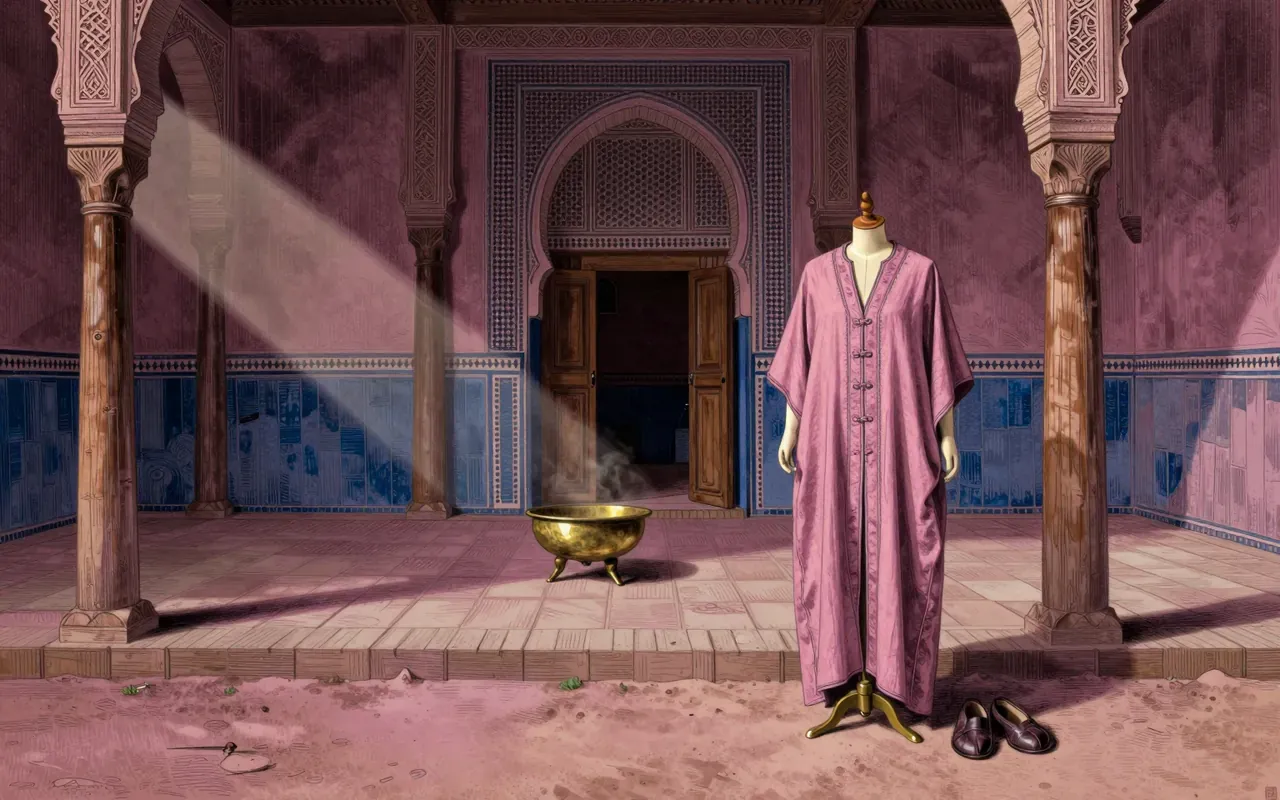
The kaftan isn’t one garment—it’s a linguistic smokescreen for dozens of distinct robes.

The kaftan is a functional, adaptable garment rooted in West Asia. Its name and form evolved across empires—but contemporary usage erases those distinctions.

Chapters & takeaways5
  1. 1:07
    Origin

    It began in West Asia—not Africa, not India, not the Mediterranean.

  2. 2:11
    Form

    It is defined by length, openness, and sleeve cut—not by pattern, fabric, or occasion.

  3. 3:41
    Function & Symbol

    Its function shifts with climate; its meaning shifts with hierarchy.

  4. 5:18
    Name

    The word 'kaftan' is Ottoman Turkish—but its roots may be Turkic, not Persian or Arabic.

  5. 6:47
    Luxury Turn

    Front-buttoning luxury emerged only during the Abbasid era—not earlier, not universally.

Worth your time?

Yes. Wear the whole thing.

4/ 5
What works
  • clarifies linguistic provenance
  • separates form from symbolism
  • anchors claims in documented eras and regions
  • exposes category collapse in global fashion discourse
What does not
  • claim influence beyond what is verified
  • conflate cultures
  • treat popularity as significance
Wear it if
  • readers tracking how clothing terms travel
  • designers researching historical precedent
  • editors fact-checking trend copy
Skip it if
  • those seeking stylistic inspiration
  • students of non-West-Asian dress systems
  • anyone expecting a definitive origin story
The written brief1 min read

What the thing is

A long-sleeved, ankle-length robe or tunic, open at the front, worn as a coat, overdress, or standalone garment.

Where it came from

West Asia, with linguistic roots possibly in Turkic via Persian and Arabic, and documented use in the Abbasid era and Ottoman Turkish.

What it gets right

It solves real problems: heat regulation in warm climates, modesty without constriction, and status signalling through fabric and cut.

What it gets wrong

It is often misrepresented as a single, unified garment rather than a family of distinct regional robes with divergent histories and functions.

Why it matters now

It reveals how fashion terminology flattens cultural specificity—and how a word like ‘kaftan’ can obscure more than it clarifies in global retail and media.

Is it worth your time

Yes—if you care about how garments encode power, climate, and cross-cultural borrowing without romanticising any of it.
Same rail · Garments4 of 66
10:13
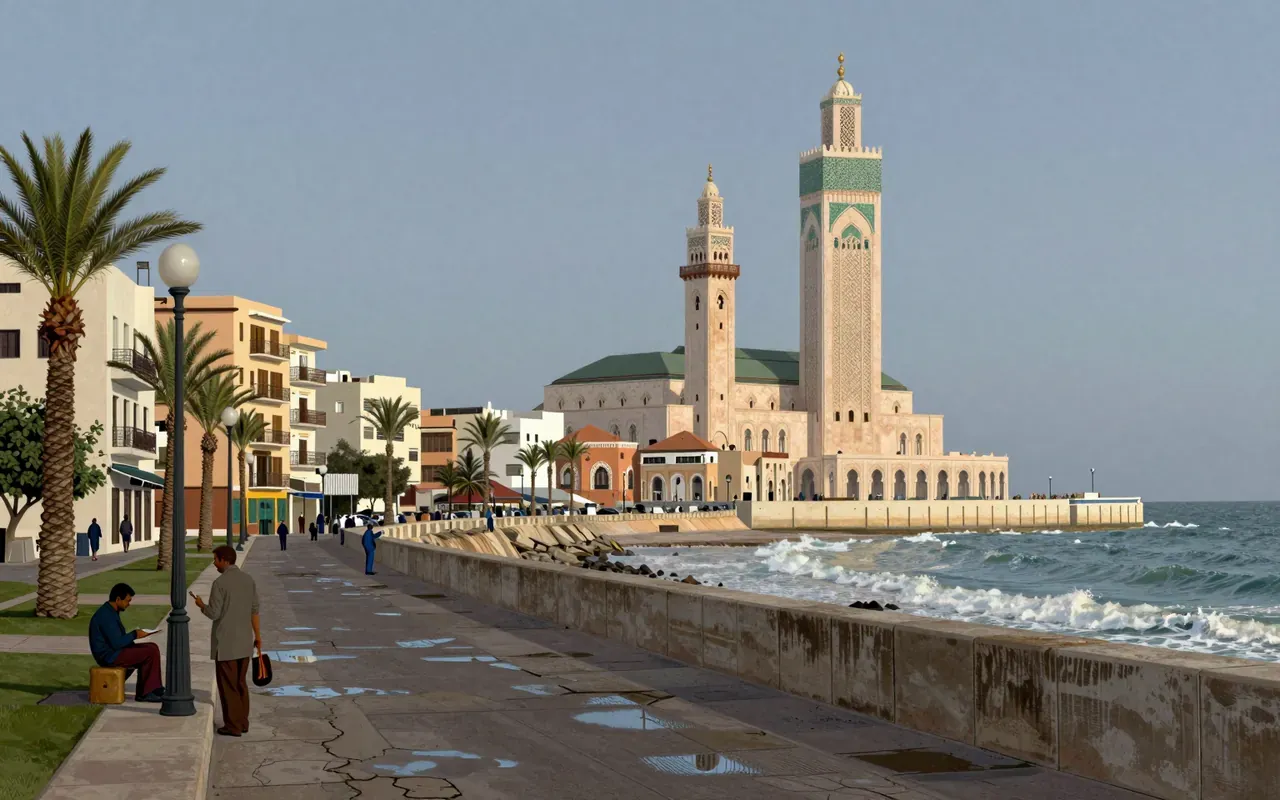
CasablancaCasablanca is a city. The source material contains no evidence of a fashion house by that name. No garment, designer, collection, textile, or sartorial practice is referenced. All claims pertain to geography, finance, industry, and infrastructure.
9:05
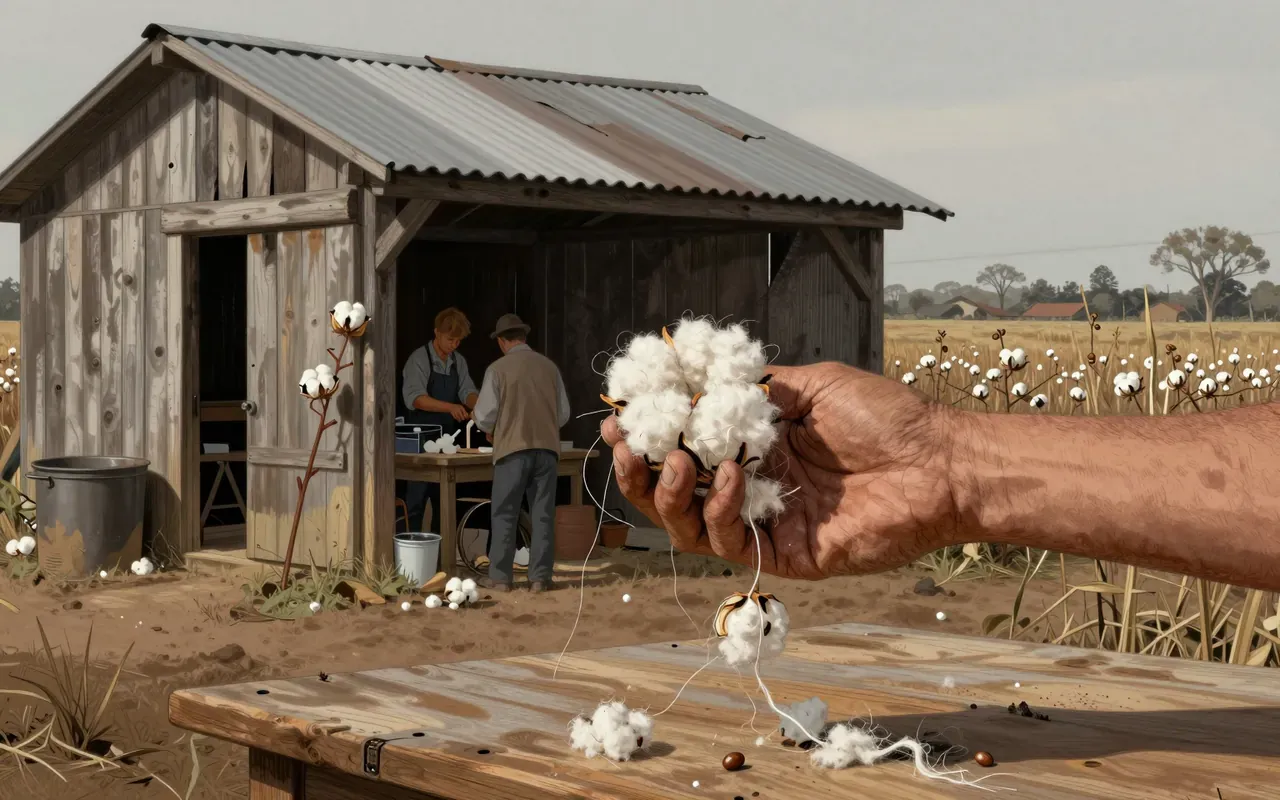
CottonCotton is a naturally occurring, soft, fluffy staple fiber derived from the bolls of Gossypium plants—shrubs native to tropical and subtropical regions across the Americas, Africa (including Egypt), and India. It is nearly pure cellulose, with minor waxes, fats, pectins, and water, and its bolls aid seed dispersal. Domesticated independently in both Old and New Worlds, cotton has been used for textiles since prehistoric times, with archaeological evidence from Peru (7th–6th millennia BC) and Pakistan (6th millennium BC). It is most commonly spun into yarn or thread to produce soft, breathable, durable fabrics.
9:48
DistressingDistressing is a surface-altering technique used on furniture and instruments to mimic age. It relies on controlled destruction of finishes — sanding, stripping, chiselling — to reveal substrate and layer history. It works best on solid pine. It does not occur on garments. It signals curated history, not lived time.
10:34
Dover Street MarketDover Street Market is a retail institution founded in 2004 by Rei Kawakubo and Adrian Joffe on Dover Street in Mayfair, London. It was conceived as a curated, art-integrated space inspired by Kensington Market, defined by Kawakubo’s phrase 'beautiful chaos'. It stocks Comme des Garçons and other selected brands, collaborates with Frieze Art Fair, Michael Hoppen Gallery and ICA, and relocated in 2016 to the former Burberry building on Haymarket.
Up next in Fashion

Kimono

· 9:10

The kimono isn’t timeless—it’s a bureaucratic consolidation of borrowed cloth.

9:10