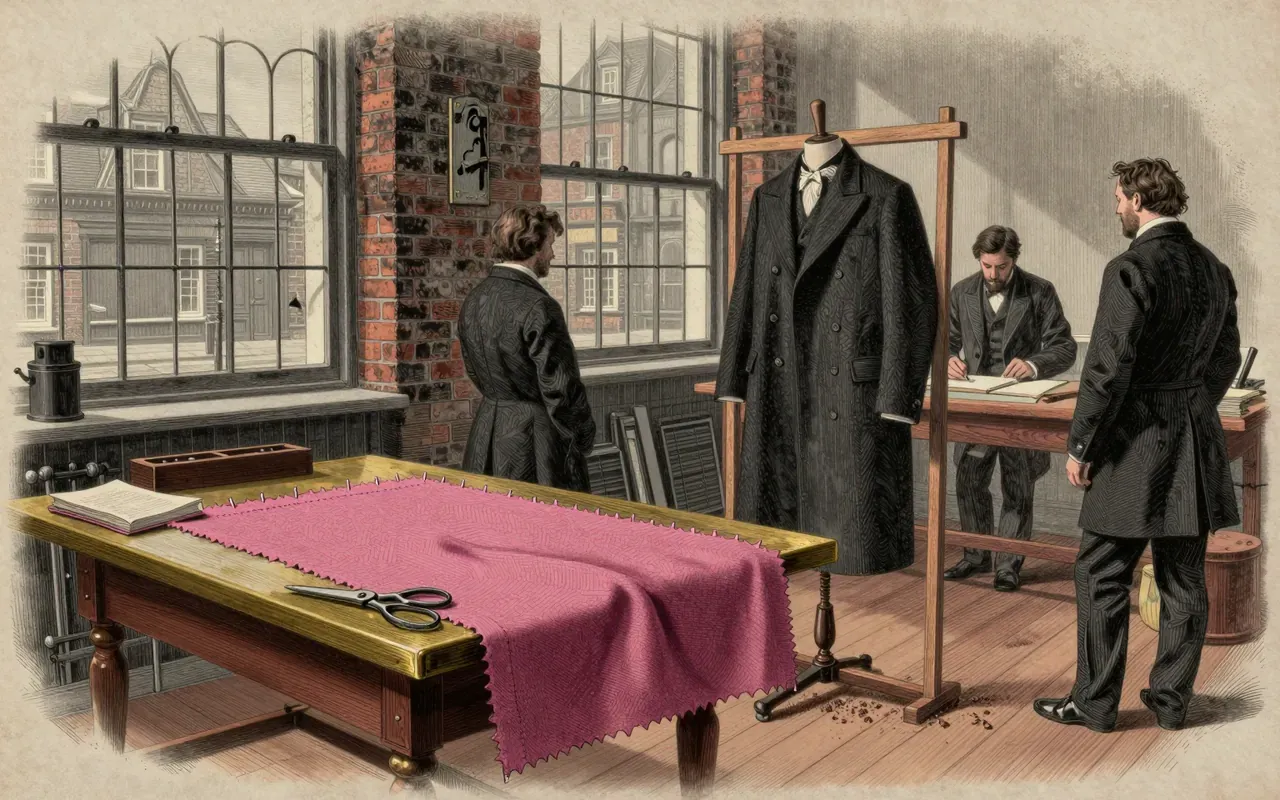
A tailor’s patent, not a designer’s vision, built Aquascutum — and killed it when the patent expired in practice.
Aquascutum was a London tailoring house founded in 1851 by John Emary. It patented waterproof wool in 1853 and supplied coats to British military officers from the Crimean War onward. Its garments supported suffragettes in 1900 and Edmund Hillary on Everest in 1953. It staged its first London Fashion Week runway in 2005. It entered bankruptcy administration in 2012 and again in 2020, following multiple ownership changes.
It began as a patent, not a brand — and the name was Latin for what the fabric did.
1:56
Uniform
Its coats were issued to officers in the Crimean War and every rank in both world wars.
3:02
Cape
Its 1900 womenswear department dressed suffragettes — water-repellent capes for street protest.
4:22
Summit
Its wyncol fabric held up on Everest in 1953 — engineered for 100 mph winds.
5:15
Runway
It walked a runway in 2005 — 154 years after its founding, and 12 years before its second administration.
6:30
Administration
It changed hands four times between 1990 and 2017 — then entered administration twice.
Worth your time?
Yes. Wear the whole thing.
3.5/ 5
What works
patent
uniform
cape
summit
What does not
culture/arts
culture/literature
culture/photography
culture/subcultures
Wear it if
design historians
material culture researchers
British industrial historians
Skip it if
contemporary fashion consumers
streetwear enthusiasts
luxury brand strategists
The written brief1 min read
What the thing is
Aquascutum is a London-based tailoring firm founded to make waterproof wool garments.
Where it came from
John Emary opened it in 1851 at 46 Regent Street, renamed it Aquascutum in 1853 after patenting waterproof wool.
What it gets right
It solved a functional problem: waterproofing wool without sacrificing drape or breathability. It delivered that solution to soldiers, explorers, and suffragettes who needed protection in public life.
What it gets wrong
It never resolved the tension between its engineering identity and its fashion identity. Its runway debut in 2005 came decades after its technical relevance had faded, and its ownership churn reflected that misalignment.
Why it matters now
It matters as evidence that British manufacturing once embedded innovation in craft — not software, not branding — but in fabric chemistry, royal warrants, and battlefield use.
Is it worth your time
No — unless you are researching British industrial tailoring, patent-driven garment innovation, or the material conditions of early women’s political mobilisation.