Saved
Footwear · Workwear

April 1960

1960

A boot built to last—not to flatter, not to fade, not to follow.

Worth your time?4.5/5Yes.Wear the whole thing.What works, what does not, who it is for ↓
8:30in productionCh. 1 · Licensed, Not Born/ 8:30 · ceiling 15 min
4 chapters · 8:30Ceiling 15:00

The brief is written and checked. The video joins this page when it is cut.4 chapters · 1 min read · 8:30 planned

Read the brief

The style 1460 is a functional boot made to endure. Its significance lies in its unbroken production since April 1960—not in innovation, symbolism or craftsmanship.

Chapters & takeaways4
  1. 0:53
    Licensed, Not Born

    R Griggs & Co. did not invent it—they licensed it, then localised it.

  2. 2:04
    Unbroken Run

    It has never left production—no reissue, no revival, no hiatus.

  3. 3:18
    Made Under Licence

    Its UK manufacture was contractual, not organic—a transfer of rights, not craft.

  4. 4:44
    Same Boot, Same Date

    The 1460 is defined by continuity, not change.

1 more chapterFewer chapters
Worth your time?

Yes. Wear the whole thing.

4.5/ 5
What works
  • anchors the ankle
  • holds its shape across decades
  • commits to one silhouette
What does not
  • soften with wear
  • shrink to the foot
  • hide its construction
Wear it if
  • people who require durability first, identity second
Skip it if
  • those who prioritise flexibility, lightness or quiet presence
Who should wear it, and who should skipHide who it is for
The written brief1 min read

What the garment is and where it came from

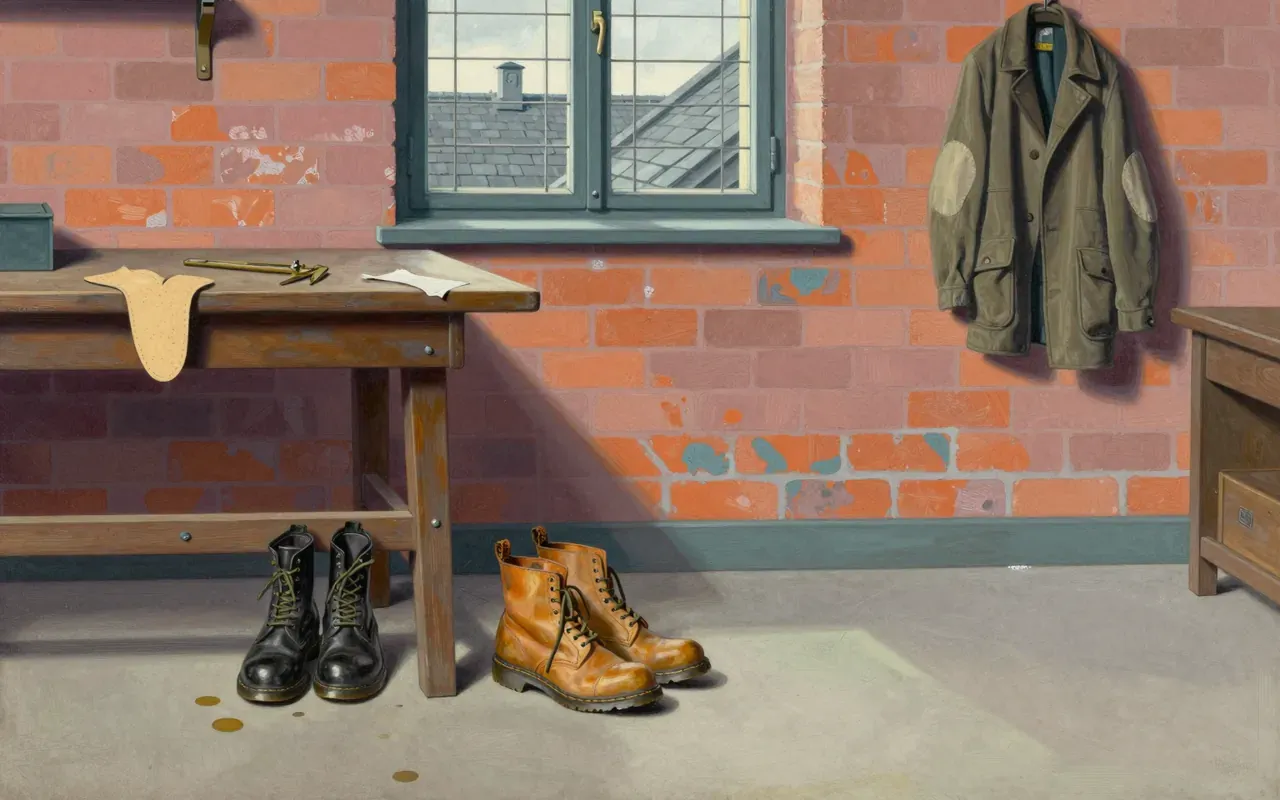
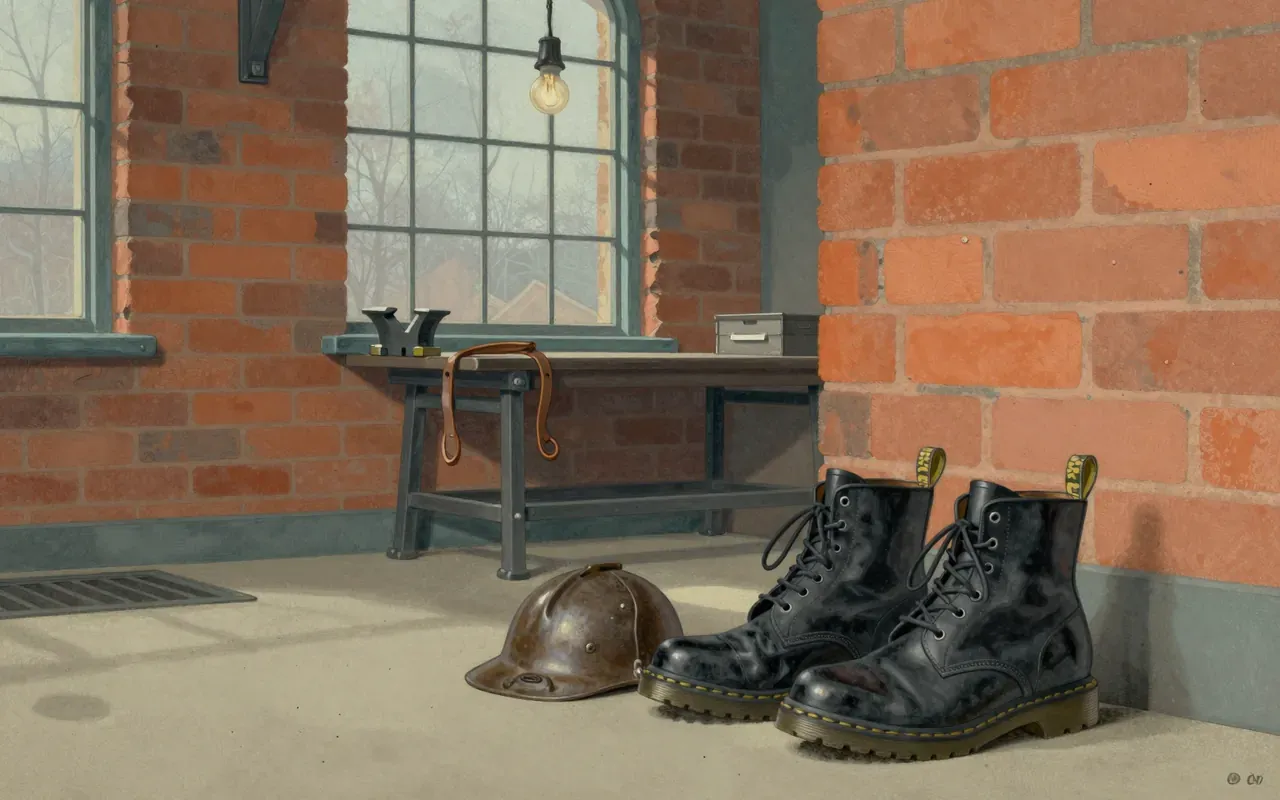
The Dr. Martens style 1460 is a lace-up boot produced under licence by R Griggs & Co. in the UK from April 1960.

How it works, in terms someone would actually use

It laces up the calf. It grips pavement. It withstands daily wear without collapsing at the welt or splitting at the toe.

What it gets right

It anchors the ankle. It holds its shape across decades. It commits to one silhouette: eight-eyelet, heel-loop, air-cushioned sole.

What it does not

It does not soften with wear. It does not shrink to the foot. It does not hide its construction.

What it changed

It turned a licensed German sole-and-upper design into a British industrial uniform and later a subcultural signifier.

Who it is for, and who it is not

It is for people who require durability first, identity second. It is not for those who prioritise flexibility, lightness or quiet presence.

Is it worth your time

Yes—if you need a boot that does not negotiate with time, terrain or trend.
Same rail · Footwear4 of 35
10:29
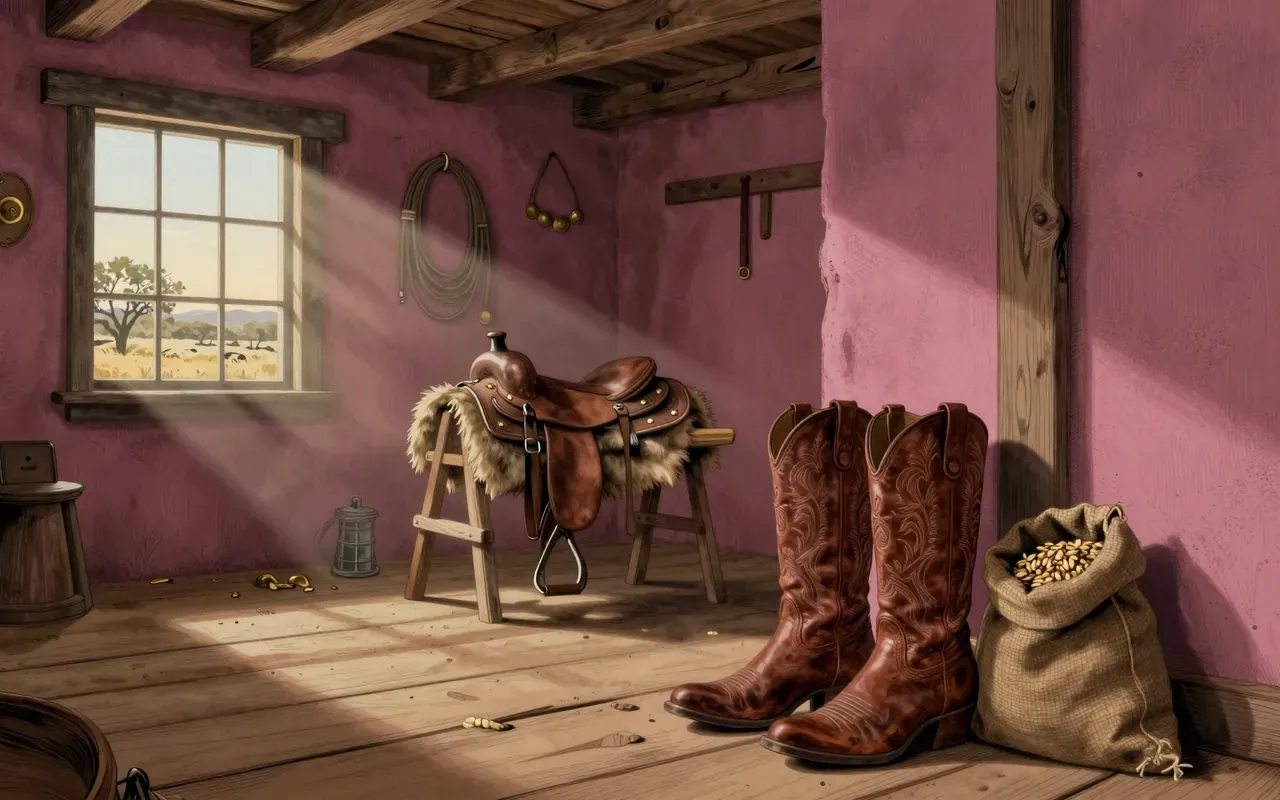
Cowboy bootA functional riding boot with slick leather soles, tall shafts, and angled or squared heels. Historically worn by cowboys. Originated from Spanish-influenced vaquero traditions in the Americas, adapted by 19th-century American ranchers—especially in Texas. Two basic styles: western (tall shaft, angled heel >1 inch) and roper (short shaft, low squared heel <1 inch). Slick sole enabled easy stirrup insertion and removal. Tall heel minimised risk of foot sliding forward through stirrup. Tall shaft held boot in place without lacing. Tall shaft, loose fit, and no lacing helped prevent dragging by allowing foot to pull free.
8:49
New BalanceWilliam J. Riley · 1906New Balance is a footwear company whose origin lies in biomechanical correction—not sport. Its founding premise was specific, functional, and local. Its later expansion into performance and lifestyle markets introduced contradictions it failed to reconcile—most visibly in its 2012 toning-shoe settlement. It matters now because it shows how medical authority gets repackaged as consumer identity—and how easily that packaging outlives its justification.
9:24
Asics1949Asics is a Japanese sportswear company headquartered in Kobe, founded officially on September 1, 1949, as Onitsuka Shokai by Kihachiro Onitsuka. Its first product was a basketball shoe released in 1950. It merged with two other firms in 1977 to become ASICS Corporation. Its name derives from the Latin phrase 'anima sana in corpore sano', rendered as 'a sound mind in a sound body'. It conducts sports-science research and product development through the ASICS Institute of Sport Science in Kobe. The crossed-stripe Mexico Line design was introduced in 1966 as a visual identifier. Performance lines include GEL-KAYANO (1993), METASPEED (2021), and NIMBUS MIRAI (2024).
9:02
Dr. MartensKlaus Märtens · 1951Dr. Martens is a functional footwear innovation repurposed as cultural symbol — its origins in rehabilitation and post-war scarcity are routinely overwritten by its later adoption elsewhere.
Up next in Fashion

Armani

1975 · 9:36

Armani is not a style—it’s a logistical doctrine dressed as tailoring.

9:36