
fashionbriefs
9:42in productionCh. 1 · Name and date/ 9:42 · ceiling 15 min
Outerwear

Gore-Tex

1969

A 1969 accident with heated PTFE gave us waterproof breathability—and a lifetime of environmental debt.

Gore-Tex is a trade name for a waterproof, breathable membrane invented in 1969. It works by blocking liquid water while allowing vapour through pores in expanded PTFE—a microporous structure 70% air, formed by sudden stretching of heated PTFE. It gets breathability and waterproofing right. It does not eliminate PFAS risk or match natural fibre comfort in mild use. It changed outerwear, medical devices, and space suits. It is for high-stakes functional wear—not ethical minimalism. It is worth your time if performance outweighs planetary cost.

Chapters & takeaways6
  1. 0:58
    Name and date

    Gore-Tex is a trade name—not a fabric type—and it was born in 1969.

  2. 2:03
    How it breathes

    Its pores block rain but pass vapour because it is 70% air.

  3. 3:06
    What it is made of

    It is ePTFE—stretched PTFE with fibrils and nodes—made by sudden yank, not slow pull.

  4. 4:02
    Where it lives

    It works only when laminated into a garment system—never alone.

  5. 5:28
    What it replaced

    It changed rainwear from sealed to ventilated—and never looked back.

  6. 6:42
    The trade-off

    It solved one problem perfectly—and created another that outlasted its patents.

Worth your time?

Yes. Wear the whole thing.

4/ 5
What works
  • delivers waterproof breathability
  • anchors performance to physical microstructure
  • redefined outerwear function
What does not
  • eliminate PFAS risk
  • match natural fibre comfort in mild use
  • solve environmental cost of PFAS chemistry
Wear it if
  • mountaineers
  • medics
  • conservationists
Skip it if
  • climate-conscious buyers seeking fully non-toxic materials
The written brief1 min read

What the garment is and where it came from

Gore-Tex is a trade name owned by W. L. Gore & Associates. It is a waterproof, breathable fabric membrane invented in 1969.

How it works, in terms someone would actually use

It blocks rain but lets sweat escape. The membrane is 70% air. Its pores are too small for liquid water, large enough for vapour.

What it gets right

It delivers on its core promise: waterproof and breathable. It anchors performance to a physical microstructure—fibrils and nodes—not coatings or laminates.

What it does not

It does not eliminate PFCs in legacy production. It does not solve the environmental cost of PFAS chemistry. It does not breathe like natural fibres in moderate conditions.

What it changed

It redefined outerwear function. It moved waterproofing from waxed cotton and rubberised cloth to a breathable synthetic membrane.

Who it is for, and who it is not

It is for mountaineers, medics, conservationists, astronauts—and anyone who must stay dry while moving hard in wet cold. It is not for the climate-conscious buyer seeking fully non-toxic, circular materials.

Is it worth your time

Yes—if you need waterproof breathability in harsh weather. No—if you prioritise environmental safety or long-term material ethics.

Same rail · Outerwear4 of 33
8:57
A-2 jacketThe A-2 jacket is a functional military garment defined by its adoption date, material, and deliberate departures from the A-1. Its authority comes from specification, not sentiment. It endures because it was built to be issued—not admired.
9:36
Boglioli1974Boglioli redefined Italian tailoring by removing its bones — not as rebellion, but as recalibration. Its garment-dyed cashmere jacket is a functional object first: soft, adaptable, quietly resistant to formality. It expanded internationally because it offered something rare — luxury without hierarchy, structure without stiffness. The 2010s shift to global branding diluted its regional specificity but widened its utility. Womenswear in 2022 confirmed its logic was transferable, not gendered. It remains tailoring — just unmoored from expectation.
9:10
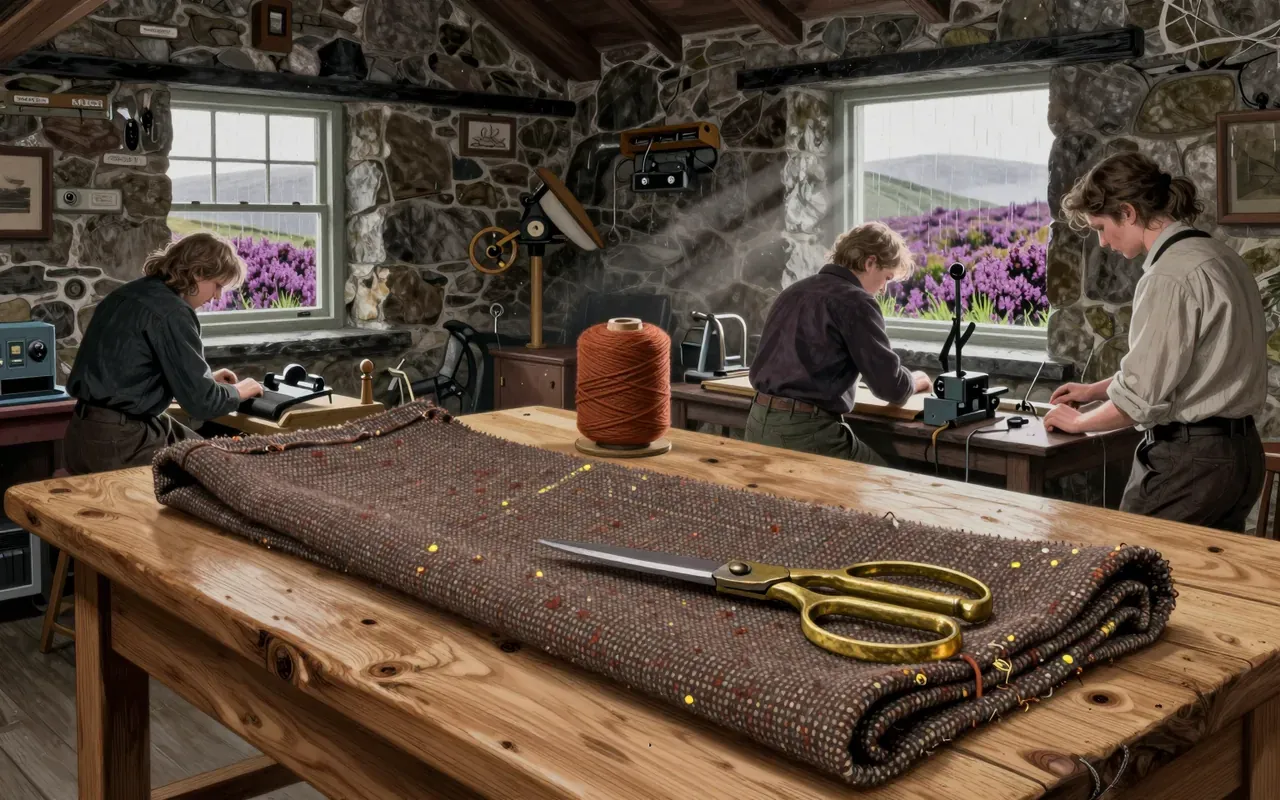
Donegal tweedDonegal tweed is a plain-weave wool fabric from County Donegal, Ireland. It was historically handwoven for caps, suits and vests using local materials. Its modern form dates to the 1880s. Machine weaving arrived in the 1950s–60s. It is best known for a plain-weave cloth with differently-coloured warp and weft and small, irregularly placed coloured yarns yielding a heathered effect. Magee, founded in 1866, became the largest and most famous producer. Such fabric is often labelled 'donegal' regardless of where it is made.
9:24
Polar fleecePolar fleece is a soft, napped, insulating polyester fabric developed by Malden Mills in Massachusetts in 1979. It was co-developed with Patagonia as Synchilla to mimic and surpass wool. Malden Mills CEO Aaron Feuerstein declined to patent it, enabling broad adoption. It is trademarked as PolarFleece since October 6, 1981. Its warmth depends on loft and trapped air pockets. Weight variants are defined in grams per square meter (gsm): micro, 100, 200, and 300. It is hydrophobic but loses insulation when wet. It generates static and sheds microfibres during washing and drying.
Up next in Fashion

Harper's Bazaar

1867 · 9:42

The longest-running women’s fashion magazine isn’t a relic—it’s a live wire of editorial reinvention, wired straight from 1867.

9:42