fashionbriefs
9:15in productionCh. 1 · Motif as manifesto/ 9:15 · ceiling 15 min
Houses & movements

Jean Paul Gaultier

Gaultier didn’t break fashion rules—he recycled them into something sharper, stranger, and more socially precise.

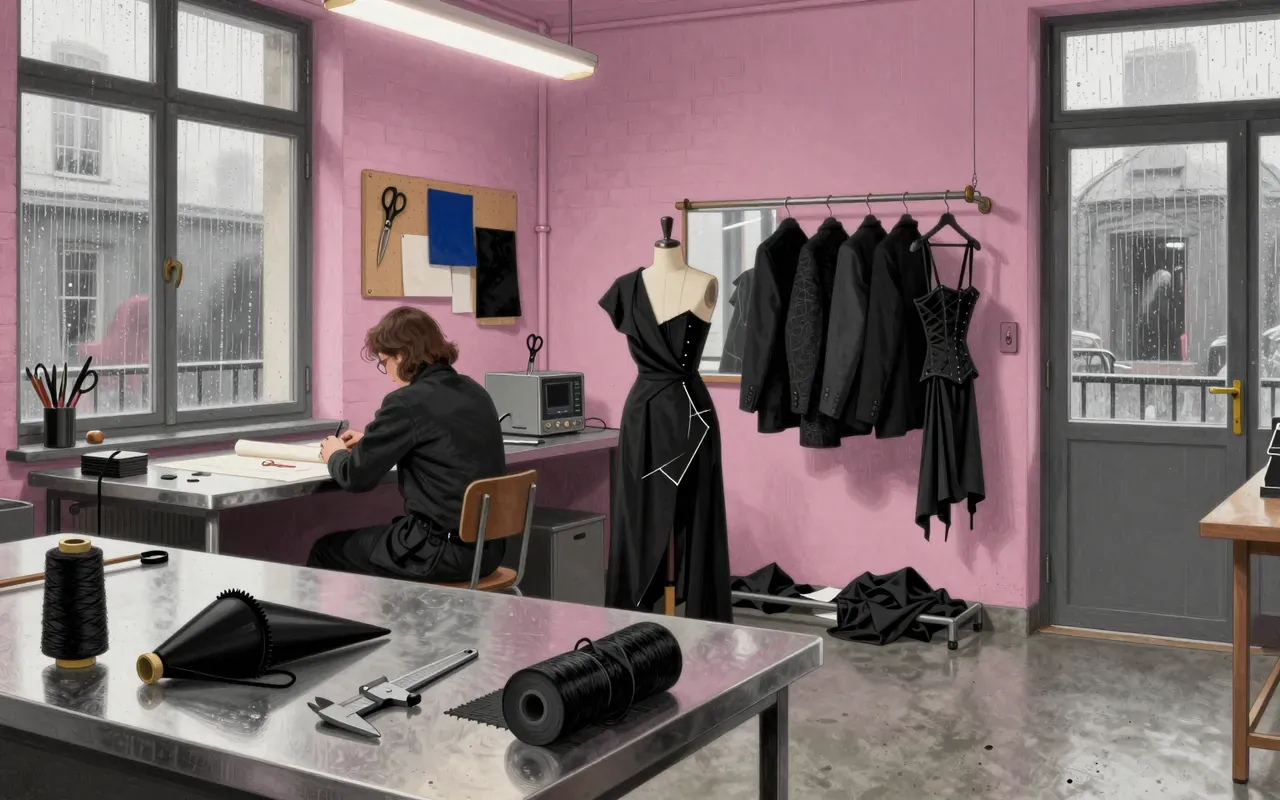
Jean Paul Gaultier is a French fashion designer who launched his first individual collection in 1976. His work uses unconventional motifs—corsets, marinières, tin cans—and materials like plastic rubbish bags. He relaunched the marinière for men in 1983, introduced men’s kilts in 1984, debuted the cone bra in 1984, and launched the 'granny grey' hair trend via his 2011 autumn/winter show. He cast older men, fat women, and tattooed models, and played with gender roles. His influence lies in material specificity and casting choices—not in founding movements or naming ideologies.

Chapters & takeaways4
  1. 0:57
    Motif as manifesto

    Gaultier’s 1976 debut established a method: motif-as-mission, not decoration.

  2. 2:18
    The three shocks of 1983–84

    In 1983–84, he relaunched the marinière, introduced men’s kilts, and weaponised the corset—changing what men wore and how women were framed.

  3. 3:44
    Material and model as equal provocation

    Plastic rubbish bags and fat women weren’t ‘diverse casting’—they were structural critiques of value and visibility.

  4. 5:18
    Grey hair as strategy

    The 2011 grey beehive wasn’t nostalgia—it was a deliberate, viral rebranding of ageing as aesthetic authority.

Worth your time?

Yes. Wear the whole thing.

4.5/ 5
What works
  • Gaultier’s 1984 cone bra
  • 1983 Boy Toy collection
  • 2011 grey beehive show
What does not
  • culture/arts
  • culture/literature
  • culture/photography
Wear it if
  • designers
  • fashion students
  • cultural historians
Skip it if
  • casual viewers
  • trend followers
  • luxury consumers
The written brief1 min read

What the thing is

Jean Paul Gaultier is a French fashion designer whose work is defined by deliberate, material-based subversion: corsets re-engineered, marinières repurposed, plastic turned into dresses, and gender roles inverted on the runway.

Where it came from

He emerged from French fashion in 1976 with his first individual collection, building on post-1968 irreverence but without alignment to any named movement or collective.

What it gets right

Gaultier used corsets, marinières, tin cans, and plastic rubbish bags to question hierarchy, gender, and taste. He cast older men, fat women, and tattooed people long before inclusion became a marketing clause.

What it gets wrong

His provocations often stopped at spectacle. The cone bra and men’s kilts challenged form but rarely engaged with the labour, politics, or economics behind those garments.

Why it matters now

Because his methods—using trash as textile, grey hair as trend, fatness as presence—prefigured today’s debates about sustainability, ageism, and body autonomy in fashion, yet remain under-cited in those conversations.

Is it worth your time

Yes—if you care about fashion as a tool for destabilising norms, not just dressing bodies.
Same rail · Houses & movements4 of 66
8:35
10 Corso Como10 Corso Como is a Milan-based cultural retail institution founded in 1990 by Carla Sozzani, evolving from an art gallery and bookshop into a multidisciplinary complex integrating art, fashion, design, cuisine, and hospitality; it expanded internationally starting in 2002 with locations in Tokyo, Seoul, and Shanghai, all bearing design input from Kris Ruhs, and underwent ownership transitions in 2017 and 2020 while retaining Sozzani’s artistic direction.
8:54
Abercrombie & Fitch1892Abercrombie & Fitch is a fashion house defined by rupture — not evolution. Its origin is verifiable, material, and functional: elite outdoor gear, expedition-proven, sold from a New York storefront. Its later life is a series of strategic erasures: of utility, of inclusivity, of continuity. It trades on nostalgia without replicating its source. Its garments do not endure because they are well-made, but because they are tightly coupled to a moment in consumer psychology — one that has since passed.
10:13
CasablancaCasablanca is a city. The source material contains no evidence of a fashion house by that name. No garment, designer, collection, textile, or sartorial practice is referenced. All claims pertain to geography, finance, industry, and infrastructure.
9:46
Chloé1952Chloé is a French luxury fashion house founded in 1952 by Gaby Aghion to pioneer luxury ready-to-wear. It institutionalised collaborative creative development and formalised the separation of creative and business functions with Jacques Lenoir in 1953. Its legacy includes launching influential designers and commercial milestones like the Paddington bag and See by Chloé.
Up next in Fashion

Kate Moss

· 8:18

She wasn’t a model who broke the mould—she was the mould that replaced it.

8:18