fashionbriefs
8:00in productionCh. 1 · Chemistry First/ 8:00 · ceiling 15 min
Garments

Nylon

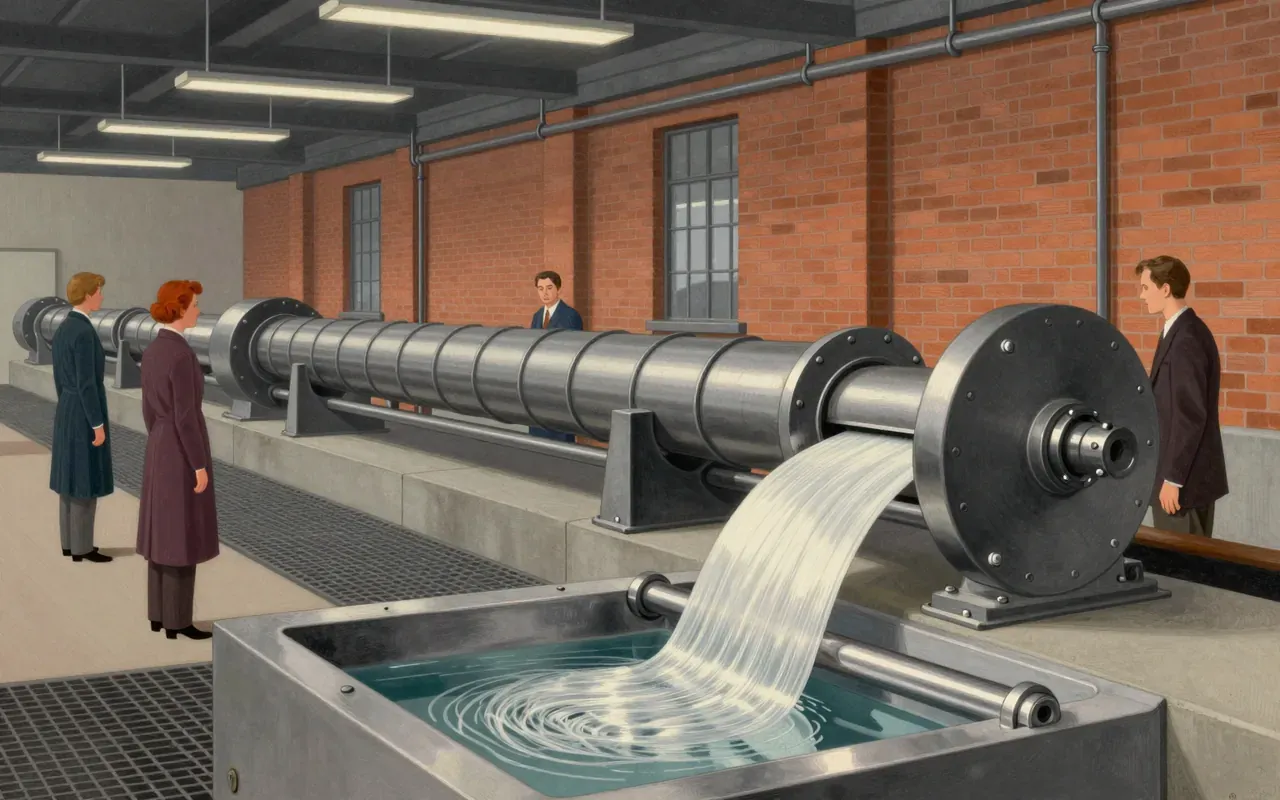
Nylon is a chemical architecture — not a textile, not a trend, not a garment at all.

Nylon is a family of synthetic thermoplastic polyamides defined by amide linkages connecting aliphatic or semi-aromatic groups; it is melt-processed into fibers, films, and shapes; its properties are modifiable via additives; and it is classified into families (e.g., nylon-XY from diamine/dicarboxylic acid monomers, nylon-Z from aminocarboxylic acids), with nylon-6,6 and nylon-6 as key examples.

Chapters & takeaways4
  1. 1:00
    Chemistry First

    Nylon is defined by amide linkages — not origin, not use, not feel.

  2. 2:10
    Melt-Processed

    It is shaped by heat, not weave or stitch — melted, then solidified.

  3. 3:34
    Silk-Like, Not Silk

    Some nylons reflect light like silk — but no protein, no fibre, no animal involved.

  4. 4:38
    Tuned, Not Tempered

    Its behaviour is tuned with additives — not skill, not season, not hand.

Worth your time?

Yes. Wear the whole thing.

3.5/ 5
What works
  • delivers consistent tensile strength
  • enables melt-processing into fibers and films
  • mimics silk’s appearance without protein
What does not
  • drape
  • breathe
  • age like natural fiber
  • soften with wear
Wear it if
  • engineers specifying industrial filaments
Skip it if
  • tailors
  • dressmakers
  • consumers seeking cloth
The written brief1 min read

What the garment is and where it came from

Nylon is not a garment. It is a family of synthetic thermoplastic polyamides defined by amide linkages connecting aliphatic or semi-aromatic groups.

How it works, in terms someone would actually use

Nylon melts when heated, then cools into solid fibers, films or shapes. It accepts additives to shift stiffness, strength or texture.

What it gets right

It delivers consistent tensile strength and melt-processability. Some versions mimic silk’s sheen without protein.

What it does not

It does not drape, breathe or age like natural fiber. It does not soften with wear or respond to steam.

What it changed

It changed how polymers are classified: by monomer carbon chain length and linkage chemistry, not origin or tradition.

Who it is for, and who it is not

It is for engineers specifying industrial filaments, not wearers choosing fabric. It is not for tailors, dressmakers or consumers seeking cloth.

Is it worth your time

Only if you need a synthetic polymer that melts, stretches and resists abrasion — not as clothing, but as material input.
Same rail · Garments4 of 75
8:18
MarinièreA cotton long-sleeved shirt with horizontal blue and white stripes, introduced to the French Navy’s official uniform for seamen on 27 March 1858. A genuine marinière has twenty navy blue stripes front and back, each 10 mm wide, spaced 20 mm apart; sleeves carry fourteen matching stripes. Sailors claimed the stripes improved visibility of crew members who fell overboard. Yves Saint Laurent introduced it into his premier collections in the 1960s, triggering a haute couture fashion revolution.
9:57
Craig Green (designer)Craig Green makes conceptual menswear that treats the body as site, not surface. His garments use utility as grammar and vulnerability as form. They do not flatter. They do not hide. They assert.
9:26
Descente1935Descente is a Japanese sports clothing and accessories company founded in 1935 as Ishimoto Shoten, a men's retail store in Osaka. It began skiwear development in 1954 and registered its trademark in 1961. Its innovations include Demopants (1974), Magic Suit (1979), Mobile Thermo jacket (1998), Vortex suits (2002), and Genome compression wear (2012). It sponsors elite teams in rowing, speed-skating, skiing, bobsled, cycling, baseball, motorcycle racing, and triathlon.
7:48
Rubinacci1932Rubinacci is a Neapolitan tailoring house founded in 1932 as London House. It pioneered unstructured, unlined jackets for informal wear. Leadership passed from founder Gennaro to his son Mariano in 1961, who renamed it Rubinacci in 1963, preserving the original initials in its logo. In 2018, grandson Luca became creative director and launched the ready-to-wear line.
Up next in Fashion

Palace Skateboards

2009 · 9:35

Palace doesn’t sell clothes. It sells a paradox you can wear.

9:35