fashionbriefs
9:45in productionCh. 1 · Woven, not treated/ 9:45 · ceiling 15 min
Outerwear

Ripstop

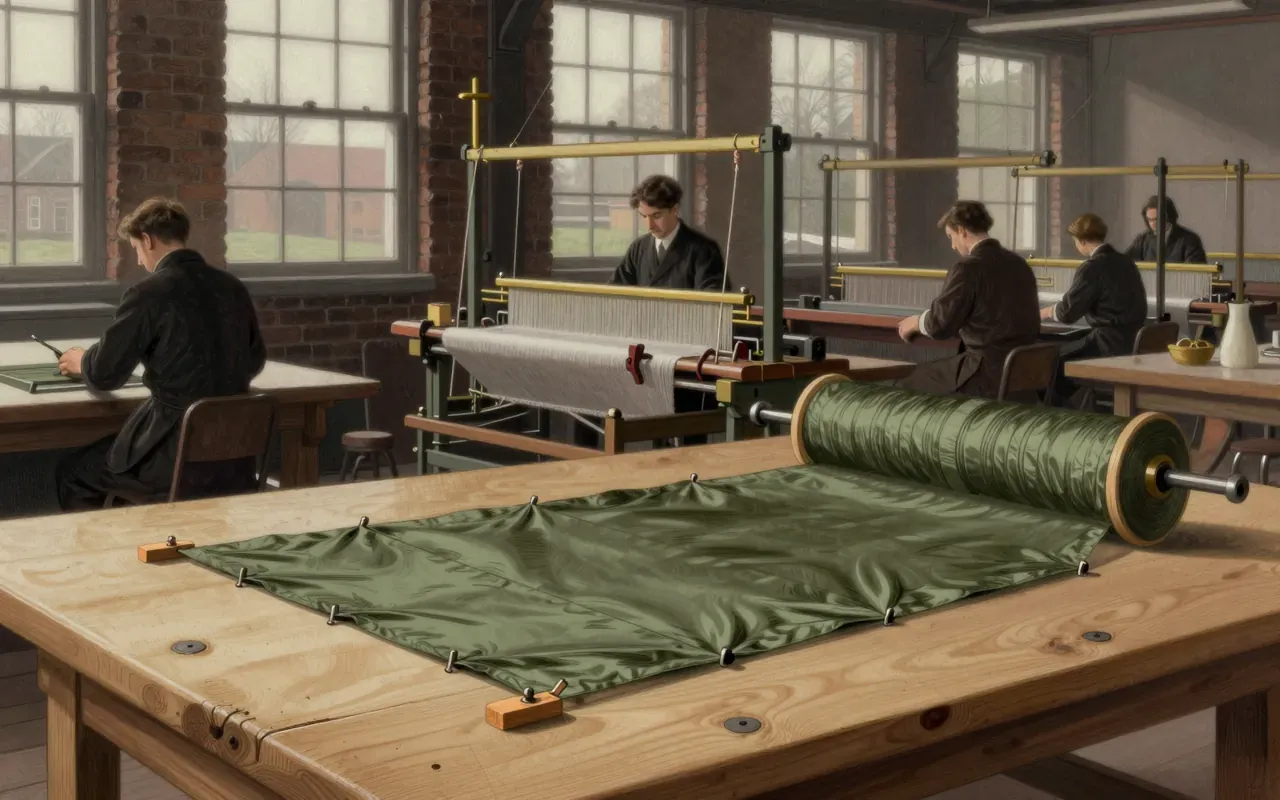
Ripstop doesn’t drape — it defends. And it does so with a grid you can feel but never ignore.

Ripstop is a structural solution, not an aesthetic one. It trades invisibility for integrity — and works only when that trade is accepted.

Chapters & takeaways4
  1. 1:03
    Woven, not treated

    Ripstop is woven, not coated or laminated — its strength comes from how threads lock during weaving.

  2. 2:40
    The grid is the guard

    The 5–8 mm crosshatch isn’t decorative — it’s the exact spacing needed to stop a tear before it jumps.

  3. 4:35
    Two dimensions, one function

    Thin ripstop feels flat and tight; older versions shout their structure, modern ones whisper it — but both rely on visible hierarchy of yarns.

  4. 6:09
    Nylon is the skeleton, not the skin

    Nylon isn’t the whole cloth — it’s often just the crosshatched threads, while cotton or polyester forms the base.

Worth your time?

Yes. Wear the whole thing.

4/ 5
What works
  • delivers maximum tear resistance per gram of weight
  • halts rips before they gain momentum
  • makes high-mobility outerwear possible without sacrificing tear resistance
What does not
  • drape
  • soften with wear
  • blend into fluid silhouettes
Wear it if
  • people who move hard and fast outdoors
  • people who carry gear where snags are inevitable
Skip it if
  • people who prioritise tactile luxury
  • people who prioritise quiet fabric
  • people who prioritise seamless tailoring
The written brief1 min read

What the garment is and where it came from

Ripstop is not a garment. It is a weaving technique applied to fabrics used in garments — most commonly outerwear, uniforms, and performance gear — to resist tearing.

How it works, in terms someone would actually use

Ripstop stops tears from spreading by trapping them at the nearest reinforced crosshatch. You feel it as a slight grid-like texture under fingers, not as stiffness — the thicker yarns hold while the base fabric stays thin and pliant.

What it gets right

It delivers a precise trade-off: maximum tear resistance per gram of weight. The 5–8 mm crosshatch intervals act like miniature fences, halting rips before they gain momentum.

What it does not

It does not drape like plain-weave cotton or silk. It does not soften with wear. It does not hide its construction — even modern versions retain a subtle grid that resists blending into fluid silhouettes.

What it changed

It redefined what lightweight fabric could withstand: wind, abrasion, and snagging without adding bulk. It made high-mobility outerwear possible without sacrificing tear resistance.

Who it is for, and who it is not

It is for people who move hard and fast outdoors, or who carry gear where snags are inevitable. It is not for people who prioritise tactile luxury, quiet fabric, or seamless tailoring.

Is it worth your time

Yes, if you need lightweight durability for movement or exposure. No, if you need drape, softness, or quiet fabric — ripstop announces itself with structure, not subtlety.
Same rail · Outerwear4 of 33
8:57
A-2 jacketThe A-2 jacket is a functional military garment defined by its adoption date, material, and deliberate departures from the A-1. Its authority comes from specification, not sentiment. It endures because it was built to be issued—not admired.
9:36
Boglioli1974Boglioli redefined Italian tailoring by removing its bones — not as rebellion, but as recalibration. Its garment-dyed cashmere jacket is a functional object first: soft, adaptable, quietly resistant to formality. It expanded internationally because it offered something rare — luxury without hierarchy, structure without stiffness. The 2010s shift to global branding diluted its regional specificity but widened its utility. Womenswear in 2022 confirmed its logic was transferable, not gendered. It remains tailoring — just unmoored from expectation.
9:10
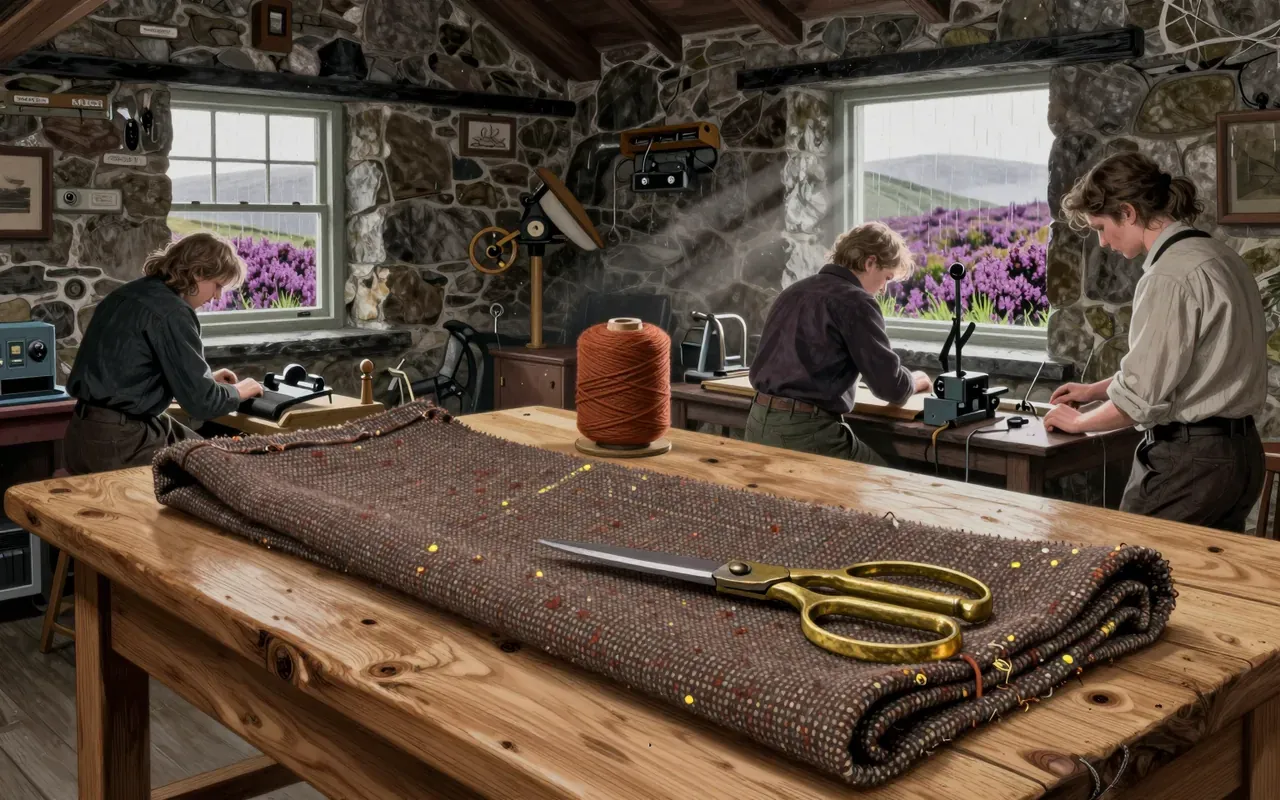
Donegal tweedDonegal tweed is a plain-weave wool fabric from County Donegal, Ireland. It was historically handwoven for caps, suits and vests using local materials. Its modern form dates to the 1880s. Machine weaving arrived in the 1950s–60s. It is best known for a plain-weave cloth with differently-coloured warp and weft and small, irregularly placed coloured yarns yielding a heathered effect. Magee, founded in 1866, became the largest and most famous producer. Such fabric is often labelled 'donegal' regardless of where it is made.
9:24
Polar fleecePolar fleece is a soft, napped, insulating polyester fabric developed by Malden Mills in Massachusetts in 1979. It was co-developed with Patagonia as Synchilla to mimic and surpass wool. Malden Mills CEO Aaron Feuerstein declined to patent it, enabling broad adoption. It is trademarked as PolarFleece since October 6, 1981. Its warmth depends on loft and trapped air pockets. Weight variants are defined in grams per square meter (gsm): micro, 100, 200, and 300. It is hydrophobic but loses insulation when wet. It generates static and sheds microfibres during washing and drying.
Up next in Fashion

Satin

· 9:54

Satin trades durability for dazzle — and refuses to apologise.

9:54