Saved
Accessories

Rolex Submariner

The Submariner stopped being a diver’s tool in the 1960s—and became the world’s most successful status symbol disguised as one.

Worth your time?4/5Yes.Wear the whole thing.What works, what does not, who it is for ↓
8:24in productionCh. 1 · A Tool, Not a Trophy/ 8:24 · ceiling 15 min
4 chapters · 8:24Ceiling 15:00

The brief is written and checked. The video joins this page when it is cut.4 chapters · 1 min read · 8:24 planned

Read the brief

The Rolex Submariner is a mechanically robust, historically significant dive watch that fulfilled its original purpose with precision—and then outlived it. Its evolution reflects Rolex’s shift from professional instrumentation to symbolic capital. It remains technically capable, but no longer meets the full set of standards it helped inspire.

Chapters & takeaways4
  1. 1:03
    A Tool, Not a Trophy

    It was built as a working diver’s instrument—not a luxury accessory.

  2. 2:26
    First to Market

    It launched in 1953 and appeared at Basel in 1954—beating competitors to public visibility.

  3. 3:52
    Depth Ratings That Moved Fast

    It claimed 100m waterproofing first—and doubled that rating within a year.

  4. 5:11
    Modern Specs, Missing Standards

    Today’s models use Calibres 3230/3235 and Cerachrom bezels—but none are certified to ISO 6425.

1 more chapterFewer chapters
Worth your time?

Yes. Wear the whole thing.

4/ 5
What works
  • as a durable daily wear
  • as a reference point for functional design
  • as an object of cultural transmission
What does not
  • culture/art
  • culture/arts
  • culture/cities
  • culture/food
Wear it if
  • collectors
  • designers
  • watchmakers
Skip it if
  • divers
  • historians-of-technology
Who should wear it, and who should skipHide who it is for
The written brief1 min read

What the thing is

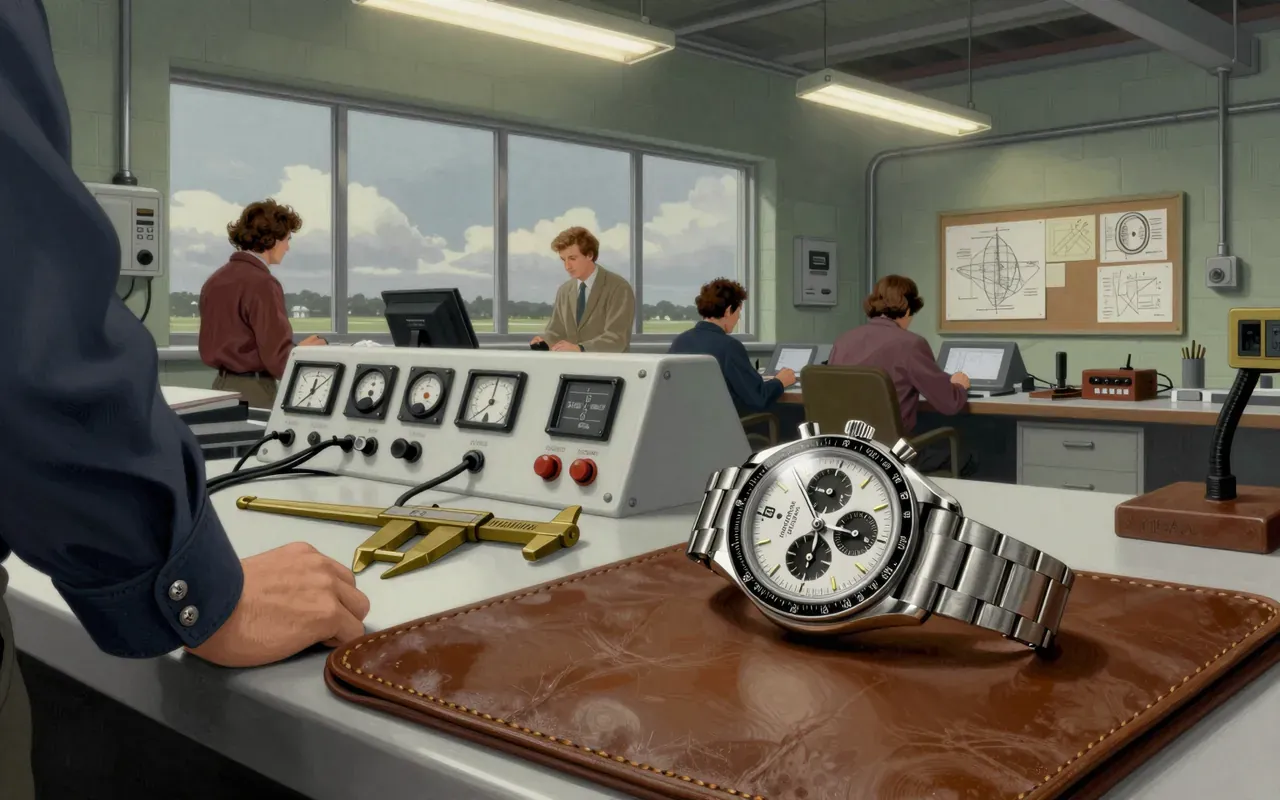
A Rolex sports watch designed for diving. Part of Rolex’s Professional line. A mechanical timepiece with a rotatable bezel, luminescent markers, and water resistance certified to 300 metres in current models.

Where it came from

It went into production in 1953 and debuted publicly at the 1954 Basel Watch Fair. It was designed for diving and manufactured by Rolex. Early models used the A260 movement and 37 mm cases.

What it gets right

It delivers real-world water resistance. It was the first watch waterproof to 100 metres. It evolved reliably: certified to 200 metres by 1954. Its unidirectional bezel, luminescent markers, and Oyster case remain functionally coherent.

What it gets wrong

It no longer serves divers. Modern Submariners are rated to 300 metres but lack ISO 6425-compliant features like depth rating verification under dynamic pressure, magnetic resistance testing, or strap security standards required of professional dive watches.

Why it matters now

It anchors the modern luxury watch market’s definition of utility-as-status. Its design language has been copied endlessly—not because it is optimal for diving today, but because it signals continuity with a functional origin that no longer applies.

Is it worth your time

Yes—if you need a durable, legible, water-resistant tool watch that delivers on its original diving specification without compromise.

Same rail · Accessories4 of 27
Up next in Fashion

Savile Row

· 10:26

Savile Row didn’t invent bespoke—it weaponised it, then lost the war over its meaning.

10:26