11:06in productionCh. 1 · Origin in precision/ 11:06 · ceiling 15 min
Ready-to-wear
Sacai
1999
Sacai doesn’t mix casual and formal—it engineers friction between them.
Sacai is a Japanese luxury fashion brand founded in 1999 by Chitose Abe, who trained under Comme des Garçons and Junya Watanabe; Vogue cites the label as influential in dissolving the boundary between casual and formal wear, and it engaged in high-profile cross-brand collaborations from 2016 to 2022.
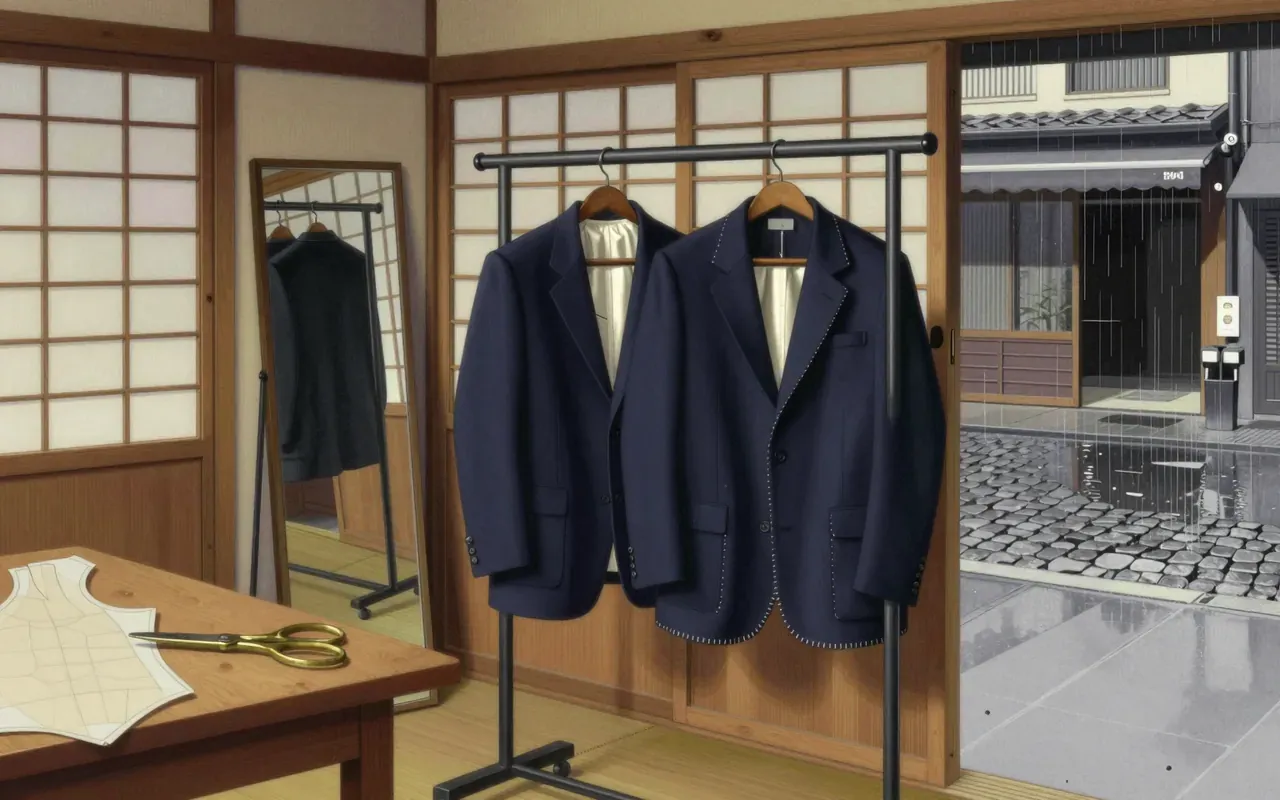
Sacai began in 1999 as a Japanese luxury label built on pattern-cutting discipline, not trend response.
2:44
Training as blueprint
Chitose Abe’s training at Comme des Garçons and Junya Watanabe forged a method rooted in structural interrogation, not surface decoration.
5:07
Dichotomy dismantled
Sacai dissolves the casual/formal divide by treating both as load-bearing systems—then bolting them together.
6:52
Collaboration as stress test
From 2016 to 2022, Sacai collaborated with Nike, Dior, The North Face and others—not to borrow credibility, but to test construction across contexts.
Worth your time?
Yes. Wear the whole thing.
4.5/ 5
What works
by making hybrid logic legible in cloth
through collaboration as functional testing, not branding
What does not
solve wardrobe simplicity
prioritise ease over intention
Wear it if
people who read garment construction as grammar
those who expect clothes to adapt—not just accommodate
Skip it if
those who want garments to disappear into routine
anyone seeking uniformity over calibrated contradiction
The written brief1 min read
What the garment is and where it came from
Sacai is a Japanese luxury fashion brand founded in 1999 by Chitose Abe, who trained under Comme des Garçons and Junya Watanabe.
How it works, in terms someone would actually use
Sacai layers garments to make formal pieces behave like sportswear and sportswear hold the structure of tailoring.
What it gets right
It gets right the tension between control and collapse: a blazer cut with running-shoe mesh holds its shape until it doesn’t—and that moment is intentional.
What it does not
It does not simplify dressing. It adds decision points—where seams meet, where hems stack, where fabrics resist or yield.
What it changed
Sacai changed how designers think about garment boundaries: not as categories to be blurred, but as systems to be spliced.
Who it is for, and who it is not
It is for people who treat clothing as infrastructure—not costume—and who expect construction to answer questions about use, not just appearance. It is not for those who want garments to recede.
Is it worth your time
Yes—if you need clothes that shift between meetings and movement without changing outfits.