What the garment is and where it came from
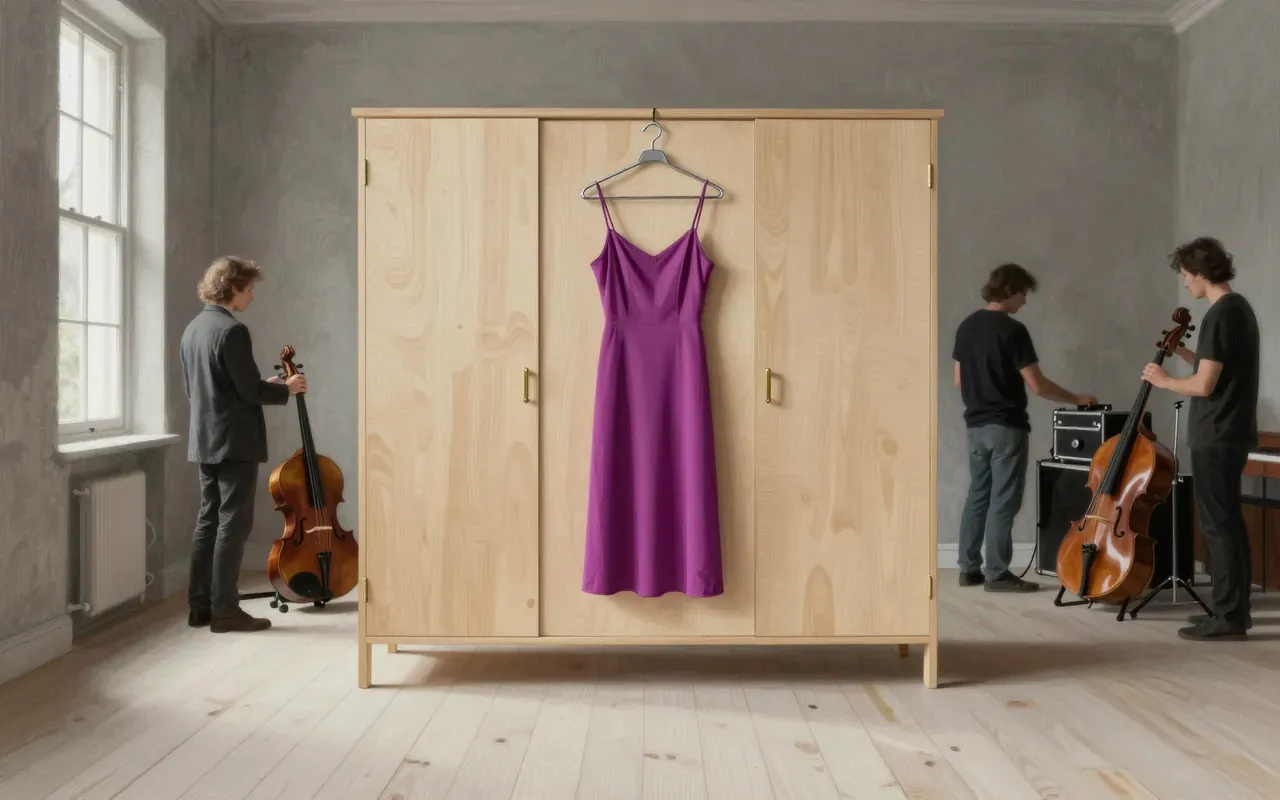
A dress modelled on an underslip or petticoat. Traditionally cut on the bias, with spaghetti straps. Designed as outerwear that evokes undergarments.
How it works, in terms someone would actually use
It hangs close to the body, cut on the bias to drape without seams at the side. Spaghetti straps hold it up. It reveals skin through sheer fabric or lace trim. It is worn as outerwear, not layered under anything.
What it gets right
The bias cut moves with the body. The spaghetti straps frame the collarbone without anchoring the shoulder. Sheer and lace elements offer control over revelation—not accident.
What it does not
It does not flatter broad shoulders or narrow hips without alteration. It does not conceal midriff movement. It does not withstand wind or sitting without adjustment.
What it changed
It shifted underwear from private to public grammar. It made sheer, bias-cut, strap-supported garments legible as deliberate outerwear.
Who it is for, and who it is not
It is for someone who wants simplicity with intention, who accepts exposure as structure, not compromise. It is not for anyone needing coverage, support, or ease of movement.
Is it worth your time
Yes—if you want a garment that declares minimalism without effort, and are comfortable with its exposure and narrow fit.