Supreme isn’t streetwear—it’s a retail system wearing clothes.
Supreme is a retail system disguised as a clothing brand. Its power lies in timing, placement, and repetition—not fabric innovation or silhouette evolution. It answers to skate culture’s immediacy, not fashion’s longevity. It belongs in wardrobes that speak in slogans, not stories.
Supreme launched in April 1994 as both clothing brand and skate shop on Lafayette Street in Manhattan.
2:35
Layout: Where the floor is the runway.
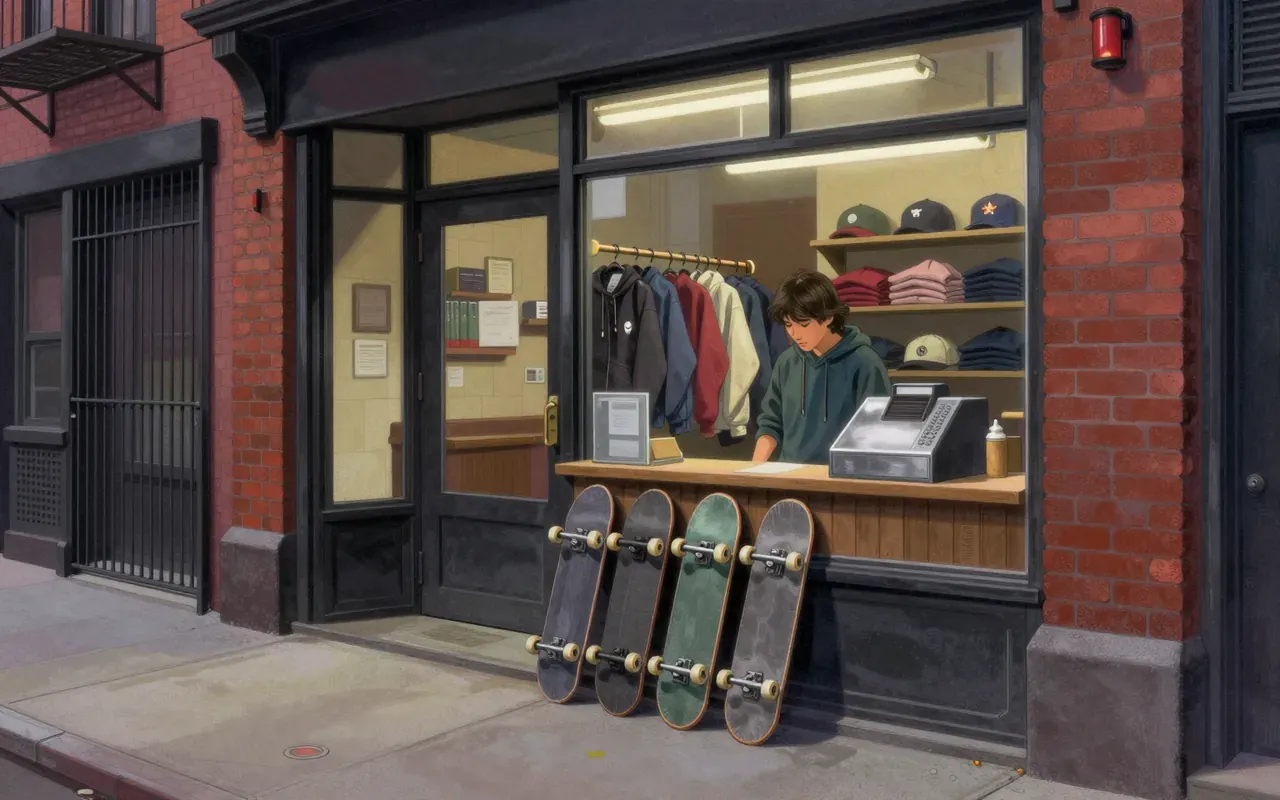
The first store was built for skateboarding—open floor, perimeter racks, no barriers between motion and merchandise.
4:19
Design: Abstraction meets construction.
Barbara Kruger inspired the red box logo; tiger-stripe cargo pants showed early cut-and-sew intent—not just branding, but making.
6:04
Distribution: Scarcity as architecture.
It invented the 'drops' model—weekly releases—and scaled it to 14 global stores by 2021 without abandoning the original aesthetic.
Worth your time?
Yes. Wear the whole thing.
4/ 5
What works
weekly drop rhythm
logo legibility at distance and speed
store layout enabling movement before shopping
What does not
fit refinement
long-term garment durability
context-free utility
Wear it if
people who treat apparel as participation
those who accept scarcity as a design condition
Skip it if
those who need garments to outlive their context
those who expect apparel to evolve with wear
The written brief1 min read
What the garment is and where it came from
Supreme is an American clothing brand founded in Manhattan in April 1994. It began as a skateboarding shop and clothing brand in a former office space on Lafayette Street.
How it works, in terms someone would actually use
It releases small groups of products every Thursday. You go to the store or website on that day. You choose fast. You pay. You own it—or you miss it.
What it gets right
The red box logo works because it is legible at speed and scale. The Lafayette Street store layout puts movement first—skateboards before racks. The cut-and-sew tiger-stripe cargo pants anchor early design in construction, not just print.
What it does not
It does not prioritise fit refinement over logo placement. It does not build garments for decades of wear. It does not separate skateboarding utility from commercial spectacle.
What it changed
It replaced seasonal calendars with weekly urgency. It turned retail into ritual. It proved that distribution could be more distinctive than design.
Who it is for, and who it is not
It is for people who treat apparel as participation—not protection, not polish, not permanence. It is not for those who need garments to outlive their context or outperform their season.
Is it worth your time
Yes—if you value scarcity as a design feature, not a flaw. No—if you expect garments to evolve with wear, or if your wardrobe answers to function before fandom.