Saved
Houses & movements · Streetwear

Undercover

1993

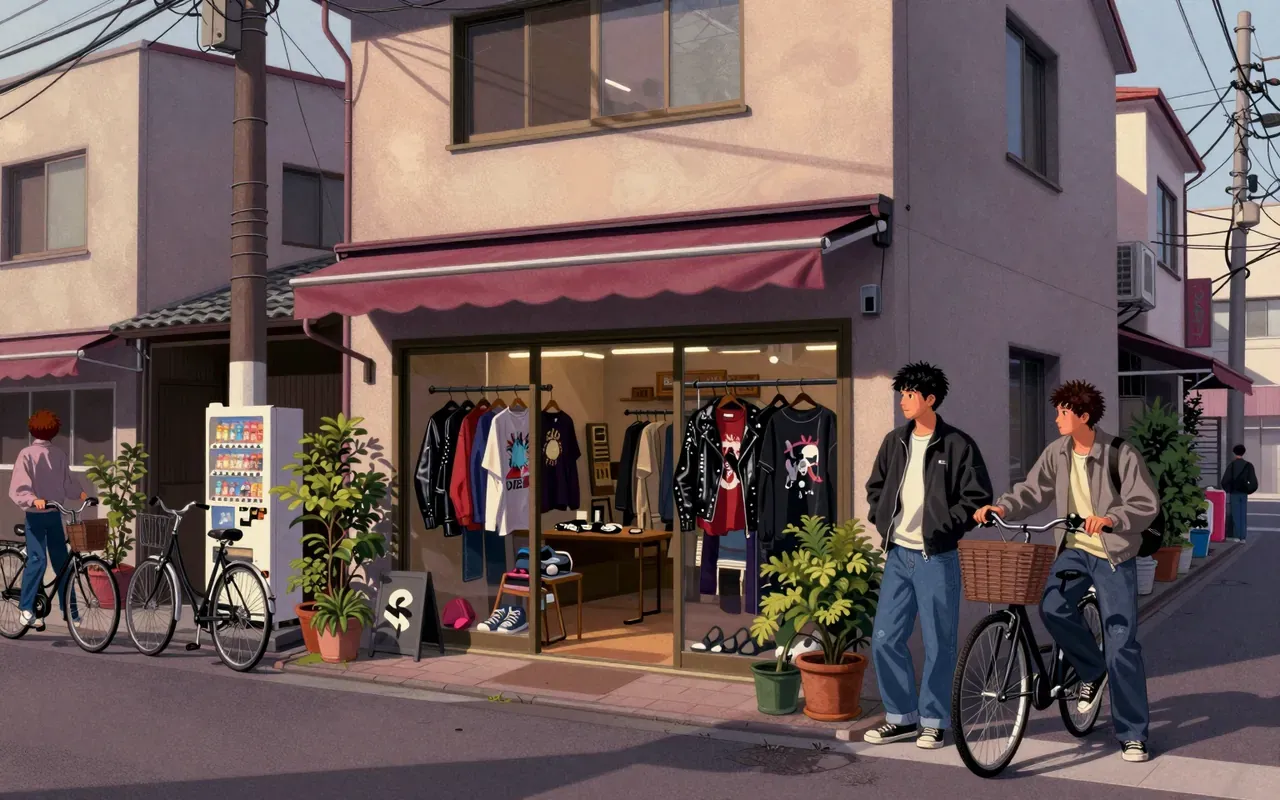
Undercover is a Japanese fashion label founded in 1993 by Jun Takahashi as a high-end streetwear label for men, women and children.

Worth your time?3.5/5Yes.Wear the whole thing.What works, what does not, who it is for ↓
9:27in productionCh. 1 · A label from Gunma/ 9:27 · ceiling 15 min
4 chapters · 9:27Ceiling 15:00

The brief is written and checked. The video joins this page when it is cut.4 chapters · 3 min read · 9:27 planned

Read the brief

Undercover was launched in 1993 by Jun Takahashi, who went on to show it in Paris and to work with Nike and Uniqlo. In 2026 Human Made announced a deal to acquire it. There is no article on the label itself, so this brief is written from the Wikipedia article on its founder.

Chapters & takeaways4
  1. 0:55
    A label from Gunma

    Jun Takahashi, born in Kiryu in 1969, launched Undercover in 1993 as a high-end streetwear label.

  2. 2:41
    Tokyo to Paris

    Tokyo Fashion Week in 1994 and 1995, Rei Kawakubo as mentor and a 1998 showing at Colette came before the label's Paris Fashion Week debut in 2002.

  3. 4:13
    Nike, Uniqlo and a Radiohead remix

    Gyakusou activewear with Nike, Uniqlo UnderCover since 2011 and a 2021 animated video for a remix of Creep.

  4. 5:57
    A planned sale to Human Made

    In 2026 Human Made signed to buy all voting shares for about 538.8 million yen, with Takahashi staying as head designer.

1 more chapterFewer chapters
Worth your time?

Yes. Wear the whole thing.

3.5/ 5
What works
  • a clear line from a 1993 launch to Paris Fashion Week
  • collaborations with Nike and Uniqlo
  • Takahashi's three Mainichi fashion grand prize awards
What does not
  • describe any garment in detail in the source
  • keep Takahashi in day-to-day management if the planned sale completes
Wear it if
  • readers following Japanese streetwear
  • anyone tracing how a Japanese label reached Paris
  • collectors of designer collaborations
Skip it if
  • anyone who wants cuts, cloths or individual garments described
Who should wear it, and who should skipHide who it is for
The written brief3 min read

What the garment is and where it came from

Undercover is a Japanese fashion label, launched in 1993 by the designer Jun Takahashi as a high-end streetwear label for men, women and children. The source spells the name UnderCover and notes that it is also written Under Cover or Undercover.

There is no article on the label itself. This brief is written from the Wikipedia article on Takahashi and says about the label only what that article does.

Takahashi was born in 1969 in Kiryu, Gunma, and in 1988 enrolled in Fashion Education at Bunka Fashion College. In his free time he sang in a cover band called Tokyo Sex Pistols, with Vivienne Westwood as his role model. In 1993 he also launched Nowhere, a retail venture in Ura-Harajuku with his friend Nigo, the founder of BAPE.

How it works, in terms someone would actually use

The source describes the label through what it showed, where and with whom, not through cut or cloth. Takahashi took part in Tokyo Fashion Week in 1994 and 1995, and a Nowhere Ltd. company store opened in Harajuku in 1995. Rei Kawakubo, who created Comme des Garcons, became his mentor and persuaded him to come to Paris. The Paris store Colette asked him to present his 1998 collection, Exchange, in its store. Undercover made its debut at Paris Fashion Week in October 2002, for Spring/Summer 2003.

What it gets right

The label has drawn partners from sport and the high street. Takahashi makes activewear lines for men and women with Nike under the name Nike x Undercover Gyakusou, and has worked with Uniqlo on Uniqlo UnderCover since 2011, a collaboration on which he worked with his wife, Morishita Riko. In 2021 he made artwork and an animated music video for a remix of Radiohead’s 1992 song Creep, a remix that Thom Yorke contributed to one of his fashion shows. The Mainichi fashion grand prize recognised him three times: the New Face Prize in 1997 and the Grand Prize in 2001 and again in 2013.

What it does not

The article does not describe a single garment, so this brief cannot say what Undercover’s clothes are made of or how they are cut. It is also due to change hands. In 2026 Nigo’s Human Made announced plans to acquire the label. A non-binding agreement was announced in June, and in September Human Made signed a definitive share-transfer agreement for 100 percent of Undercover’s voting shares for approximately 538.8 million yen in cash. Completion is planned for February 2027, and under the planned structure Takahashi would leave day-to-day management while remaining head designer.

What it changed

The article records a path, not an effect. A label launched in 1993 made its Paris Fashion Week debut about nine years later, and Takahashi also works with Nike on activewear and with Uniqlo on Uniqlo UnderCover. The same article ties the label to Nigo, the founder of BAPE, whose company Human Made is now set to buy it.

Who it is for, and who it is not

The source names the label’s market only as men, women and children, and its activewear lines as for men and women. It names no particular wearer. The label is for readers who follow Japanese streetwear and its route into Paris, and for anyone interested in collaborations between a designer label, a sportswear giant and a high-street brand. It is not for a reader who wants a garment-by-garment guide.

Is it worth your time

Yes, as a short history of a streetwear label that went from a 1993 launch to a Paris Fashion Week debut in 2002 and now faces a planned change of owner. If you need to know what the clothes are like, look elsewhere; this source is about the designer and the label’s timeline.
Same rail · Houses & movements4 of 76
10:45
Off-White (company)Virgil Abloh · 2012Off-White is a case study in how conceptual framing, visual consistency, and asset sequencing can outpace traditional luxury development cycles.
9:25
Kith (brand)Kith is a retail architecture brand that uses streetwear as its public interface. Its garments are never specified. Its authority lies in spatial sequencing, partnership logic, and gender-inclusive rollout—not silhouette, stitch or fabric.
9:33
Etro1968Etro is a family-founded Italian textile design house established in 1968. Its defining contribution is the systematic use of paisley—not as decoration but as a modular, transferable, historically grounded design language. It began with 300 antique shawls, expanded into apparel and objects through motif-first logic, and remains defined by that choice: pattern before form, archive before trend.
11:22
Marc JacobsMarc Jacobs is an American fashion designer whose career is defined by structural decisions—licensing, sub-labels, cross-category expansion—not just seasonal collections. His work begins with 1986 backing from Onward Kashiyama USA, Inc., peaks in institutional recognition (CFDA Perry Ellis Award, 1987; Women’s Designer of the Year, 1992), and expands via global licensing (Gilmar, 1995; Safilo, 2004; Coty, 2006–2007) and corporate integration (LVMH, 1997). He launched menswear in 1994, diffusion in 2001, and Heaven in 2020. His output is calibrated to hold contradiction: luxury and accessibility, fine art and fragrance, gender rigidity and fluidity—all held in place by contractual and creative frameworks, not stylistic continuity.
Up next in Fashion

Dirk Bikkembergs

· 8:29

Fashion didn’t enter the stadium—it was invited in by a designer who made players his pattern-cutters.

8:29