fashionbriefs
9:36in productionCh. 1 · What it covers/ 9:36 · ceiling 15 min
Garments

Bikini

1946

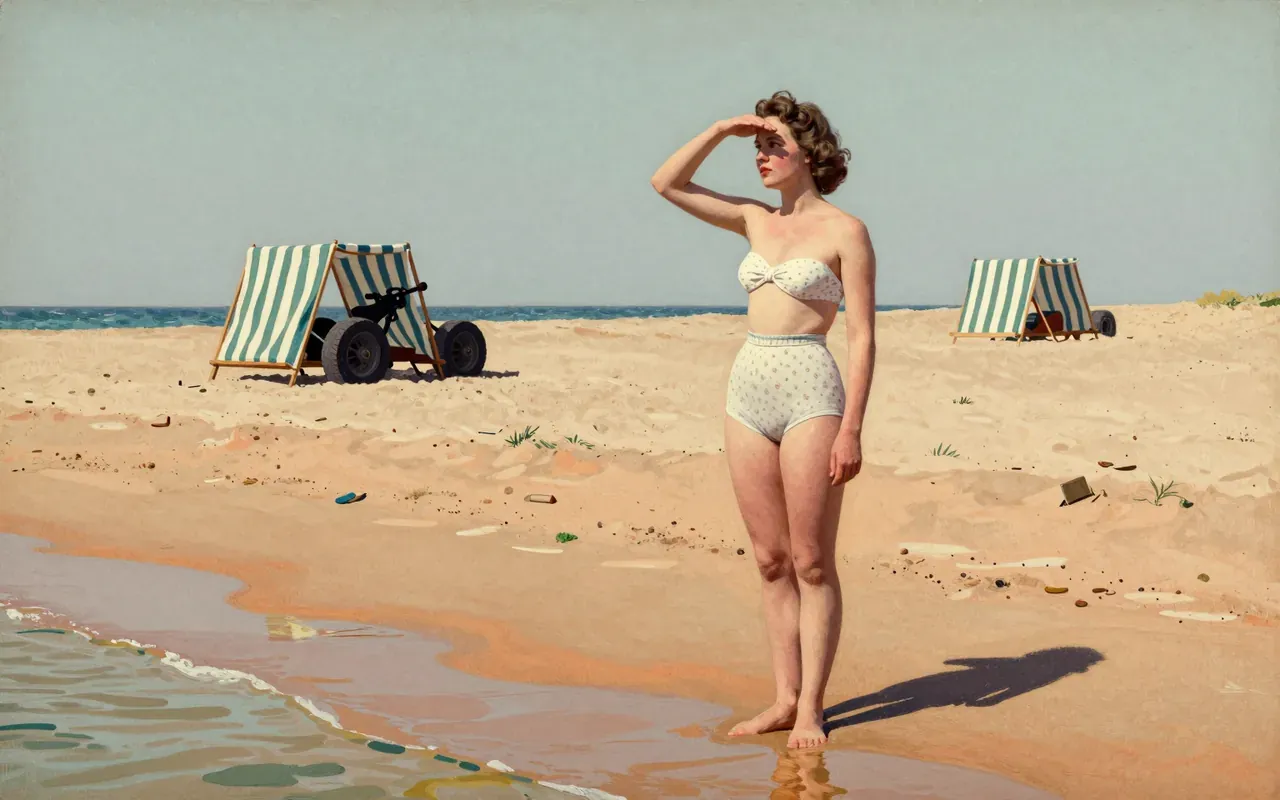
A swimsuit named after a nuclear test—and worn without irony by the mid-1960s.

A garment named after a nuclear test. Not a symbol of liberation—but a marker of how quickly violence becomes mundane.

Chapters & takeaways5
  1. 0:53
    What it covers

    It is defined by coverage: breasts and pelvis only.

  2. 1:40
    When and where it exploded

    It was launched in Paris on 5 July 1946—four days after the first US nuclear test at Bikini Atoll.

  3. 2:50
    Why it’s called that

    Réard borrowed the name 'Bikini' from the atoll’s colonial German label, itself drawn from Marshallese 'Pikinni'.

  4. 4:19
    How fast it normalised

    By the mid-1960s, it was common swimwear—and underwear—in most Western countries.

  5. 5:52
    The false ancestry

    A 5600 BCE mural in Çatalhöyük shows a figure in a costume 'somewhat like' a bikini—not proof of origin, but of recurring form.

Worth your time?

Yes. Wear the whole thing.

3.5/ 5
What works
  • as a case study in naming and normalisation
  • as evidence of cultural absorption of trauma
What does not
  • liberation
  • rebellion
  • empowerment
Wear it if
  • Western women in the 1950s and 1960s
  • beachgoers in mid-century Europe and North America
Skip it if
  • women in countries where it remained banned
  • Marshallese people displaced from Bikini Atoll
The written brief1 min read

What the thing is

A women’s two-piece swimsuit: a top covering the breasts, a bottom covering the pelvis (usually excluding the navel) and some or all of the buttocks.

Where it came from

Louis Réard, a French automotive engineer and clothing designer, introduced it in Paris on 5 July 1946. He named it after the Bikini Atoll—the site of the first public US peacetime nuclear test on 1 July 1946.

What it gets right

It names the bikini as a deliberate provocation: a two-piece swimsuit with minimal coverage, introduced in Paris on 5 July 1946, four days after the US detonated a bomb at Bikini Atoll.

What it gets wrong

It implies continuity from antiquity—citing a 5600 BCE Çatalhöyük mural—as precedent. That mural shows a goddess in a costume ‘somewhat like’ a bikini. It is not evidence of lineage. It is an anachronistic projection.

Why it matters now

Because it reveals how geopolitical violence enters daily life through naming. The bikini did not symbolise freedom. It carried the weight of the atomic age into beach culture before most people understood what that meant.

Is it worth your time

Yes—if you want to understand how a garment named after a nuclear test became ordinary. It is not about liberation or rebellion. It is about timing, naming, and the quiet absorption of shock into routine.
Same rail · Garments4 of 66
10:13
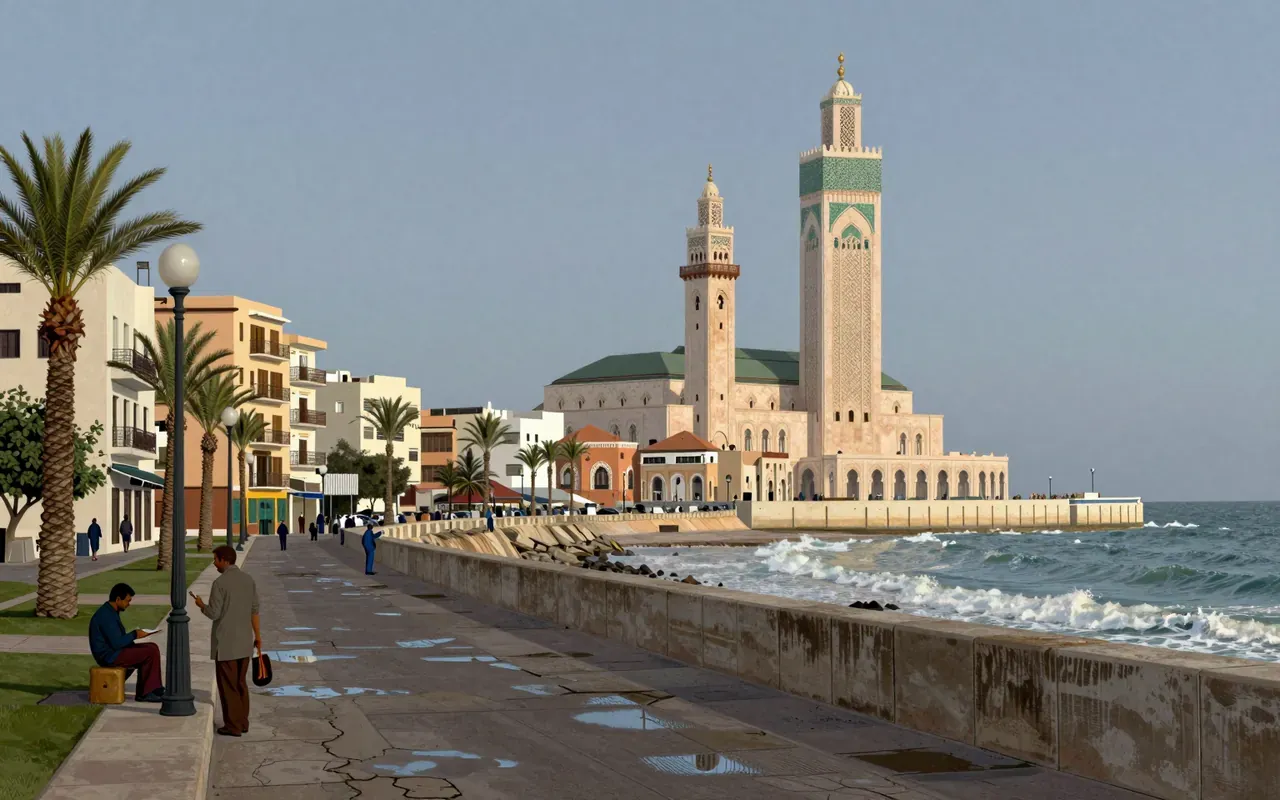
CasablancaCasablanca is a city. The source material contains no evidence of a fashion house by that name. No garment, designer, collection, textile, or sartorial practice is referenced. All claims pertain to geography, finance, industry, and infrastructure.
9:05
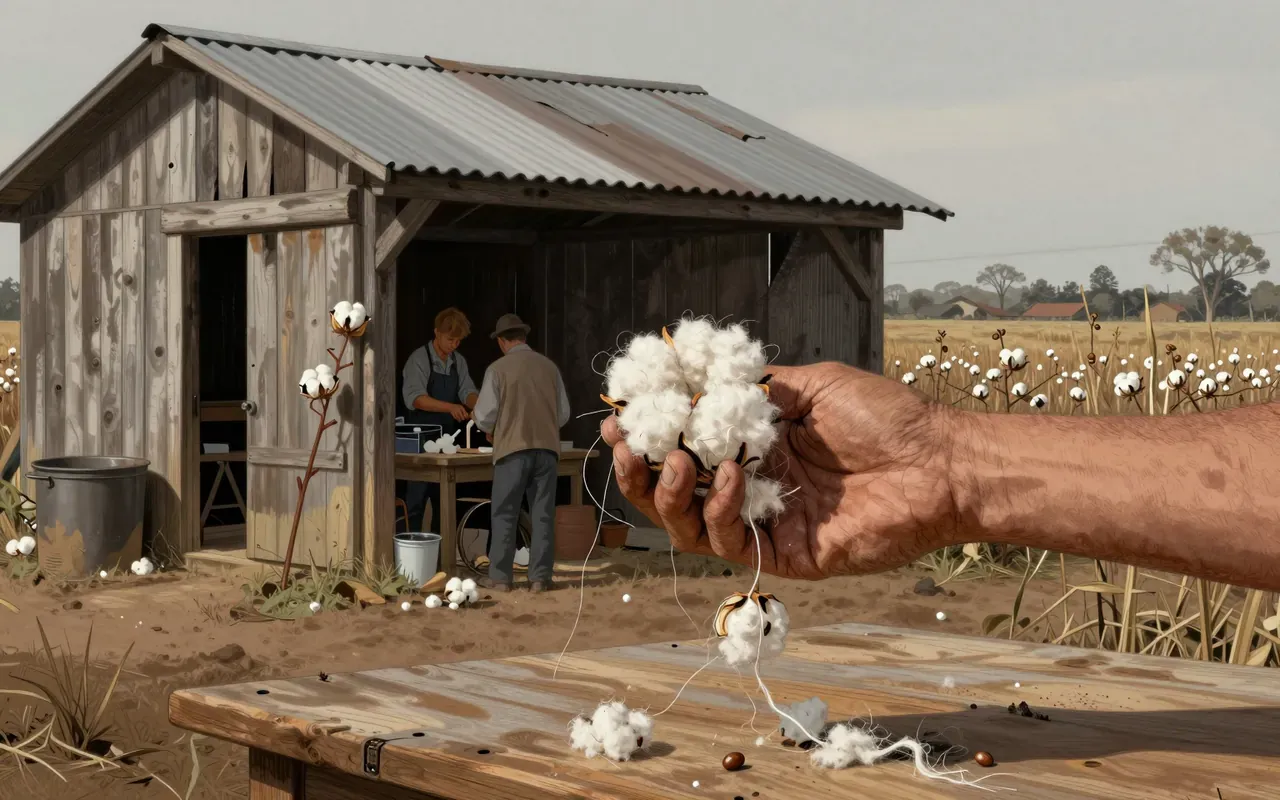
CottonCotton is a naturally occurring, soft, fluffy staple fiber derived from the bolls of Gossypium plants—shrubs native to tropical and subtropical regions across the Americas, Africa (including Egypt), and India. It is nearly pure cellulose, with minor waxes, fats, pectins, and water, and its bolls aid seed dispersal. Domesticated independently in both Old and New Worlds, cotton has been used for textiles since prehistoric times, with archaeological evidence from Peru (7th–6th millennia BC) and Pakistan (6th millennium BC). It is most commonly spun into yarn or thread to produce soft, breathable, durable fabrics.
9:48
DistressingDistressing is a surface-altering technique used on furniture and instruments to mimic age. It relies on controlled destruction of finishes — sanding, stripping, chiselling — to reveal substrate and layer history. It works best on solid pine. It does not occur on garments. It signals curated history, not lived time.
10:34
Dover Street MarketDover Street Market is a retail institution founded in 2004 by Rei Kawakubo and Adrian Joffe on Dover Street in Mayfair, London. It was conceived as a curated, art-integrated space inspired by Kensington Market, defined by Kawakubo’s phrase 'beautiful chaos'. It stocks Comme des Garçons and other selected brands, collaborates with Frieze Art Fair, Michael Hoppen Gallery and ICA, and relocated in 2016 to the former Burberry building on Haymarket.
Up next in Fashion

Blazer

1837 · 8:20

A jacket named after a naval gig crew became the world’s most portable badge of belonging—and exclusion.

8:20