fashionbriefs
9:07in productionCh. 1 · What It Is/ 9:07 · ceiling 15 min
Garments

Bra

The bra didn’t liberate women—it outsourced control from whalebone to wire, and from corsetieres to corporations.

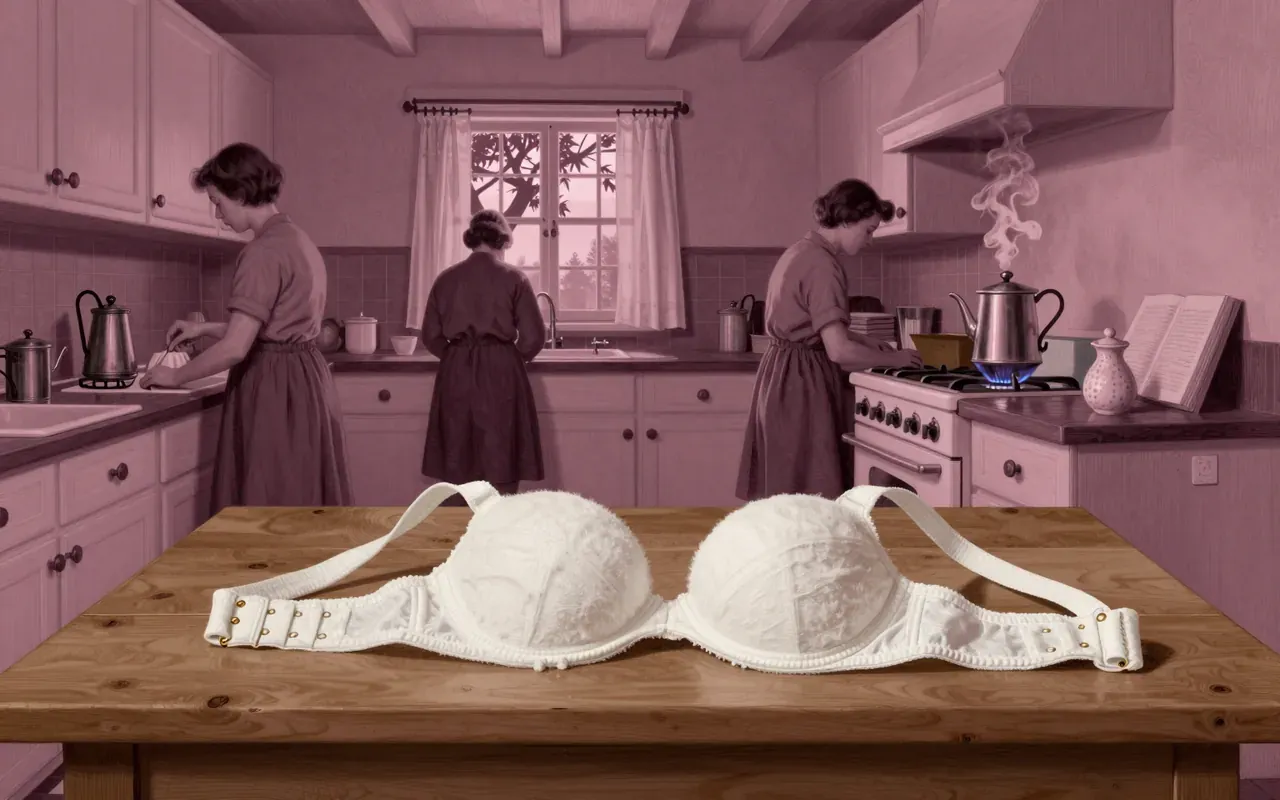
The bra is a functional apparatus built for containment, not liberation. Its origin is pragmatic, its adoption commercial, its legacy structural.

Chapters & takeaways4
  1. 1:01
    What It Is

    A bra is not a garment of choice. It is a system: band, cup, strap, fastener—each calibrated to contain.

  2. 2:10
    How It Began

    It began as a hack—not a manifesto—by a 19-year-old avoiding wardrobe failure at a party.

  3. 3:28
    How It Was Captured

    One patent. One two-woman Boston factory. Sold to Warner Brothers for mass production within months.

  4. 4:46
    What It Displaced

    It replaced the corset not because it was kinder—but because it was lighter, cheaper, and easier to scale.

Worth your time?

Yes. Wear the whole thing.

4/ 5
What works
  • replacing rigid support with flexible containment
  • enabling mass production of intimate apparel
  • shifting undergarment manufacture from bespoke to industrial
What does not
  • liberate
  • empower
  • revolutionise
Wear it if
  • women who needed alternatives to corsets
  • Warner Brothers Corset Company
Skip it if
  • women with asymmetrical or non-conforming breast tissue
  • those excluded by standard sizing
The written brief1 min read

What the thing is

A form-fitting undergarment. Chest band. Two cups. Shoulder straps. Usually back-fastening.

Where it came from

  1. Mary Phelps Jacob—later Caresse Crosby—made it in New York from two handkerchiefs and ribbon to hide a whale bone corset under a party dress.

What it gets right

It supports and covers breasts with minimal rigidity. It allows movement the corset forbids. It separates support from posture control.

What it gets wrong

It assumes uniform anatomy. It enforces a binary cup-size logic that ignores tissue distribution, density, and mobility. It displaces breath, circulation, and comfort when ill-fitted.

Why it matters now

Because its design logic still governs how women’s bodies are measured, marketed to, and medicalised—and because its origin story reveals how domestic improvisation becomes industrial property.

Is it worth your time

Yes—if you want to understand how a simple garment redefined bodily autonomy, labour, and commerce in the twentieth century.
Same rail · Garments4 of 66
10:13
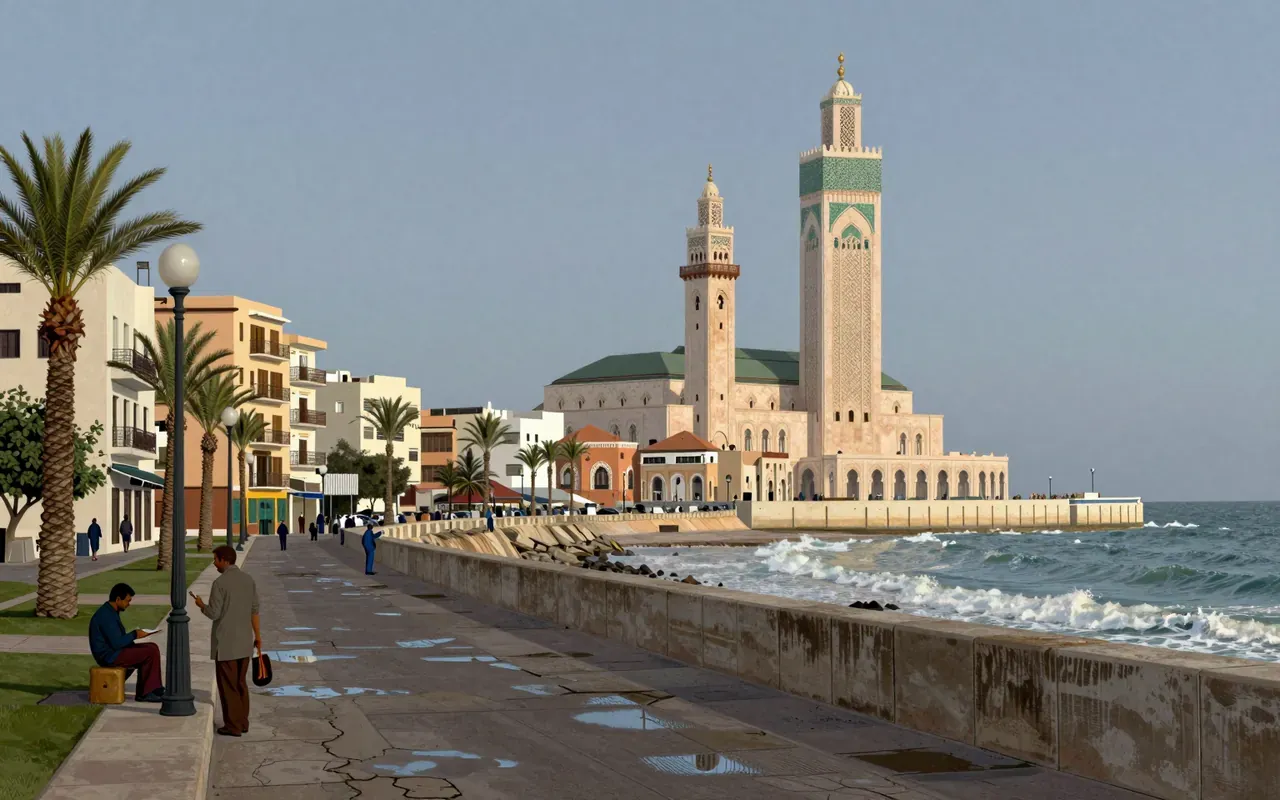
CasablancaCasablanca is a city. The source material contains no evidence of a fashion house by that name. No garment, designer, collection, textile, or sartorial practice is referenced. All claims pertain to geography, finance, industry, and infrastructure.
9:05
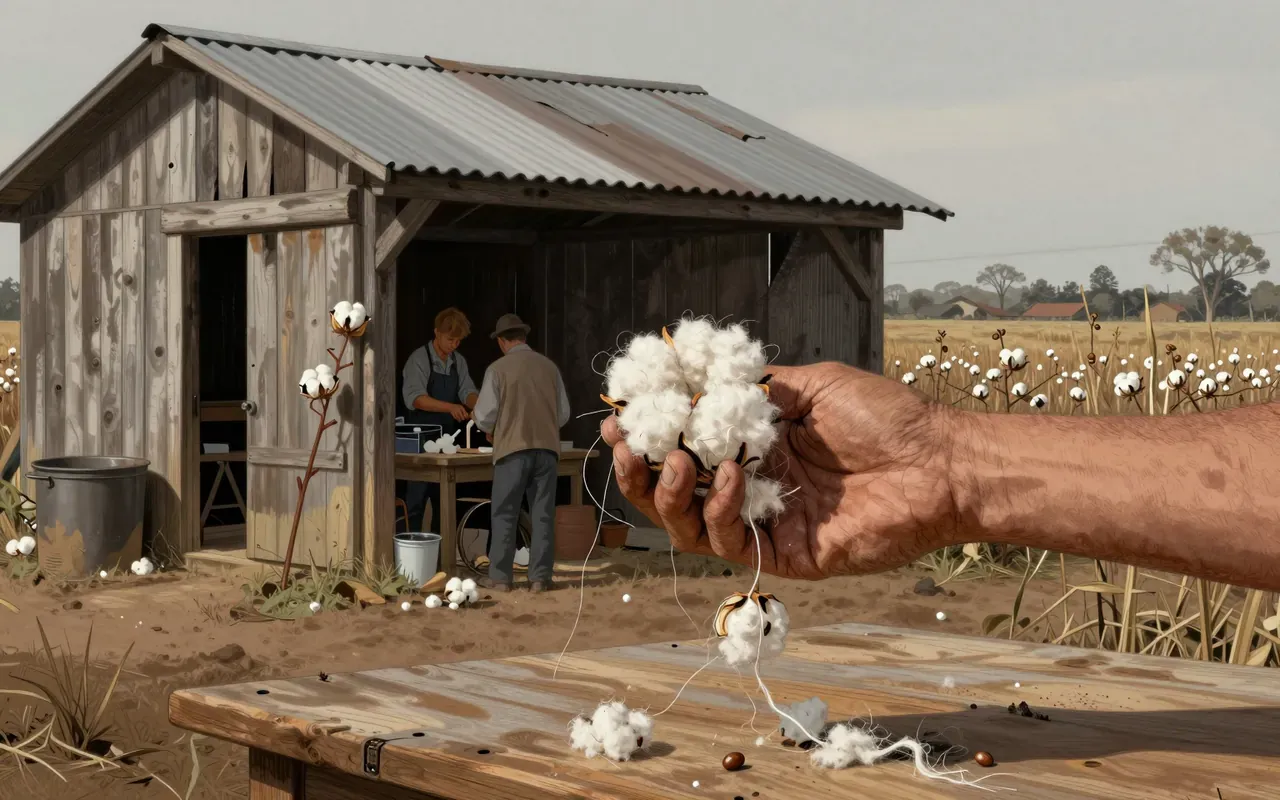
CottonCotton is a naturally occurring, soft, fluffy staple fiber derived from the bolls of Gossypium plants—shrubs native to tropical and subtropical regions across the Americas, Africa (including Egypt), and India. It is nearly pure cellulose, with minor waxes, fats, pectins, and water, and its bolls aid seed dispersal. Domesticated independently in both Old and New Worlds, cotton has been used for textiles since prehistoric times, with archaeological evidence from Peru (7th–6th millennia BC) and Pakistan (6th millennium BC). It is most commonly spun into yarn or thread to produce soft, breathable, durable fabrics.
9:48
DistressingDistressing is a surface-altering technique used on furniture and instruments to mimic age. It relies on controlled destruction of finishes — sanding, stripping, chiselling — to reveal substrate and layer history. It works best on solid pine. It does not occur on garments. It signals curated history, not lived time.
10:34
Dover Street MarketDover Street Market is a retail institution founded in 2004 by Rei Kawakubo and Adrian Joffe on Dover Street in Mayfair, London. It was conceived as a curated, art-integrated space inspired by Kensington Market, defined by Kawakubo’s phrase 'beautiful chaos'. It stocks Comme des Garçons and other selected brands, collaborates with Frieze Art Fair, Michael Hoppen Gallery and ICA, and relocated in 2016 to the former Burberry building on Haymarket.
Up next in Fashion

Burqa

· 10:22

A garment that proves modesty has never been exclusively Muslim—and never required the face to disappear.

10:22