fashionbriefs
8:20in productionCh. 1 · 1837: A Naval Gig Names a Jacket/ 8:20 · ceiling 15 min
Garments

Blazer

1837

A jacket named after a naval gig crew became the world’s most portable badge of belonging—and exclusion.

The blazer is not a neutral garment. It is a sartorial treaty signed between navy, college and street—with each signatory rewriting the terms.

Chapters & takeaways5
  1. 0:59
    1837: A Naval Gig Names a Jacket

    The word 'blazer' entered English in 1837—not from fashion, but from a Royal Navy gig crew’s striped jackets.

  2. 1:35
    1860s: Scarlet Flannel and College Identity

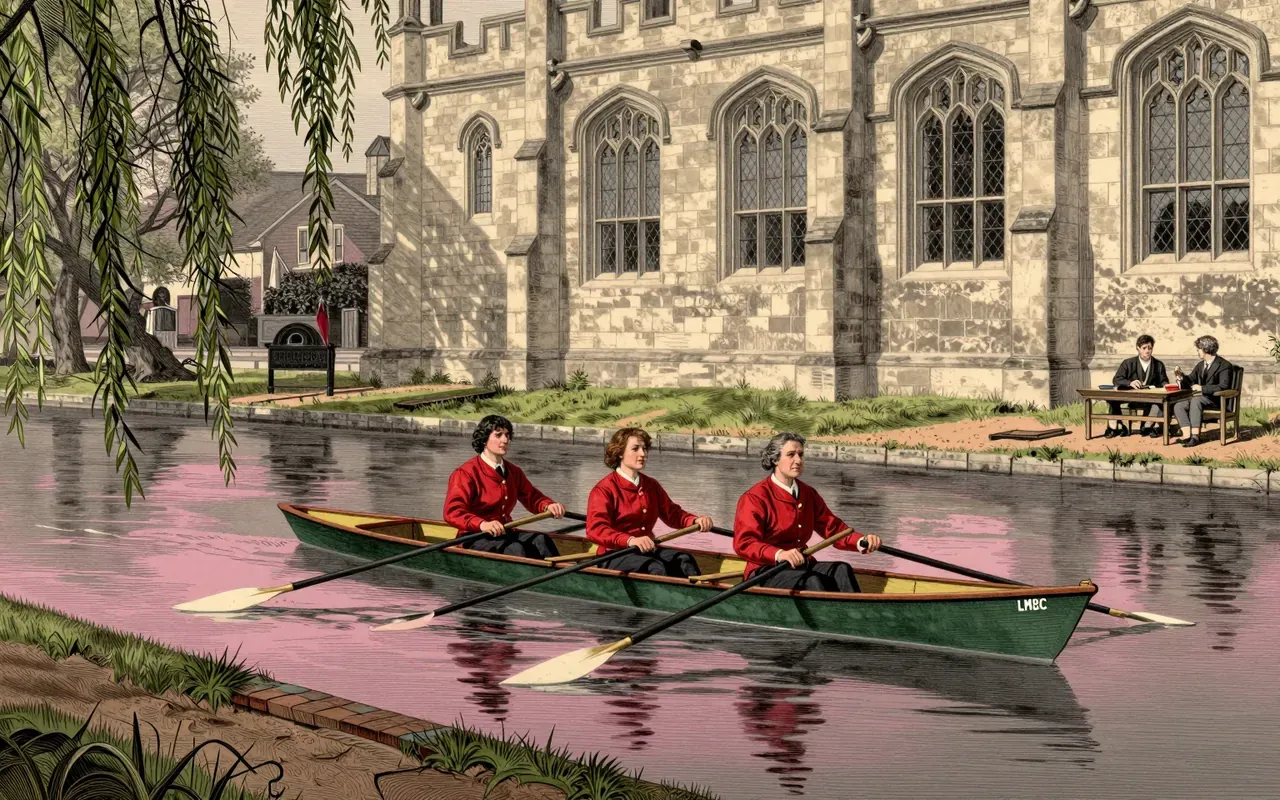
    Cambridge rowers wore red flannel blazers before the term meant anything else—and they defined it for decades.

  3. 2:45
    From Reefing Sails to Boardroom Seats

    It began as sportswear, but its naval roots—reefer jackets, brass buttons, double-breasted discipline—shaped its authority.

  4. 3:33
    1960s: Stripes as Subcultural Code

    British Mods didn’t just wear striped blazers—they reloaded them with working-class defiance.

  5. 4:43
    Late 2000s: Gender-Flipped, Not Rebuilt

    By the late 2000s, women wore blazers shorter, brighter, rolled-up—but still within a frame built for men.

Worth your time?

Yes. Wear the whole thing.

4.5/ 5
What works
  • as a precise map of sartorial borrowing
  • as evidence of how institutions export style
  • as a warning against reading garments as politically blank
What does not
  • claim influence beyond what is documented
  • confuse popularity with significance
  • treat retroactive adoption as original intent
Wear it if
  • readers tracking how clothing encodes power
  • designers studying garment evolution without mythmaking
  • students of British social history who distrust 'timeless' claims
Skip it if
  • those seeking origin myths or heroic innovation narratives
  • readers who assume gender-inclusive adoption erases patriarchal structure
The written brief1 min read

What the thing is

A lightweight sports jacket. Traditionally navy or striped wool or linen. Structured. Often double-breasted. Defined by contrast: sportswear made formal, uniform made wearable.

Where it came from

Two sources in the 1830s–1860s: HMS Blazer’s blue-and-white striped jackets (1837), and the scarlet flannel boating jackets of St John’s College, Cambridge’s Lady Margaret Boat Club (founded 1825, jackets worn from at least the 1860s). It descends from the naval reefer jacket.

What it gets right

It establishes clear visual hierarchy. Double-breasted cuts, brass buttons, structured shoulders signal authority without speech.

What it gets wrong

It pretends neutrality. The blazer never shed its origins in elite collegiate sport or naval command. Its adoption by women in the late 2000s did not erase that lineage—it repurposed it.

Why it matters now

Because it is still being weaponised—by schools enforcing conformity, by brands selling ‘power dressing’ to women, by mods reviving stripes as anti-establishment shorthand. Its grammar remains legible, even when its syntax is rewritten.

Is it worth your time

Yes—if you care how a garment named after a naval gig crew became a vessel for class, gender and subcultural signalling.
Same rail · Garments4 of 66
10:13
CasablancaCasablanca is a city. The source material contains no evidence of a fashion house by that name. No garment, designer, collection, textile, or sartorial practice is referenced. All claims pertain to geography, finance, industry, and infrastructure.
9:05
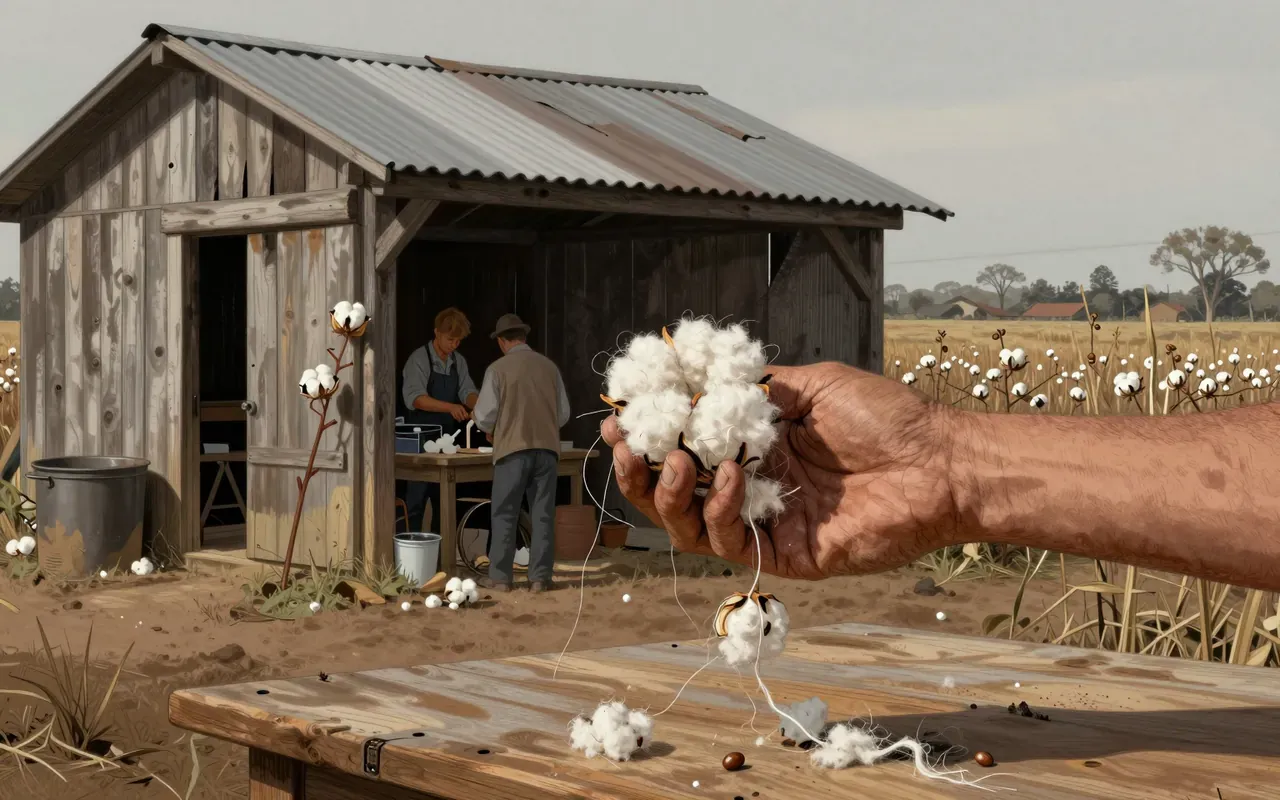
CottonCotton is a naturally occurring, soft, fluffy staple fiber derived from the bolls of Gossypium plants—shrubs native to tropical and subtropical regions across the Americas, Africa (including Egypt), and India. It is nearly pure cellulose, with minor waxes, fats, pectins, and water, and its bolls aid seed dispersal. Domesticated independently in both Old and New Worlds, cotton has been used for textiles since prehistoric times, with archaeological evidence from Peru (7th–6th millennia BC) and Pakistan (6th millennium BC). It is most commonly spun into yarn or thread to produce soft, breathable, durable fabrics.
9:48
DistressingDistressing is a surface-altering technique used on furniture and instruments to mimic age. It relies on controlled destruction of finishes — sanding, stripping, chiselling — to reveal substrate and layer history. It works best on solid pine. It does not occur on garments. It signals curated history, not lived time.
10:34
Dover Street MarketDover Street Market is a retail institution founded in 2004 by Rei Kawakubo and Adrian Joffe on Dover Street in Mayfair, London. It was conceived as a curated, art-integrated space inspired by Kensington Market, defined by Kawakubo’s phrase 'beautiful chaos'. It stocks Comme des Garçons and other selected brands, collaborates with Frieze Art Fair, Michael Hoppen Gallery and ICA, and relocated in 2016 to the former Burberry building on Haymarket.
Up next in Fashion

Boubou (clothing)

· 9:36

The boubou is not heritage—it’s a garment forged in desert trade, weaponised by empire, and repurposed by colonisers.

9:36