What the garment is and where it came from
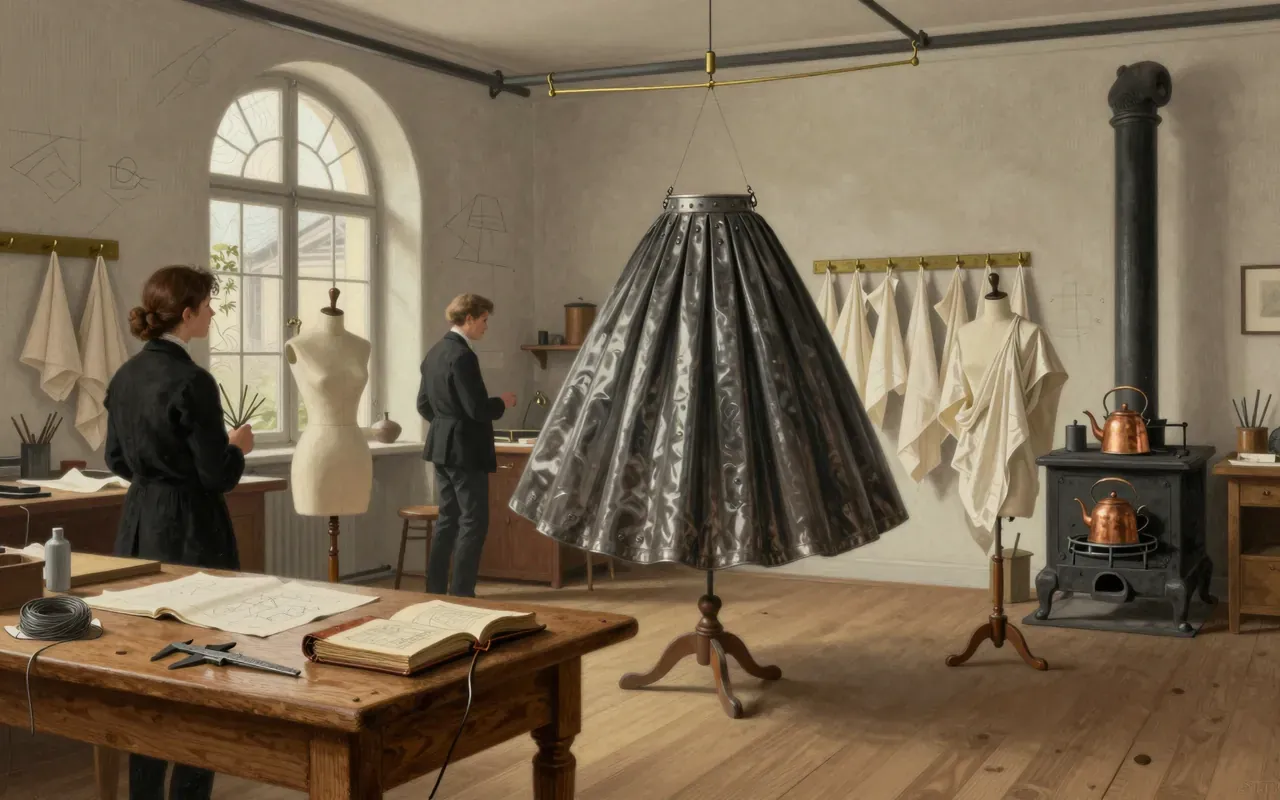
A bustle is a padded undergarment or wire frame used to add fullness, or support the drapery, at the back of women’s dresses in the mid-to-late 19th century. It is worn under the skirt at the back, just below the waist.
Women had long shaped their skirts to accentuate the back of the hips. Padded cushions, called “bum rolls”, “bearers” and “cork rumps”, were used in Europe, with sporadic popularity from the 16th century, and were especially popular in France in the late 18th century. The crinoline, an integrated padded petticoat, developed from this technology, and the more elaborate and specialised bustle eventually replaced it.
How it works, in terms someone would actually use
Heavy fabric tends to pull the back of a skirt down and flatten it. A petticoated skirt would lose its shape in everyday wear, from merely sitting down or moving about. The bustle sits under the back of the skirt, just below the waist, and keeps the skirt from dragging.
In the early stage the fullness at the back was carried quite low and often fanned out into a train. Later it became a pronounced hump just below the waist, with the fabric falling sharply to the floor.
What it gets right
It solves a specific problem: where a heavy skirt sags, it holds the fabric up. When the overskirt of the late 1860s was draped up toward the back, some kind of support was needed for the new shape, and the bustle supplied it. Fullness of some sort was also considered necessary to make the waist look smaller.
What it does not
The wireframe bustle was popular only very briefly. Its relative the crinolette, a crinoline that created a shape very like a bustle, was more restrictive than a traditional crinoline: the flat front and bulk behind made sitting down more difficult.
What it changed
The bustle replaced the crinoline completely and was worn in different shapes for most of the 1870s and 1880s. The transition shows in the loops and gathers of fabric and trimming of 1863-1872, as crinolines flattened at the front and sides. The late bustle, from late 1881, grew into a major feature of fashion, and by 1885 reached proportions that look preposterous to modern eyes.
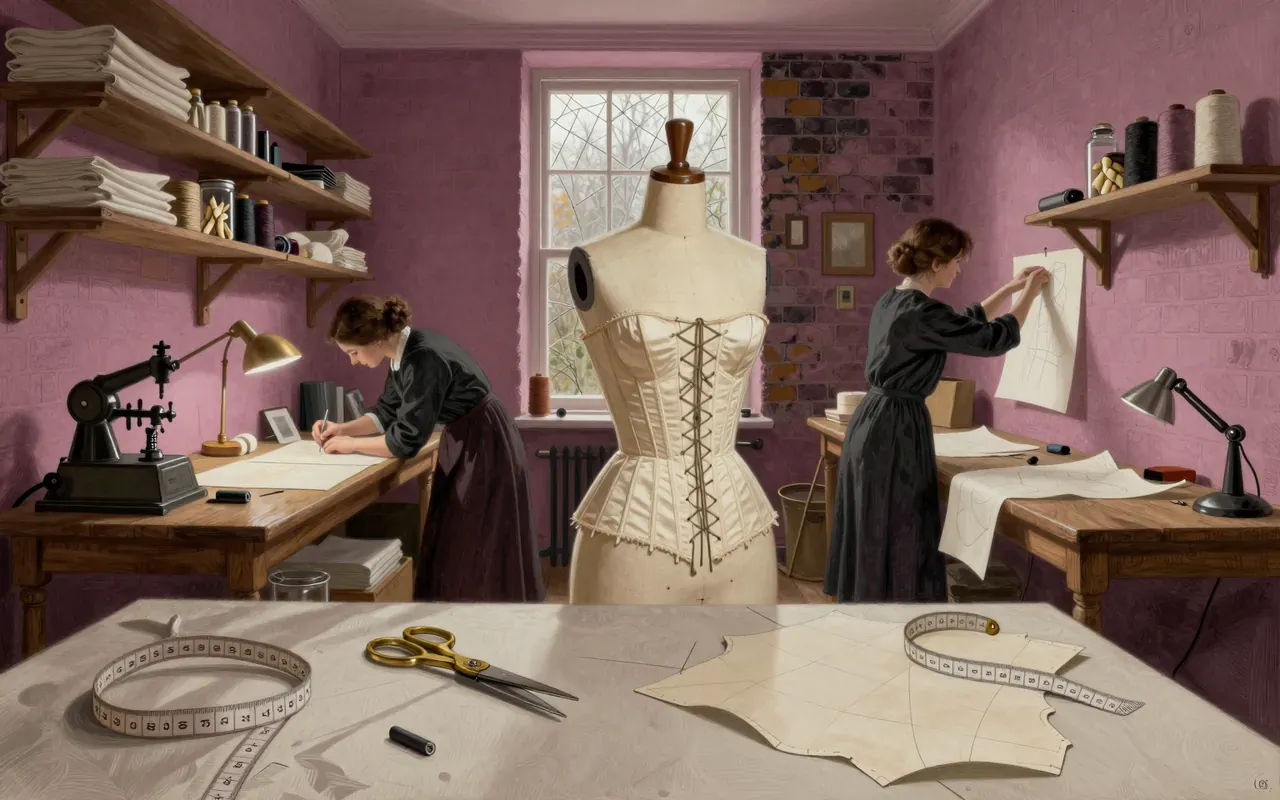
The fashion for large bustles ended in 1889. The bustle survived into the 1890s and early 20th century, and had disappeared by 1905, when the long corset shaped the body to protrude behind. Some women also gave it up for more practical dress to use the newly invented bicycle. Simpler padded cushions returned after the bustle went out of fashion.
Who it is for, and who it is not
Bustles and bustle gowns are rarely worn today. Exceptions survive in haute couture and bridal fashion, and among neo-Victorian circles including the steampunk, Gothic and Lolita subcultures. They are also used in period costuming for film and theatre. In the 1992 film Bram Stoker’s Dracula, costume designer Eiko Ishioka won an Academy Award, and the film features several extravagant bustle gowns made for Winona Ryder and Sadie Frost.
Is it worth your time
Yes, if you study or design period dress: it explains how a heavy skirt was kept in shape and how the silhouette moved from crinoline to bustle to corset. For everyday wear, it is a costume or bridal choice rather than a wardrobe item.