What the thing is
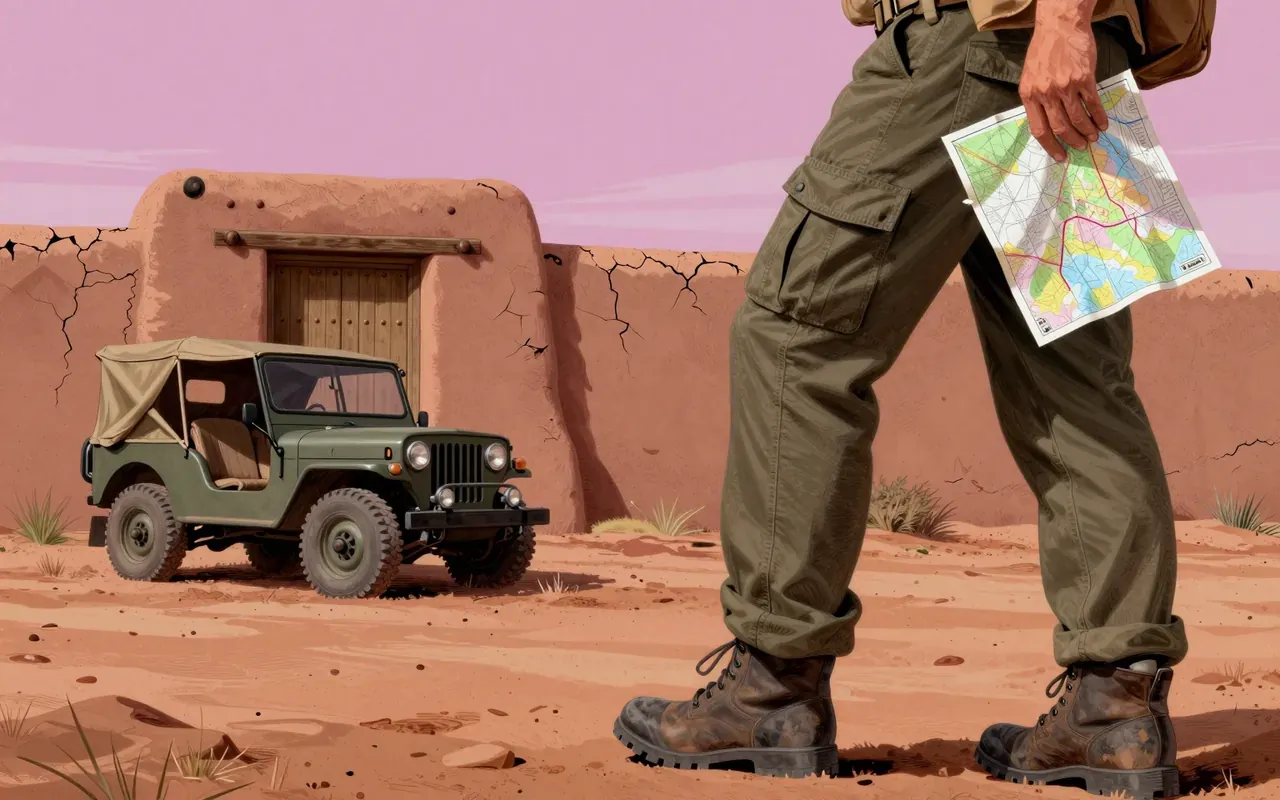
Cargo pants are loose-fitting trousers with multiple large external utility pockets.
A cargo pocket is a patch pocket, often bellowed to increase capacity, and closed with a flap held by a button, snap, Velcro or magnet. In some designs the pockets are hidden inside the legs. The trousers are made of hard-wearing, ruggedly stitched fabric, with felled seams for strength and durability, and are cut to allow bending at the knee and hip. Many now use quick-drying synthetic or cotton-synthetic blends, and oversized belt loops are common so that a wide webbing belt fits.
Where it came from
They originated in 1938 as part of British Armed Forces battle dress, designed to hold field dressings and maps.
Battle dress reached the United States in the mid-1940s, during the Second World War. The paratrooper uniform copied the large pockets to leave more room for K rations and extra ammunition.
What it gets right
Cargo pants solve a real problem: carrying things hands-free in active, unpredictable environments.
The cut also travelled. Cargo shorts are the same trousers shortened to the knee, and some pairs have removable lower legs. In 1980 cargo shorts were marketed as ideal for the sportsman or fisherman, because the pocket flaps kept the contents from falling out. By the mid-to-late 1990s they were popular in mainstream men’s fashion. EMT pants are a specialist variant, with six-way cargo pockets, calf pockets for glove storage and three slots for scissors.
What it gets wrong
They pretend to be rugged while prioritising silhouette over substance—pockets are often sewn shut or too shallow for actual use.
Why it matters now
Their Y2K-era revival exposes how nostalgia flattens history—military utility is repackaged as ironic leisurewear, divorced from context.
Is it worth your time
Yes—if you care about how utility becomes identity, and how fashion recycles function without remembering why.