fashionbriefs
9:10in productionCh. 1 · Form/ 9:10 · ceiling 15 min
Accessories

Fedora

A hat named after a woman’s role in a French play—and then made to forget her.

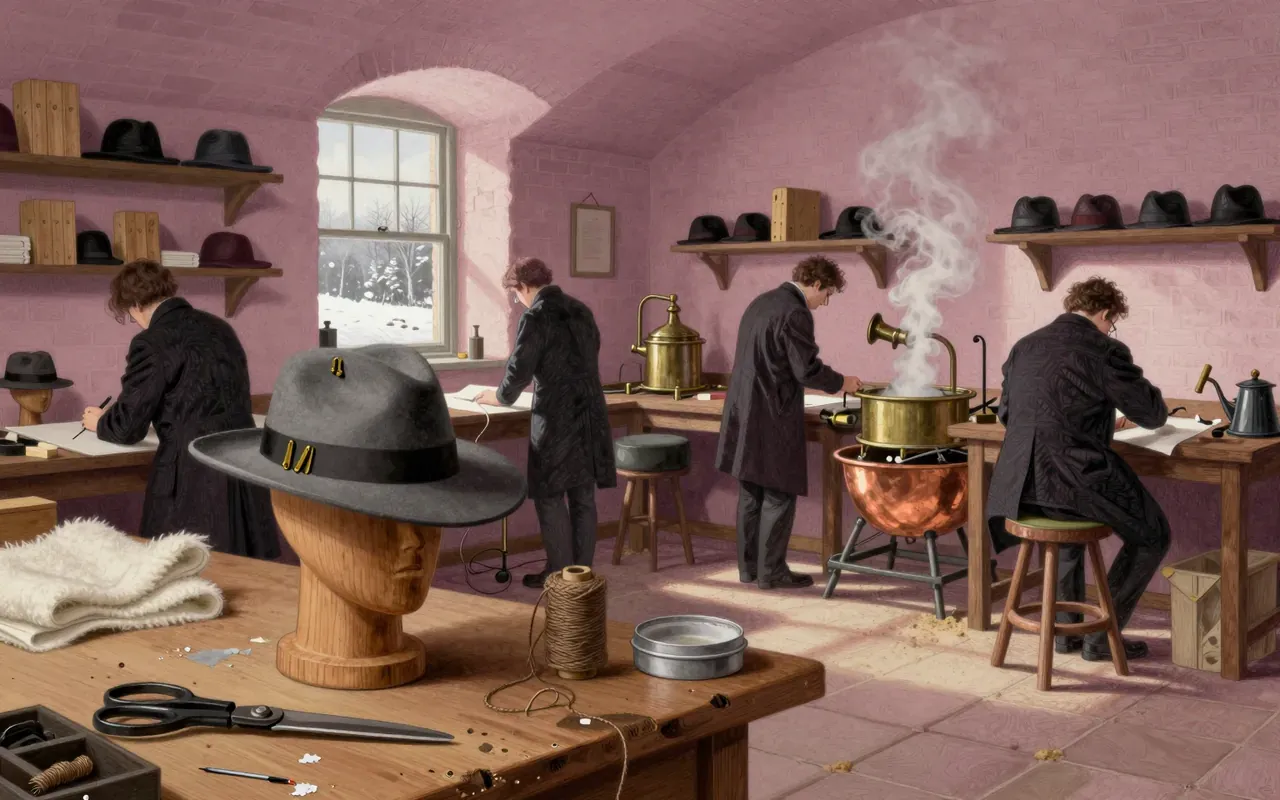
The fedora is a standardised hat form with theatrical origins and industrial execution. It succeeded by being reproducible, adaptable, and legible—but failed to retain the meaning of its name. Its endurance is not cultural authority. It is semantic drift made wearable.

Chapters & takeaways4
  1. 0:50
    Form

    It is defined by two physical traits: a soft brim and an indented crown.

  2. 2:34
    Measure

    Its dimensions are standardised: 4.5 inches tall, 2.5 inches wide.

  3. 4:06
    Material

    It can be made from at least eleven materials—from beaver felt to waxed cotton.

  4. 5:07
    Name

    It was named after a play, not a person, place, or craft tradition.

Worth your time?

Yes. Wear the whole thing.

3.5/ 5
What works
  • as a case study in naming and erasure
  • as evidence of early mass-produced headwear
What does not
  • culture/arts
  • culture/cities
  • culture/food
  • culture/generations
Wear it if
  • people who study dress as language
  • readers of Victorian-era theatre history
  • milliners and pattern-makers
Skip it if
  • those seeking influence on music or film
  • anyone expecting a political movement
The written brief1 min read

What the thing is

A fedora is a soft-brimmed hat with an indented crown, typically creased lengthwise and pinched at the front. Its crown is usually 4.5 inches tall; its brim around 2.5 inches wide.

Where it came from

The word ‘fedora’ entered English by 1891, borrowed from Victorien Sardou’s 1882 play Fédora, written for Sarah Bernhardt and first staged in the US in 1889.

What it gets right

It delivers precise, repeatable headwear: a soft-brimmed, indented-crown shape with standardised dimensions (4.5-inch crown, 2.5-inch brim) and adaptable construction.

What it gets wrong

It pretends neutrality. Its origins in a French play performed by Sarah Bernhardt—a woman—were quickly erased as it became a default male accessory, then a retro signifier divorced from its theatrical, gendered birth.

Why it matters now

It persists as a cipher: worn by politicians to signal tradition, by subcultures to signal irony, and by algorithms to classify ‘vintage menswear’—all while its original theatrical, feminine context remains invisible.

Is it worth your time

Yes—if you care about how a single garment’s form, material, and name encode over a century of shifting class signals, gender codes, and industrial standardisation.

Same rail · Accessories4 of 19
8:40
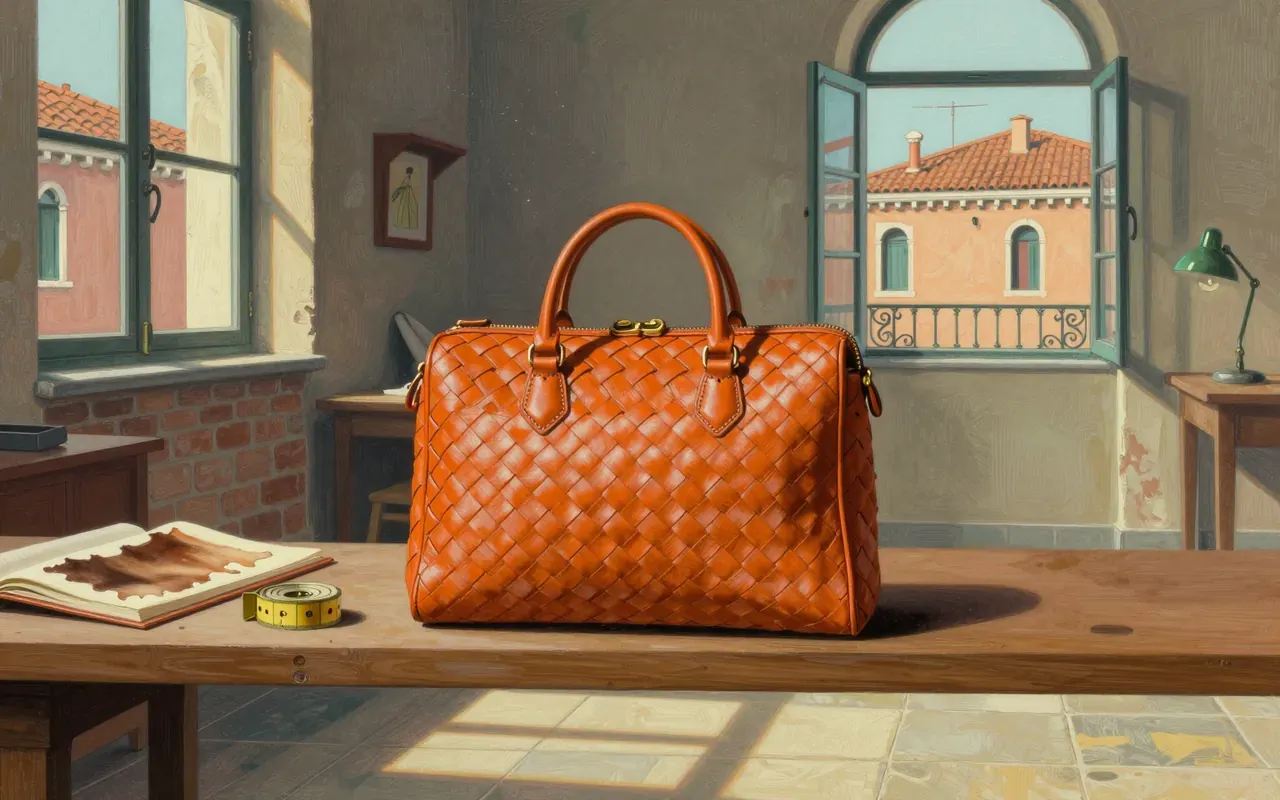
Bottega Veneta1966Bottega Veneta (1966) is defined by Intrecciato: a leather weaving technique that interlaces strips through slits. It is not clothing. It is structural. It trades seamlessness for resilience. It demands attention to making—not just wearing.
9:35
G-Shock1983The G-Shock is not fashion. It is infrastructure for the wrist.
11:16
Lady DiorThe Lady Dior is a handbag named commercially by Christian Dior to honor Diana, Princess of Wales. Designed by Gianfranco Ferré in 1994, it was first called Chouchou, then Princesse, before being renamed Lady Dior. Commissioned by Bernadette Chirac for Diana’s 1995 Paris visit, it was presented in black at the Cézanne exhibition inauguration at the Grand Palais. Diana carried it publicly in Birmingham, Argentina, and on several further occasions. Its cannage motif derives from Napoleon III chairs and a neo-Louis XVI medallion armchair in Dior’s Avenue Montaigne mansion. The bag comprises 144 pieces, is rectangular and rigid, and features D-I-O-R letter charms and the Dior logo on the handle. It is produced in numerous materials including leather, velvet, microfiber, satin, denim, python, crocodile, tweed, and jacquard. Two hundred thousand units were sold in two years, increasing Dior’s leather goods turnover tenfold.
11:05
Dior Saddle bagThe Dior Saddle bag is a 1999 John Galliano creation that fused equestrian form with Lauryn Hill’s 1998 music video styling. It debuted in October 1999 during Dior’s Spring/Summer 2000 show. Commentators described it as a radical departure — 'funky, streetwise and cool'. It uses hand-stitched piping and comes in denim and leather. Dior did not confirm speculation about Helmut Newton’s influence, though early campaigns leaned into sensuality.
Up next in Fashion

Fez (hat)

· 9:04

A red hat designed to erase identity became the ultimate symbol of what the state wanted to erase.

9:04