fashionbriefs
10:00in productionCh. 1 · Not new. Updated./ 10:00 · ceiling 15 min
Accessories

Chanel 2.55

A handbag designed to free women’s hands became a reliquary for Chanel’s past — and a template for turning biography into brand dogma.

The Chanel 2.55 is a functional object turned cultural cipher — its innovations real, its symbolism rooted, its legacy inflated.

Chapters & takeaways5
  1. 1:01
    Not new. Updated.

    The 2.55 was not an invention but a deliberate update — of Chanel’s own 1929 design, timed to her 1954 comeback.

  2. 2:07
    Function first

    Chanel designed the double-chain strap to free women’s hands at social functions — solving a real, observed constraint.

  3. 3:16
    Biography built in

    Every material choice — burgundy lining, chain straps, quilted exterior — maps directly to Chanel’s lived experience: convent, orphanage, stables.

  4. 4:44
    Private storage, public form

    Two compartments served specific, intimate purposes: love letters behind the front flap, money behind the back flap.

  5. 5:51
    From memory to mark

    Karl Lagerfeld’s 1980s redesign added the Chanel logo to the clasp and lock — shifting emphasis from personal symbol to corporate signature.

Worth your time?

Yes. Wear the whole thing.

4/ 5
What works
  • as a functional solution
  • as a vessel for personal reference
  • as a durable industrial form
What does not
  • influence
  • define
  • start
  • revolutionise
Wear it if
  • women attending social functions
  • Chanel herself
  • later designers working within branded constraints
Skip it if
  • working-class women
  • those needing practical daily carry
The written brief1 min read

What the thing is

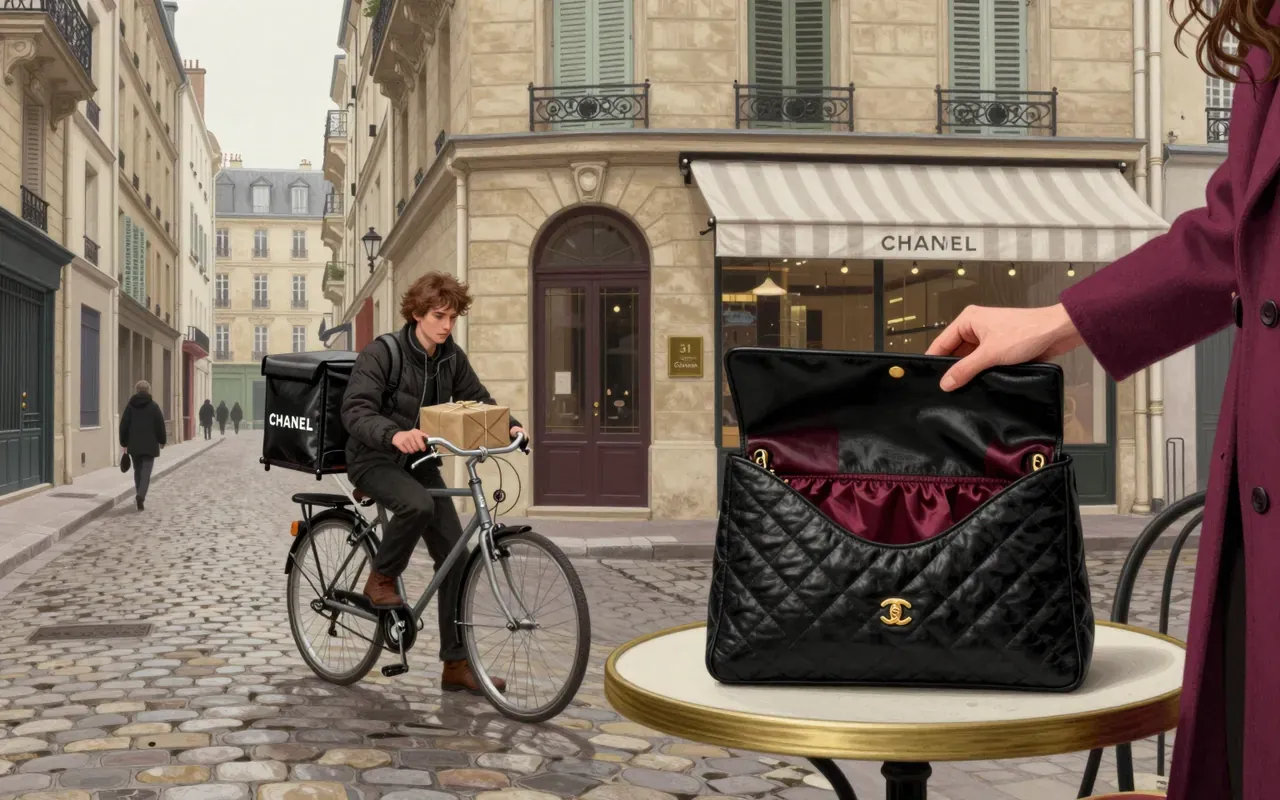
The Chanel 2.55 is a quilted, burgundy-lined handbag with a double-chain shoulder strap and two external flaps — one for money, one concealing a zippered compartment rumoured to hold love letters.

Where it came from

It evolved from Chanel’s 1929 handbag, inspired by soldiers’ bags. She redesigned it in February 1955 after her 1954 comeback, drawing on her convent upbringing and equestrian culture.

What it gets right

It solved a functional problem: freeing women’s hands during social functions. It embedded personal history — convent keys, jockey jackets, love letters — into everyday objects. It made utility symbolic without sacrificing clarity.

What it gets wrong

It presumes all women needed or wanted the same solution: a structured, quilted, chain-strapped bag. It displaces earlier handbag forms without acknowledging their variety or users’ agency.

Why it matters now

It reveals how luxury objects become vessels for myth-making — where verified detail (burgundy lining, chain straps) anchors invented narrative (love letters), and where later updates (Lagerfeld’s 1980s logo clasp) cement legacy over original intent.

Is it worth your time

Yes — if you care how design encodes biography, not just branding.
Same rail · Accessories4 of 20
Up next in Fashion

Leather jacket

· 8:42

A leather jacket protects the body—but never the ideology worn beneath it.

8:42