fashionbriefs
9:10in productionCh. 1 · What It Is Called/ 9:10 · ceiling 15 min
Garments

Kimono

The kimono isn’t timeless—it’s a bureaucratic consolidation of borrowed cloth.

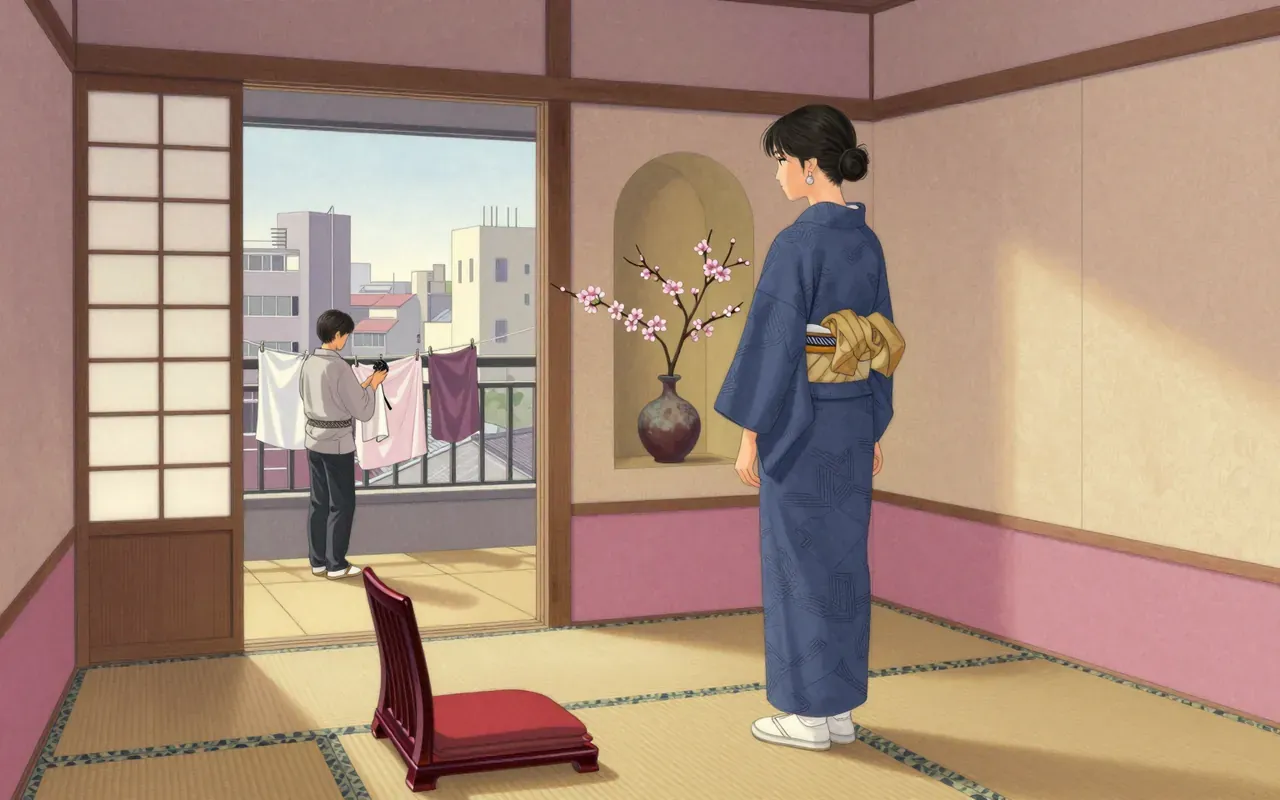
The kimono is a traditional Japanese garment and the national dress of Japan. Its origins lie in Chinese clothing introduced during the Kofun period (300–538 CE). It evolved through the Yamato-to-Nara period (300–794), diverged in the Heian period (794–1185) with garments like the jūnihitoe, and matured from the kosode during the Edo period (1603–1868). Until the Edo period, garments resembling modern kimonos were collectively referred to as kosode. The Edo period marks when the kosode developed into the direct predecessor of the modern kimono.

Chapters & takeaways4
  1. 0:56
    What It Is Called

    The kimono is officially Japan’s national dress—but that designation isn’t in the sources.

  2. 2:39
    Where It Came From

    The first kimono-like garments arrived from China in the Kofun period, not from indigenous invention.

  3. 4:06
    When It Became Japanese

    Japanese designers actively broke from Chinese styles in the late ninth century—creating garments like the jūnihitoe.

  4. 5:29
    When It Became Modern

    The kosode was the direct predecessor—and only in the Edo period did it become recognisable as the modern kimono.

Worth your time?

Yes. Wear the whole thing.

3.5/ 5
What works
  • as-a-chronological-framework-for-garment-evolution
  • as-a-corrective-to-myths-of-pure-origin
What does not
  • colonialism
  • identity
Wear it if
  • students-of-material-culture
  • design-historians
  • policy-makers-on-cultural-heritage
Skip it if
  • casual-viewers-seeking-inspiration
  • costume-designers-needing-patterns
The written brief1 min read

What the thing is

The kimono is a traditional Japanese garment. It is defined by its T-shape, straight seams, wrapped front, and obi sash. It is the national dress of Japan.

Where it came from

Kimono-like garments originated as Chinese clothing introduced during the Kofun period (300–538 CE). They evolved through the Yamato-to-Nara period (300–794), diverged in the Heian period (794–1185) with garments like the jūnihitoe, and matured from the kosode during the Edo period (1603–1868).

What it gets right

It establishes continuity across 1,500 years of Japanese garment history. It names precise periods—Kofun, Heian, Edo—and links them to material changes: Chinese import, divergence into jūnihitoe and kosode, then formalisation into the modern kimono.

What it gets wrong

It mislabels the kimono as the ‘national dress of Japan’ without acknowledging that this status was imposed in the Meiji era (1868–1912), not inherited. The sources say nothing about Meiji policy, state promotion, or displacement of Western dress—so the claim stands unsupported.

Why it matters now

Because it is routinely invoked as a symbol of cultural authenticity—yet the sources show it is a layered, imported, bureaucratised form. That gap between myth and documented evolution is where contemporary debates about appropriation, heritage, and nationalism play out.

Is it worth your time

Yes—if you want to understand how national dress is built from foreign imports, elite adaptation, and bureaucratic standardisation—not organic tradition.

Same rail · Garments4 of 66
10:13
CasablancaCasablanca is a city. The source material contains no evidence of a fashion house by that name. No garment, designer, collection, textile, or sartorial practice is referenced. All claims pertain to geography, finance, industry, and infrastructure.
9:05
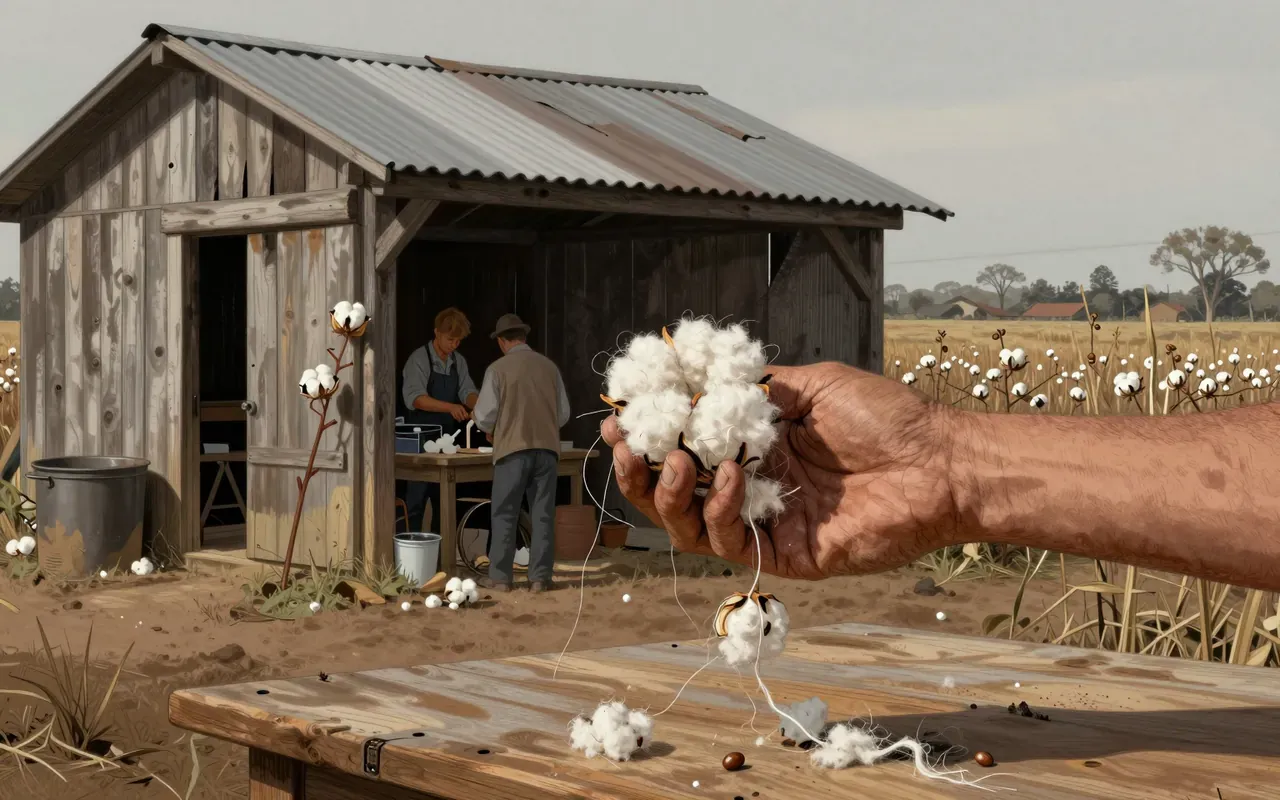
CottonCotton is a naturally occurring, soft, fluffy staple fiber derived from the bolls of Gossypium plants—shrubs native to tropical and subtropical regions across the Americas, Africa (including Egypt), and India. It is nearly pure cellulose, with minor waxes, fats, pectins, and water, and its bolls aid seed dispersal. Domesticated independently in both Old and New Worlds, cotton has been used for textiles since prehistoric times, with archaeological evidence from Peru (7th–6th millennia BC) and Pakistan (6th millennium BC). It is most commonly spun into yarn or thread to produce soft, breathable, durable fabrics.
9:48
DistressingDistressing is a surface-altering technique used on furniture and instruments to mimic age. It relies on controlled destruction of finishes — sanding, stripping, chiselling — to reveal substrate and layer history. It works best on solid pine. It does not occur on garments. It signals curated history, not lived time.
10:34
Dover Street MarketDover Street Market is a retail institution founded in 2004 by Rei Kawakubo and Adrian Joffe on Dover Street in Mayfair, London. It was conceived as a curated, art-integrated space inspired by Kensington Market, defined by Kawakubo’s phrase 'beautiful chaos'. It stocks Comme des Garçons and other selected brands, collaborates with Frieze Art Fair, Michael Hoppen Gallery and ICA, and relocated in 2016 to the former Burberry building on Haymarket.
Up next in Fashion

Sari

· 9:16

The sari isn’t tradition—it’s deep-time infrastructure for the body.

9:16