fashionbriefs
9:16in productionCh. 1 · Where it began/ 9:16 · ceiling 15 min
Garments

Sari

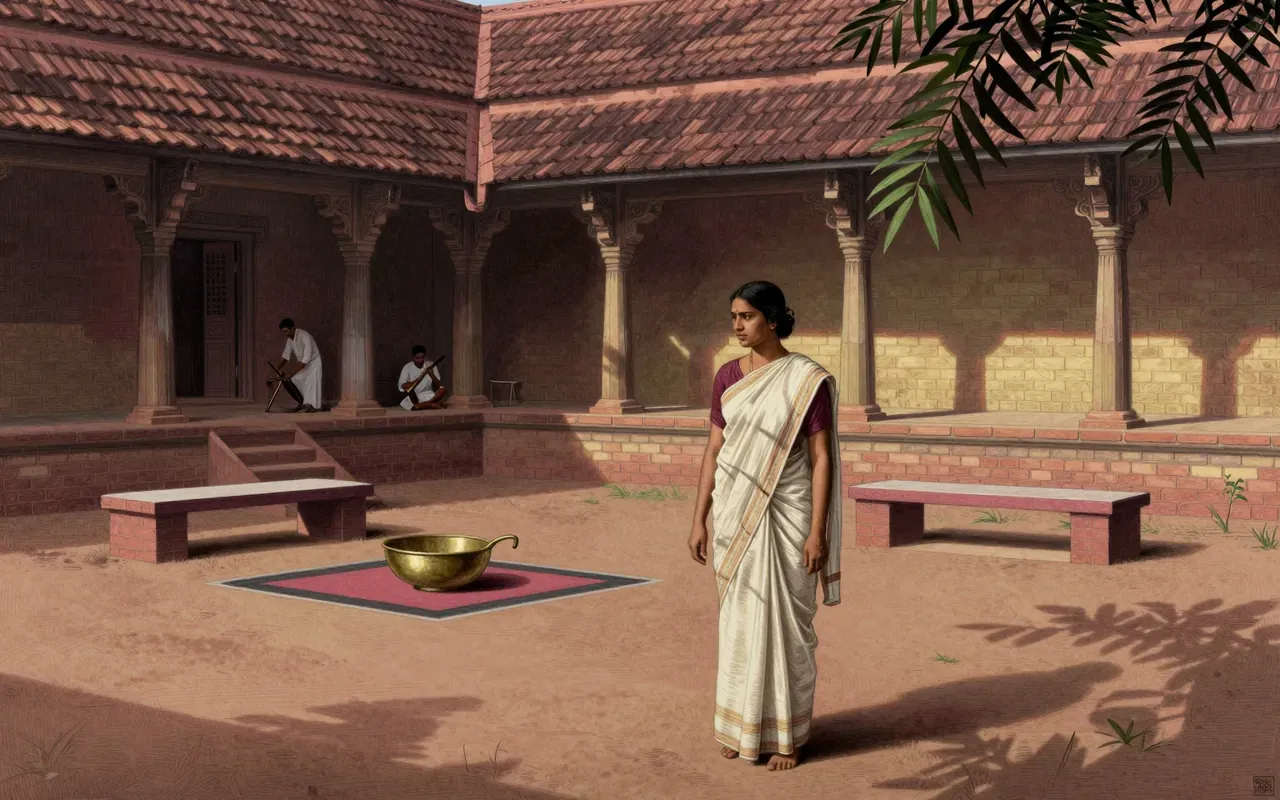
The sari isn’t tradition—it’s deep-time infrastructure for the body.

The sari is older than writing systems that describe it. Its origins are archaeological, textual, and textile—not ceremonial or aesthetic. It is not a relic. It is a working technology.

Chapters & takeaways4
  1. 0:58
    Where it began

    The sari began not as a symbol, but as a solution—woven in northwestern India between 2800 and 1800 BCE.

  2. 2:22
    Three pieces, not one

    It evolved from three separate garments—not one idea, but three functional parts: lower, upper, and chest.

  3. 3:33
    Cloth before cloth

    Cotton predates the sari by two millennia; silk weaving followed within centuries—textile capacity shaped form.

  4. 5:01
    A word with weight

    Śāṭikā wasn’t poetic licence—it was a documented term for women’s attire in early Hindu literature.

Worth your time?

Yes. Wear the whole thing.

4.5/ 5
What works
  • it names its sources precisely
  • it separates evolution from teleology
  • it treats cloth as infrastructure, not ornament
  • it refuses to conflate Sanskrit terminology with modern identity
What does not
  • claim influence beyond the evidence
  • treat popularity as significance
  • invoke retrospective consensus
  • praise without reason
Wear it if
  • readers who distrust origin myths
  • designers seeking pre-industrial logic
  • historians wary of anachronism
Skip it if
  • those wanting a celebration of 'timeless beauty'
  • readers seeking celebrity or contemporary runway context
The written brief1 min read

What the thing is

The sari is a single length of unstitched cloth, traditionally draped over the body. It is not a costume. It is a system of wear rooted in bodily articulation, textile availability, and ritual function.

Where it came from

It originated in northwestern ancient India between 2800 and 1800 BCE. It evolved from the antarīya (a fishtail dhoti), uttarīya (a shawl-like veil), and stanapatta (a chestband). Its name comes from śāṭikā, attested in early Hindu texts.

What it gets right

It establishes continuity: from antarīya to sari, from stanapatta to choli, from śāṭikā to ‘sari’. It anchors clothing in material fact—cotton at 5000 BCE, silk by 2450 BCE—not myth or romance.

What it gets wrong

It implies seamlessness. The three-piece ensemble was not a ‘proto-sari’; it was functionally distinct attire. Draping evolved, but not as linear progression—it was adaptive, regional, and socially segmented.

Why it matters now

Because it resists fast-fashion’s logic of disposability and standardisation. Its persistence challenges assumptions about what counts as ‘modern’ dress—and who gets to define it.

Is it worth your time

Yes—if you want to understand how a garment encodes millennia of textile, gendered, and regional logic without needing a single stitch of modern fashion theory.
Same rail · Garments4 of 66
10:13
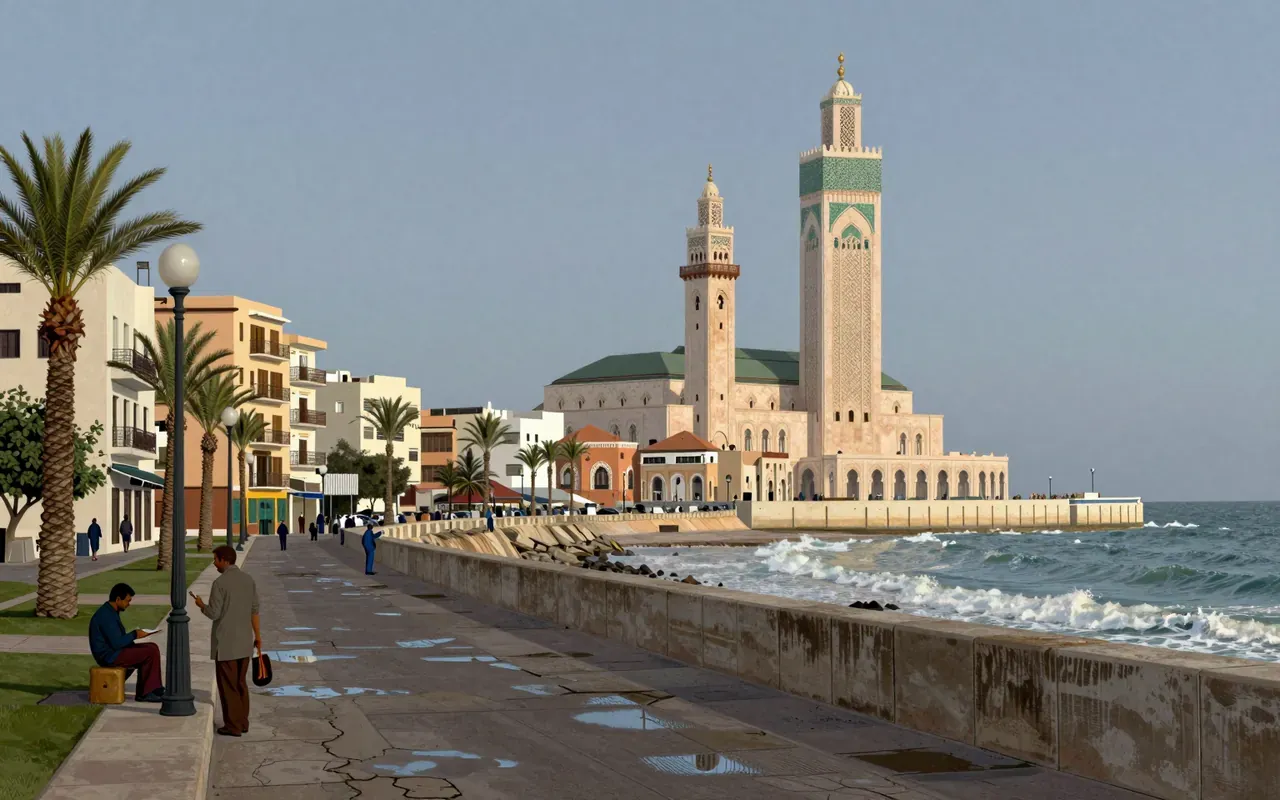
CasablancaCasablanca is a city. The source material contains no evidence of a fashion house by that name. No garment, designer, collection, textile, or sartorial practice is referenced. All claims pertain to geography, finance, industry, and infrastructure.
9:05
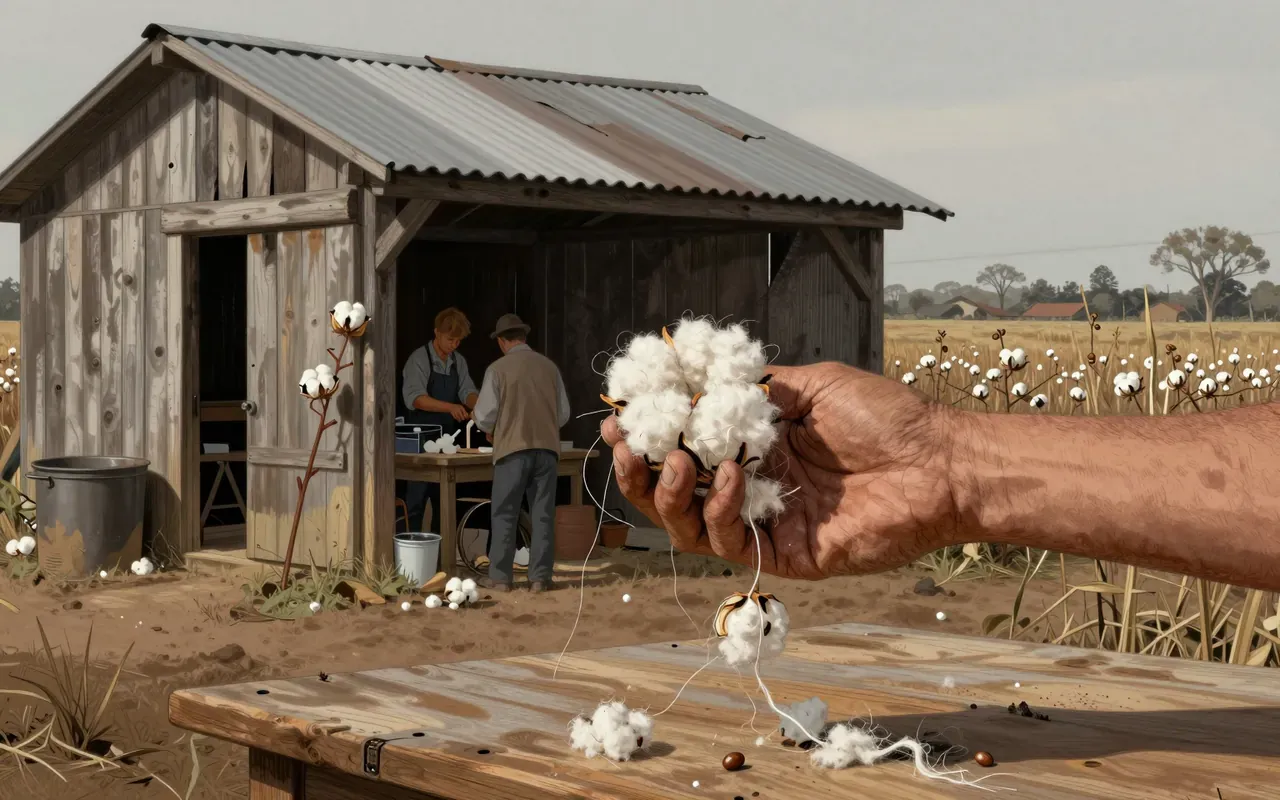
CottonCotton is a naturally occurring, soft, fluffy staple fiber derived from the bolls of Gossypium plants—shrubs native to tropical and subtropical regions across the Americas, Africa (including Egypt), and India. It is nearly pure cellulose, with minor waxes, fats, pectins, and water, and its bolls aid seed dispersal. Domesticated independently in both Old and New Worlds, cotton has been used for textiles since prehistoric times, with archaeological evidence from Peru (7th–6th millennia BC) and Pakistan (6th millennium BC). It is most commonly spun into yarn or thread to produce soft, breathable, durable fabrics.
9:48
DistressingDistressing is a surface-altering technique used on furniture and instruments to mimic age. It relies on controlled destruction of finishes — sanding, stripping, chiselling — to reveal substrate and layer history. It works best on solid pine. It does not occur on garments. It signals curated history, not lived time.
10:34
Dover Street MarketDover Street Market is a retail institution founded in 2004 by Rei Kawakubo and Adrian Joffe on Dover Street in Mayfair, London. It was conceived as a curated, art-integrated space inspired by Kensington Market, defined by Kawakubo’s phrase 'beautiful chaos'. It stocks Comme des Garçons and other selected brands, collaborates with Frieze Art Fair, Michael Hoppen Gallery and ICA, and relocated in 2016 to the former Burberry building on Haymarket.
Up next in Fashion

Sarong

· 10:03

The sarong isn’t a garment—it’s a colonial category that erased dozens of distinct traditions.

10:03