fashionbriefs
9:21in productionCh. 1 · What it is now/ 9:21 · ceiling 15 min
Garments

Petticoat

The petticoat isn’t one thing—it’s a linguistic smokescreen for centuries of shifting gender, class and cloth.

The petticoat is a garment whose name outlived its coherence. It began as outerwear, became infrastructure, then shorthand—and still carries political weight without clarity. Its value lies not in nostalgia, but in its stubborn refusal to mean just one thing.

Chapters & takeaways6
  1. 0:59
    What it is now

    Today, a petticoat is a light loose undergarment—British usage includes shoulder-hanging; American usage restricts it to waist-hanging.

  2. 2:07
    What it was then

    From the 16th to mid-19th centuries, petticoats were outer skirts—designed to be seen, not hidden.

  3. 3:06
    What it did

    Petticoats gave shape and volume to skirts—and provided warmth—making them functional, not decorative.

  4. 3:58
    What it meant

    Its meaning changed across centuries and countries—no single definition covers its full history.

  5. 4:58
    What it’s made of

    Cotton, silk and tulle are the most common materials—reflecting both utility and status.

  6. 5:43
    Where the line blurs

    It straddles underwear and outerwear—a category error built into the word itself.

Worth your time?

Yes. Wear the whole thing.

4/ 5
What works
  • it names real functional shifts
  • it flags political resonance without overclaiming
  • it separates British and American usage precisely
  • it refuses to call anything 'iconic'
What does not
  • culture/art
  • culture/arts
  • culture/cities
  • culture/food
Wear it if
  • people who study material culture
  • readers tracking how language erases function
  • designers questioning garment taxonomy
Skip it if
  • those seeking style inspiration
  • costume historians expecting technical schematics
  • readers looking for feminist origin stories
The written brief1 min read

What the thing is

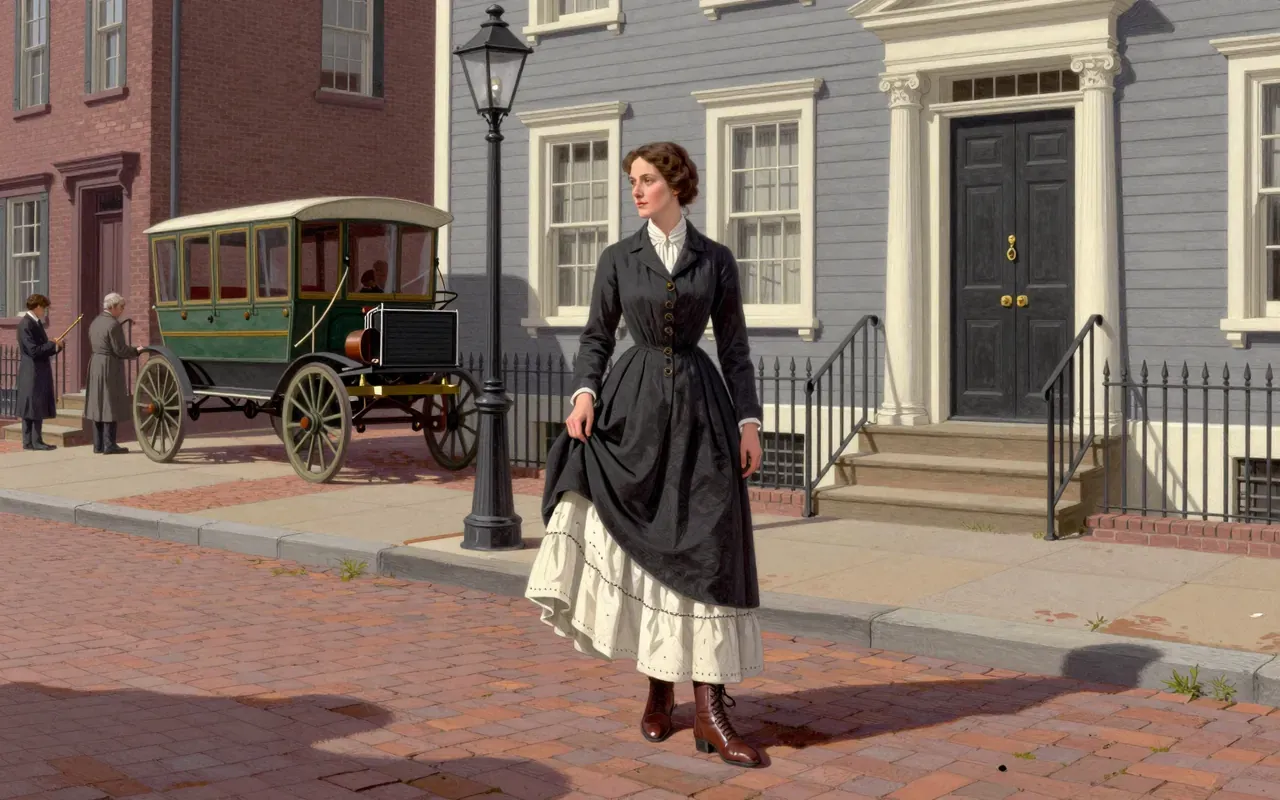
A petticoat is a skirt-like garment worn under a dress or skirt—or, historically, as outerwear. In current British English, it is a light loose undergarment hanging from the shoulders or waist.

Where it came from

It emerged in Western fashion systems by the 14th century. By 1585, it was documented as an undergarment. Men wore padded versions in the 15th–17th centuries; women across all classes wore them in the 18th century.

What it gets right

It names a garment that served dual roles: visible outerwear and functional undergarment. It shaped skirts, added warmth, and adapted across classes and genders.

What it gets wrong

It implies continuity where there was rupture—calling all skirt-like layers ‘petticoats’ flattens distinct garments with different structures, purposes and social meanings.

Why it matters now

It reveals how a single term obscures material diversity—and how language lags behind function, gender and use. Its political echoes (‘petticoat government’, ‘Petticoat affair’) persist without explanation.

Is it worth your time

Yes—if you care how clothing quietly encodes power, class and gender across centuries.
Same rail · Garments4 of 75
8:18
MarinièreA cotton long-sleeved shirt with horizontal blue and white stripes, introduced to the French Navy’s official uniform for seamen on 27 March 1858. A genuine marinière has twenty navy blue stripes front and back, each 10 mm wide, spaced 20 mm apart; sleeves carry fourteen matching stripes. Sailors claimed the stripes improved visibility of crew members who fell overboard. Yves Saint Laurent introduced it into his premier collections in the 1960s, triggering a haute couture fashion revolution.
9:57
Craig Green (designer)Craig Green makes conceptual menswear that treats the body as site, not surface. His garments use utility as grammar and vulnerability as form. They do not flatter. They do not hide. They assert.
9:26
Descente1935Descente is a Japanese sports clothing and accessories company founded in 1935 as Ishimoto Shoten, a men's retail store in Osaka. It began skiwear development in 1954 and registered its trademark in 1961. Its innovations include Demopants (1974), Magic Suit (1979), Mobile Thermo jacket (1998), Vortex suits (2002), and Genome compression wear (2012). It sponsors elite teams in rowing, speed-skating, skiing, bobsled, cycling, baseball, motorcycle racing, and triathlon.
8:00
NylonWallace Carothers · 1935Nylon is a family of synthetic thermoplastic polyamides defined by amide linkages connecting aliphatic or semi-aromatic groups; it is melt-processed into fibers, films, and shapes; its properties are modifiable via additives; and it is classified into families (e.g., nylon-XY from diamine/dicarboxylic acid monomers, nylon-Z from aminocarboxylic acids), with nylon-6,6 and nylon-6 as key examples.
Up next in Fashion

Polo shirt

· 10:40

The 'polo shirt' is a tennis garment dressed as a polo one—and that lie built an empire.

10:40