fashionbriefs
8:31in productionCh. 1 · Form follows function (and physics)/ 8:31 · ceiling 15 min
Garments

Poncho

A garment built for survival became a costume for conquest—and still wears its Indigenous name like borrowed clothing.

The poncho is not a trend. It is a persistent form—Indigenous, functional, adaptable—repeatedly repurposed but never replaced.

Chapters & takeaways5
  1. 1:10
    Form follows function (and physics)

    It is defined by radical simplicity: one sheet, one hole, no seams.

  2. 2:20
    Pre-Hispanic, pan-continental, unnamed

    Its roots span millennia and borders—from Patagonia to Mexico—but no single nation owns it.

  3. 3:08
    Weatherproofing without compromise

    Rainproof versions add fasteners, hoods and arm openings—without abandoning the core shape.

  4. 4:28
    Warmth without weather

    Fashion ponchos trade utility for breathability, turning insulation into identity.

  5. 5:26
    From shelter to uniform to icon

    It was worn long before it was weaponised—first by armies in the 1850s, then by Hollywood.

Worth your time?

Yes. Wear the whole thing.

4.5/ 5
What works
  • function
  • continuity
  • adaptation
What does not
  • influence
  • define
  • start
  • launch
Wear it if
  • designers
  • historians
  • Indigenous textile practitioners
Skip it if
  • casual shoppers
  • vintage collectors seeking provenance
The written brief1 min read

What the thing is

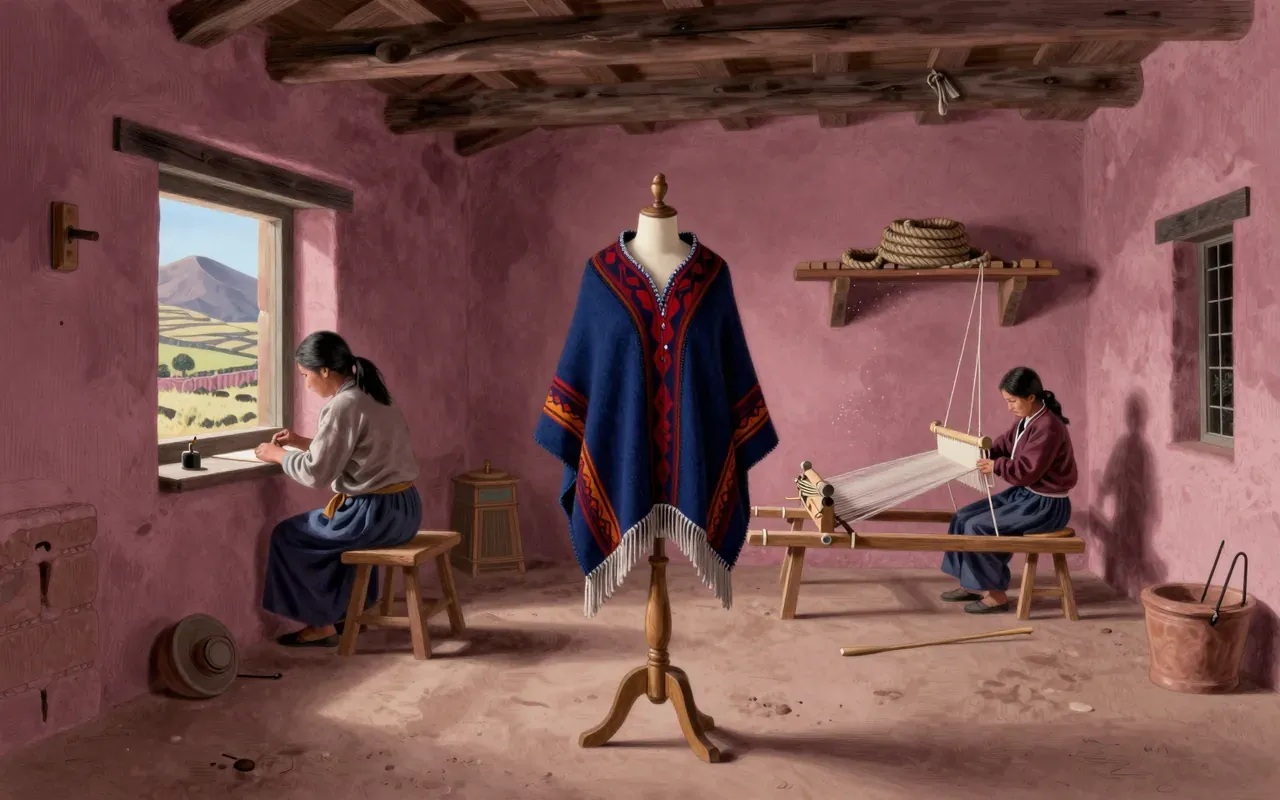
A loose outer garment: a single sheet of fabric with a central head opening. Functional versions are rainproof, hooded, and side-fastened. Fashion versions prioritise breathability and silhouette over utility.

Where it came from

The Americas. Used since pre-Hispanic times by Native peoples across the Andes, Greater Nicoya, Patagonia, and the Valley of Mexico—in what is now Argentina, Bolivia, Brazil, Chile, Colombia, Costa Rica, Ecuador, Mexico, Nicaragua, Peru, Uruguay, Venezuela, and parts of the US. Exact origin unknown; possibilities include Mexico, Ecuador or Peru.

What it gets right

It delivers warmth and weather protection with minimal construction. Its open-sided, head-centered design works across climates and bodies. It is adaptable: rainproof, hooded, fastened, or purely decorative.

What it gets wrong

It erases its pre-Hispanic origins in common usage. It flattens distinct Indigenous textile traditions—Quechua punchu, Mapudungun pontro—into a generic ‘South American’ prop. It treats military adoption as neutral history, not colonial infrastructure.

Why it matters now

It is a litmus test for how culture absorbs Indigenous forms without naming their makers. Its cinematic and military afterlife displaces its Indigenous continuity—yet that continuity remains unbroken, from Andean weavers to contemporary designers citing punchu.

Is it worth your time

Yes—if you care about how a single garment reveals layers of Indigenous ingenuity, colonial military logistics, and fashion’s selective memory.
Same rail · Garments4 of 66
10:13
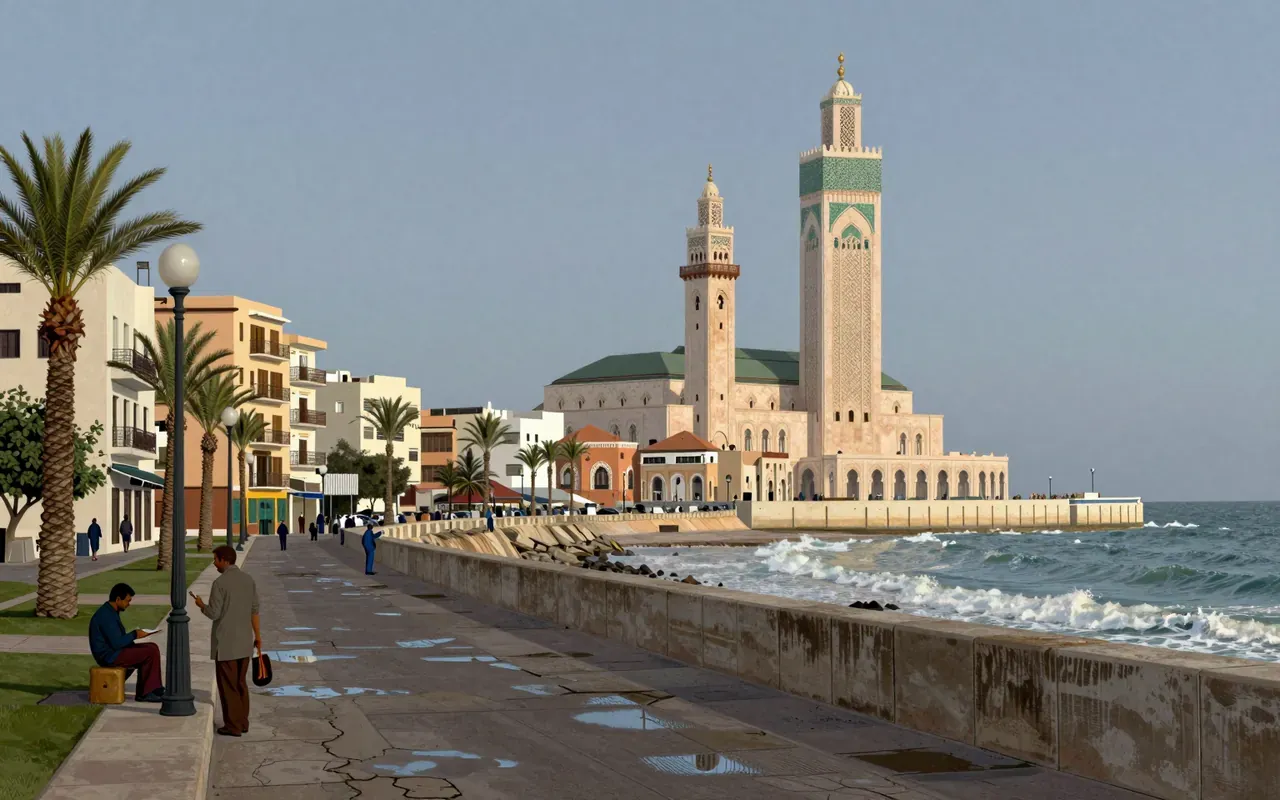
CasablancaCasablanca is a city. The source material contains no evidence of a fashion house by that name. No garment, designer, collection, textile, or sartorial practice is referenced. All claims pertain to geography, finance, industry, and infrastructure.
9:05
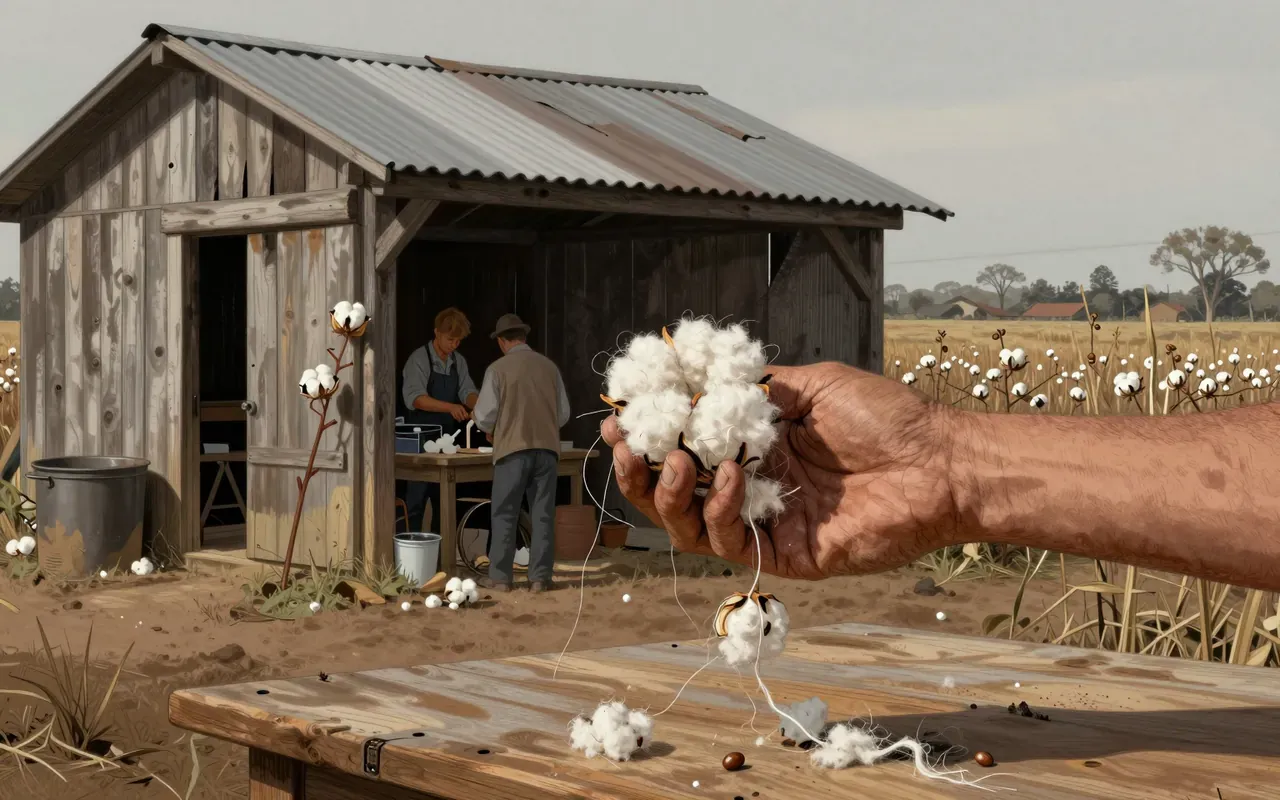
CottonCotton is a naturally occurring, soft, fluffy staple fiber derived from the bolls of Gossypium plants—shrubs native to tropical and subtropical regions across the Americas, Africa (including Egypt), and India. It is nearly pure cellulose, with minor waxes, fats, pectins, and water, and its bolls aid seed dispersal. Domesticated independently in both Old and New Worlds, cotton has been used for textiles since prehistoric times, with archaeological evidence from Peru (7th–6th millennia BC) and Pakistan (6th millennium BC). It is most commonly spun into yarn or thread to produce soft, breathable, durable fabrics.
9:48
DistressingDistressing is a surface-altering technique used on furniture and instruments to mimic age. It relies on controlled destruction of finishes — sanding, stripping, chiselling — to reveal substrate and layer history. It works best on solid pine. It does not occur on garments. It signals curated history, not lived time.
10:34
Dover Street MarketDover Street Market is a retail institution founded in 2004 by Rei Kawakubo and Adrian Joffe on Dover Street in Mayfair, London. It was conceived as a curated, art-integrated space inspired by Kensington Market, defined by Kawakubo’s phrase 'beautiful chaos'. It stocks Comme des Garçons and other selected brands, collaborates with Frieze Art Fair, Michael Hoppen Gallery and ICA, and relocated in 2016 to the former Burberry building on Haymarket.
Up next in Fashion

Serape

· 9:56

The serape is not folklore—it’s a contested textile archive written in wool, law, and colonial record.

9:56