fashionbriefs
9:56in productionCh. 1 · Form vs. function/ 9:56 · ceiling 15 min
Garments

Serape

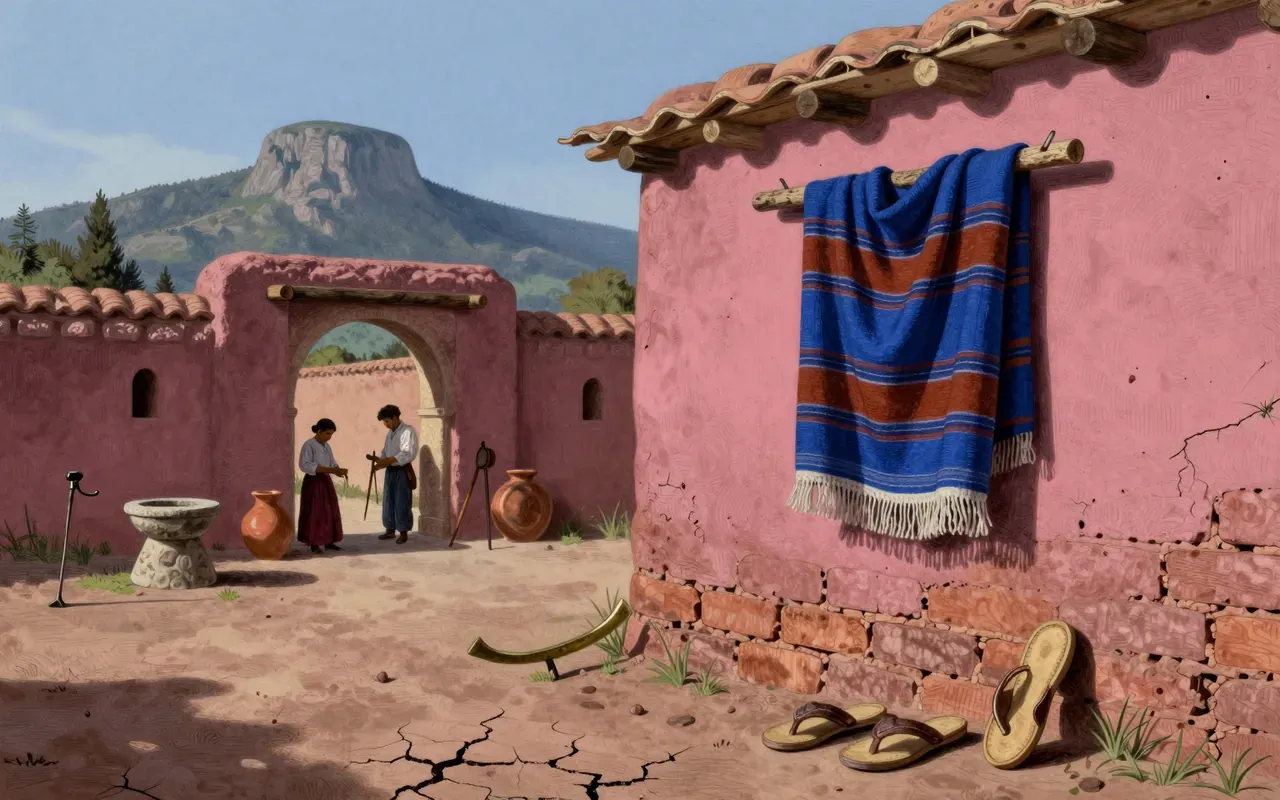
The serape is not folklore—it’s a contested textile archive written in wool, law, and colonial record.

The serape is a Mexican garment rooted in Tlaxcalan textile practice, documented from 1777, shaped by colonial settlement and industrialisation, and now embroiled in IP disputes. Its value lies not in symbolic weight but in its traceable material and legal history.

Chapters & takeaways4
  1. 0:59
    Form vs. function

    The serape is a woven rectangle—not a poncho—and its modern conflation with gabán and jorongo obscures its original form.

  2. 2:25
    From Chiautempan to Saltillo

    Its roots are in Tlaxcala, not myth—but migration, livestock, and weaving expertise moved north to Saltillo by 1591.

  3. 4:12
    First records, not first uses

    Two master weavers arrived in Saltillo in 1650; the word 'zarape' first appears in writing in 1777.

  4. 5:51
    Spelling and variation

    Sarape is the accepted spelling in Mexico; modern versions sometimes add hoods—but that’s recent adaptation, not origin.

Worth your time?

Yes. Wear the whole thing.

4/ 5
What works
  • textile historians
  • policy researchers
  • Mexican cultural practitioners
What does not
  • art-deco
  • avant-garde
  • dada
  • modernism
Wear it if
  • designers
  • historians
  • lawyers working on cultural IP
Skip it if
  • casual fashion consumers
  • pop-culture trend watchers
The written brief1 min read

What the thing is

A long, blanket-like shawl or cloak worn in Mexico, especially by men. Rectangular. Woven. Traditionally without openings.

Where it came from

Forebears worn near Chiautempan and Contla, Tlaxcala. A Tlaxcalan diaspora settled near Saltillo around 1591, raised sheep and goats, and sent master weavers there in 1650. First documented use of ‘zarape’ appears in fray Juan Augustin de Morfi’s 1777 diaries.

What it gets right

It centres Indigenous and mestizo weaving knowledge from Tlaxcala and Saltillo. It documents real material evolution: from pre-colonial garments near Chiautempan to sheep-based wool production after 1591, then formalised weaving under Spanish rule.

What it gets wrong

It conflates distinct garments: the original rectangular serape (no openings) with later poncho-like variants (gabán, jorongo). This blurs functional intent and erases design specificity.

Why it matters now

Because it sits at the centre of active legal and cultural debates over intellectual property and appropriation—questions that cannot be resolved without acknowledging its documented origins and material history.

Is it worth your time

Yes—if you care about how colonial trade, textile craft and legal battles over cultural ownership intersect in everyday objects.
Same rail · Garments4 of 66
10:13
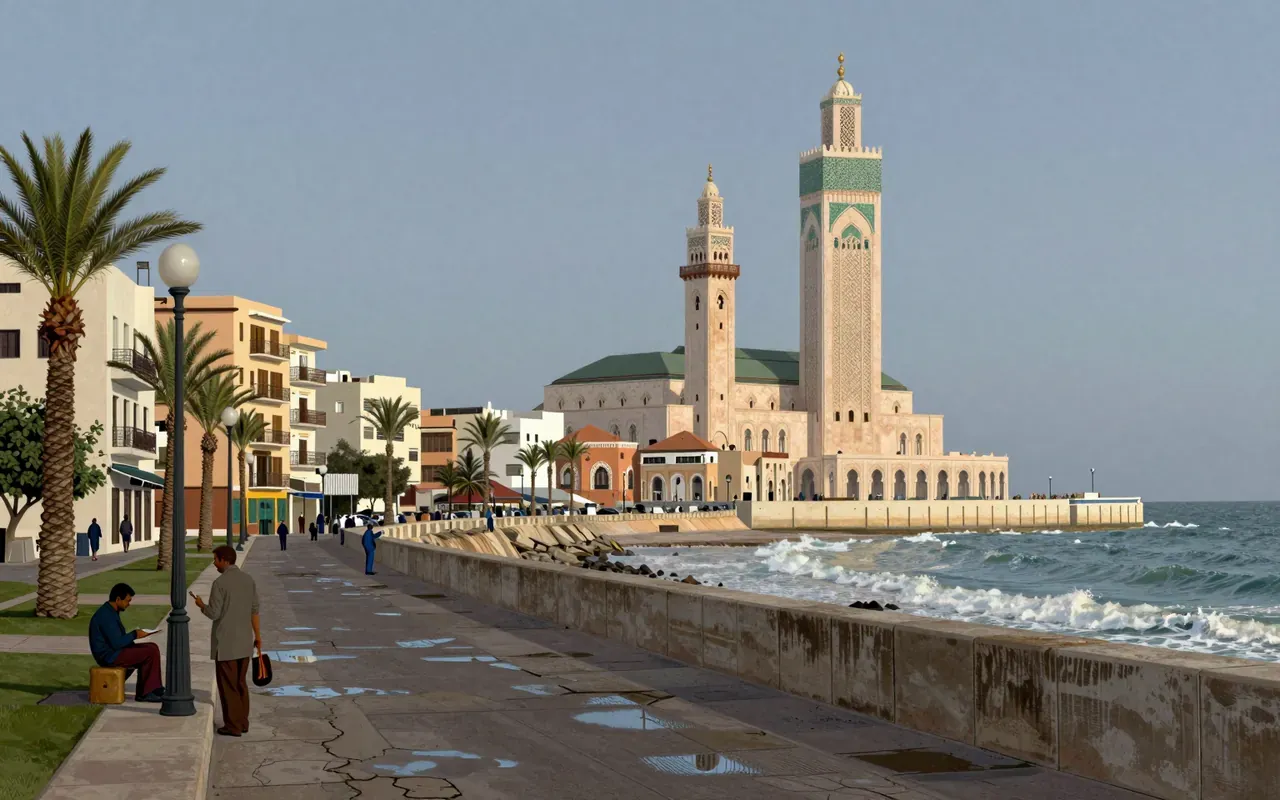
CasablancaCasablanca is a city. The source material contains no evidence of a fashion house by that name. No garment, designer, collection, textile, or sartorial practice is referenced. All claims pertain to geography, finance, industry, and infrastructure.
9:05
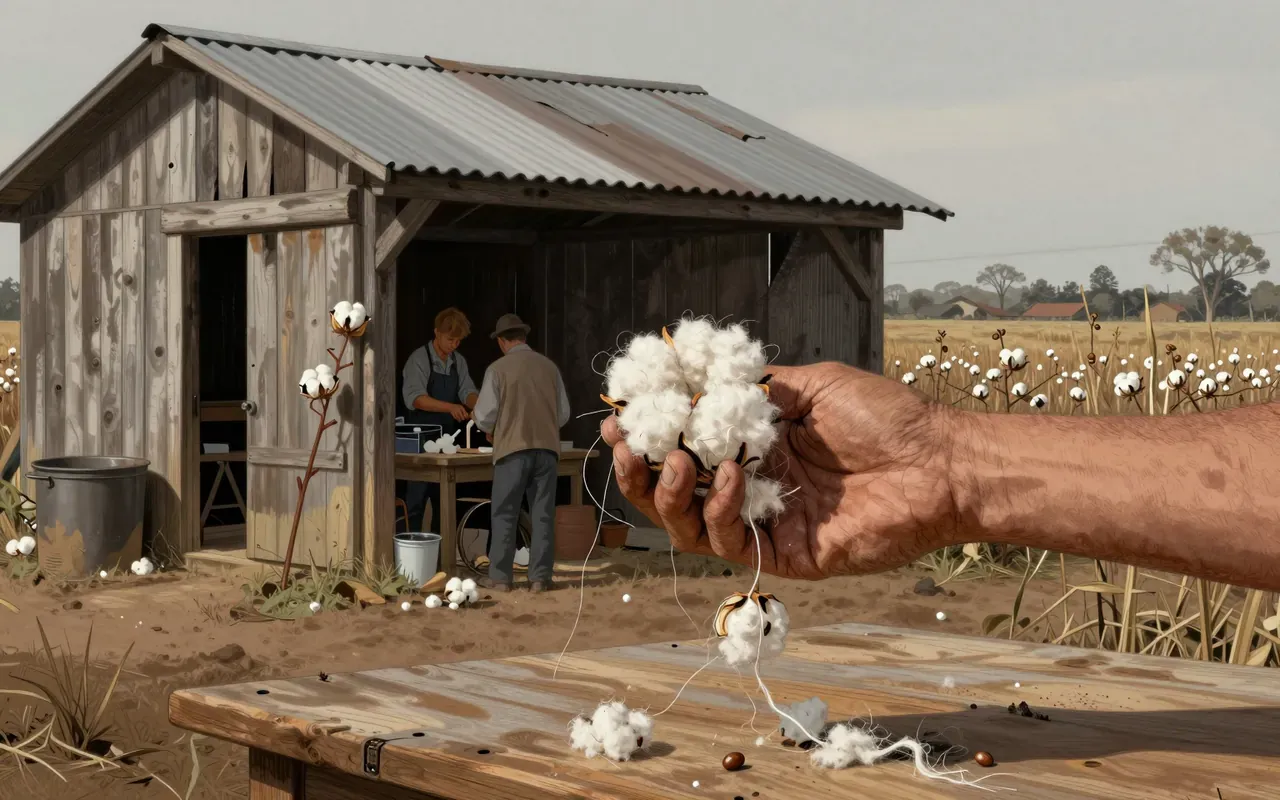
CottonCotton is a naturally occurring, soft, fluffy staple fiber derived from the bolls of Gossypium plants—shrubs native to tropical and subtropical regions across the Americas, Africa (including Egypt), and India. It is nearly pure cellulose, with minor waxes, fats, pectins, and water, and its bolls aid seed dispersal. Domesticated independently in both Old and New Worlds, cotton has been used for textiles since prehistoric times, with archaeological evidence from Peru (7th–6th millennia BC) and Pakistan (6th millennium BC). It is most commonly spun into yarn or thread to produce soft, breathable, durable fabrics.
9:48
DistressingDistressing is a surface-altering technique used on furniture and instruments to mimic age. It relies on controlled destruction of finishes — sanding, stripping, chiselling — to reveal substrate and layer history. It works best on solid pine. It does not occur on garments. It signals curated history, not lived time.
10:34
Dover Street MarketDover Street Market is a retail institution founded in 2004 by Rei Kawakubo and Adrian Joffe on Dover Street in Mayfair, London. It was conceived as a curated, art-integrated space inspired by Kensington Market, defined by Kawakubo’s phrase 'beautiful chaos'. It stocks Comme des Garçons and other selected brands, collaborates with Frieze Art Fair, Michael Hoppen Gallery and ICA, and relocated in 2016 to the former Burberry building on Haymarket.
Up next in Fashion

T-shirt

· 7:54

The T-shirt is not clothing—it’s infrastructure disguised as apparel.

7:54