fashionbriefs
10:03in productionCh. 1 · The Word Came First/ 10:03 · ceiling 15 min
Garments

Sarong

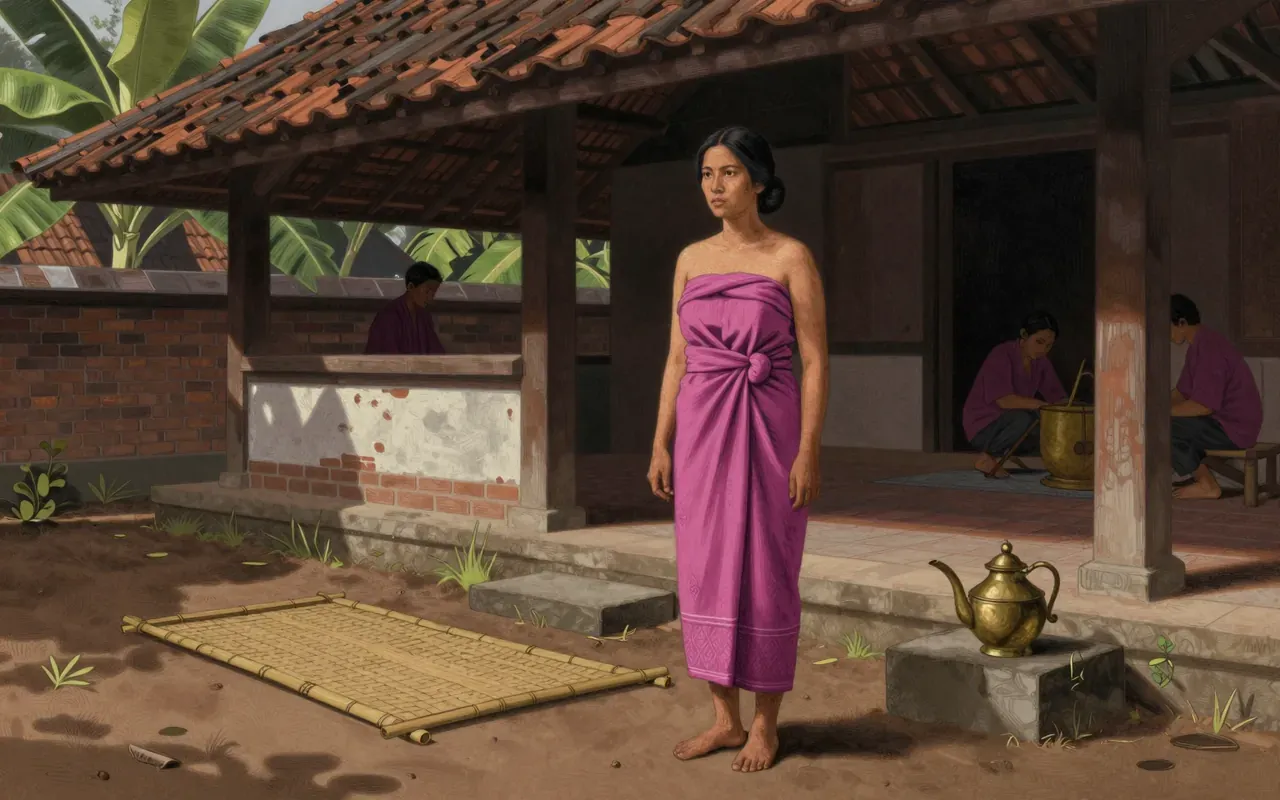
The sarong isn’t a garment—it’s a colonial category that erased dozens of distinct traditions.

The sarong is a colonial taxonomic tool masquerading as a garment.

Chapters & takeaways4
  1. 1:07
    The Word Came First

    Sarong is a Malay loanword meaning 'to cover', first used in English in 1834.

  2. 2:19
    How It Is Built and Worn

    It is a stitched tube, stepped into and secured by rolling the hem—not draped, tied, or pinned.

  3. 3:43
    Pattern and Position Are Gendered

    The kepala panel marks its centre; check patterns signal Malay men, batik signals Malay women.

  4. 5:09
    A Label for Dozens of Local Garments

    It appears across Southeast Asia, South Asia, West Asia, North Africa, East Africa, West Africa, and Pacific islands—but never as one uniform practice.

Worth your time?

Yes. Wear the whole thing.

3.5/ 5
What works
  • as a case study in linguistic erasure
  • as evidence of regional textile specificity
What does not
  • iconic
  • groundbreaking
  • timeless
Wear it if
  • museum curators
  • fashion archivists
  • anthropology students
Skip it if
  • casual shoppers
  • trend forecasters
The written brief1 min read

What the thing is

A tubular lower garment, about 0.91 m wide and 2.3 m long, stitched at the narrow edges.

Where it came from

It originated as the Malay word ‘sarong’, meaning ‘to cover’ or ‘to sheath’, first recorded in English in 1834 referring to the skirt-like garment of Malays.

What it gets right

It names a precise, functional garment: a stitched tube, worn low, with a defined head panel, secured by rolling the hem.

What it gets wrong

It implies universality. The sarong is not one thing. It is many region-specific garments—named differently, made differently, worn differently—unified only by English-language cataloguing.

Why it matters now

It reveals how ethnographic naming flattens diversity: ‘sarong’ erases distinctions between West African kente-wrapped wrappers, Javanese batik tubulars, and Pacific island sulus—yet remains the default term in global fashion and museum labels.

Is it worth your time

Yes—if you care about how a single garment encodes regional identity, gendered labour, and colonial documentation practices.
Same rail · Garments4 of 66
10:13
CasablancaCasablanca is a city. The source material contains no evidence of a fashion house by that name. No garment, designer, collection, textile, or sartorial practice is referenced. All claims pertain to geography, finance, industry, and infrastructure.
9:05
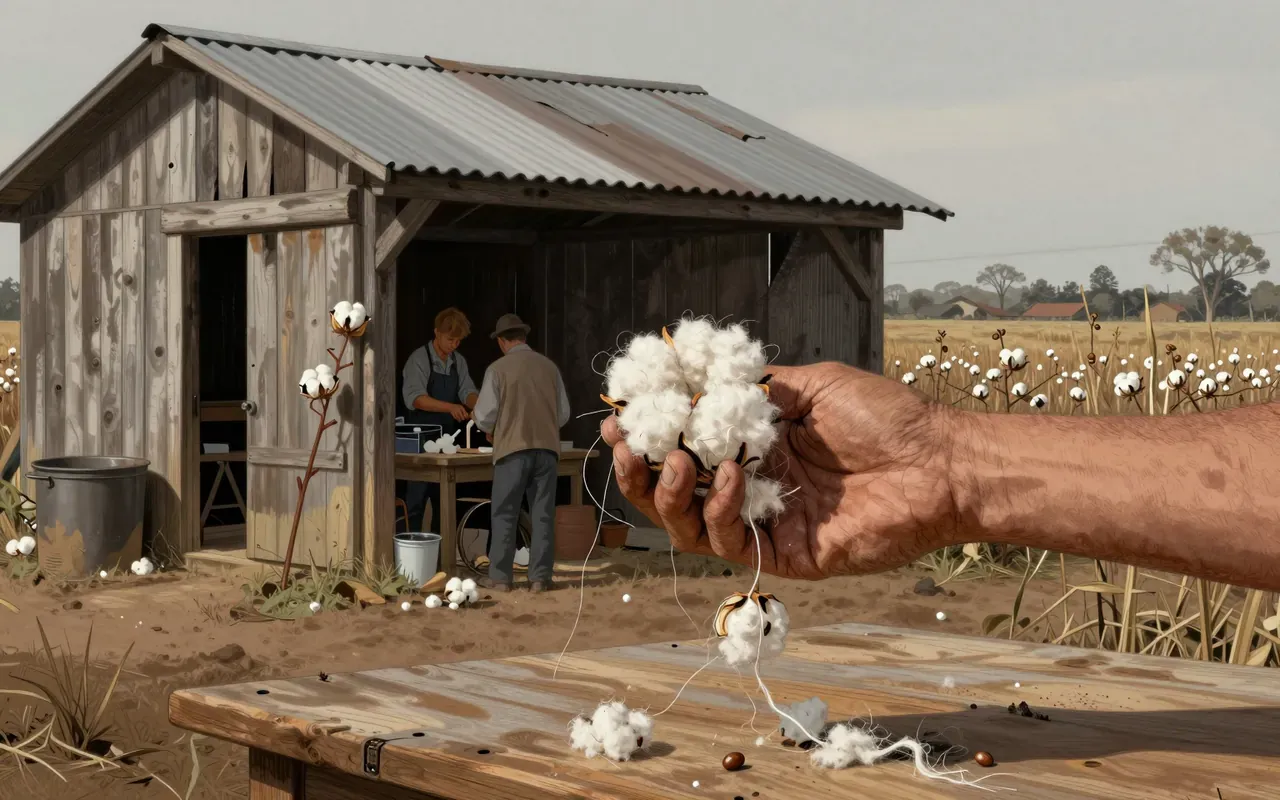
CottonCotton is a naturally occurring, soft, fluffy staple fiber derived from the bolls of Gossypium plants—shrubs native to tropical and subtropical regions across the Americas, Africa (including Egypt), and India. It is nearly pure cellulose, with minor waxes, fats, pectins, and water, and its bolls aid seed dispersal. Domesticated independently in both Old and New Worlds, cotton has been used for textiles since prehistoric times, with archaeological evidence from Peru (7th–6th millennia BC) and Pakistan (6th millennium BC). It is most commonly spun into yarn or thread to produce soft, breathable, durable fabrics.
9:48
DistressingDistressing is a surface-altering technique used on furniture and instruments to mimic age. It relies on controlled destruction of finishes — sanding, stripping, chiselling — to reveal substrate and layer history. It works best on solid pine. It does not occur on garments. It signals curated history, not lived time.
10:34
Dover Street MarketDover Street Market is a retail institution founded in 2004 by Rei Kawakubo and Adrian Joffe on Dover Street in Mayfair, London. It was conceived as a curated, art-integrated space inspired by Kensington Market, defined by Kawakubo’s phrase 'beautiful chaos'. It stocks Comme des Garçons and other selected brands, collaborates with Frieze Art Fair, Michael Hoppen Gallery and ICA, and relocated in 2016 to the former Burberry building on Haymarket.
Up next in Fashion

Aquascutum

John Emary · 1851 · 9:50

A tailor’s patent, not a designer’s vision, built Aquascutum — and killed it when the patent expired in practice.

9:50