fashionbriefs
7:54in productionCh. 1 · What it is/ 7:54 · ceiling 15 min
Garments

T-shirt

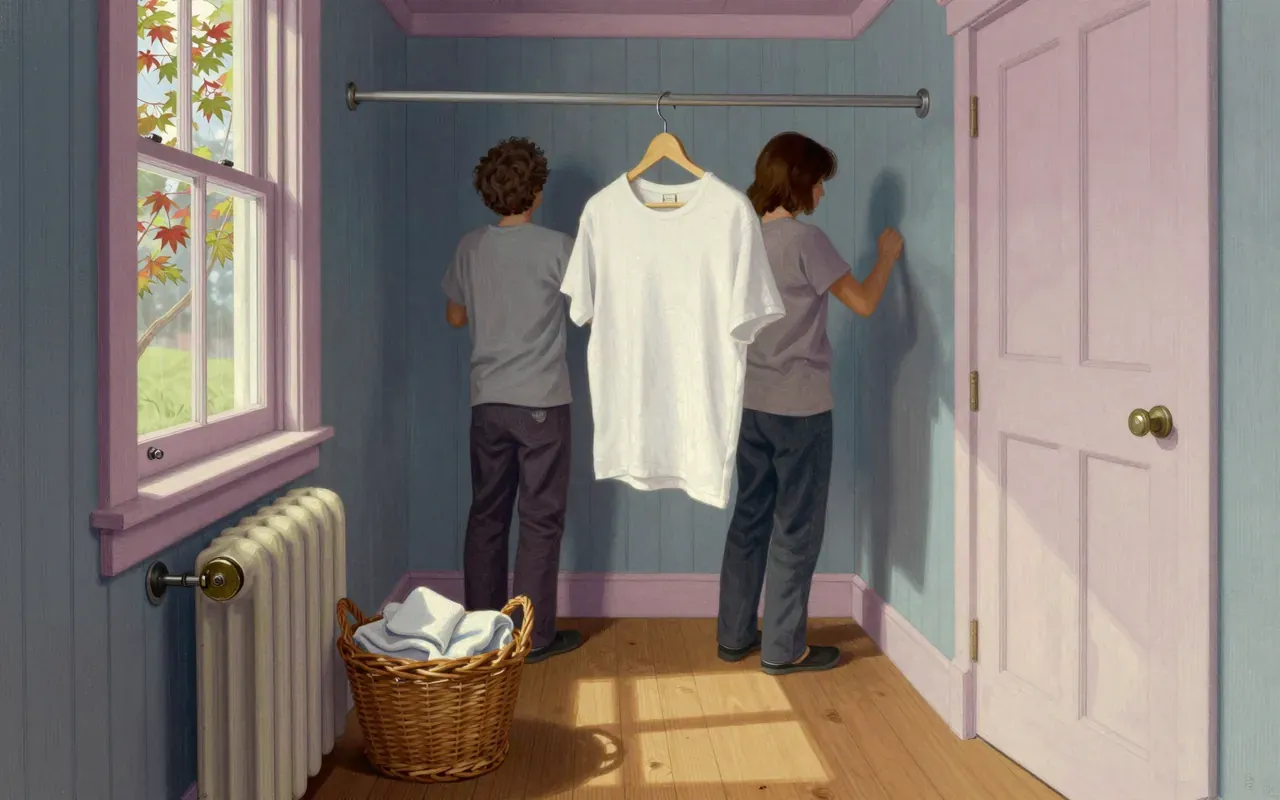
The T-shirt is not clothing—it’s infrastructure disguised as apparel.

The T-shirt is infrastructure disguised as apparel.

Chapters & takeaways4
  1. 0:54
    What it is

    Its shape and fabric define its function—not fashion.

  2. 2:07
    Where it came from

    It began as invisible underwear and only became visible when institutions wore it first.

  3. 3:11
    What it gets right

    Seamless tubes and jersey knit make it the first truly ergonomic mass garment.

  4. 4:36
    How it’s made now

    Automation made it universal—but also erased any trace of origin or repairability.

Worth your time?

Yes. Wear the whole thing.

4.5/ 5
What works
  • supply-chains
  • protest
  • uniforms
  • streetwear
What does not
  • culture/art
  • culture/literature
  • culture/photography
Wear it if
  • designers
  • logisticians
  • activists
Skip it if
  • collectors
  • historians of haute couture
The written brief1 min read

What the thing is

A T-shaped, short-sleeved, collarless shirt made of cotton jersey or stockinette knit.

Where it came from

It evolved from 19th-century undergarments. The US Navy issued it as outerwear in 1913. It became civilian casual wear in the mid-20th century.

What it gets right

It delivers utility: light, stretchy, cheap, easy to clean. It fits the body without constraining it. Its construction—especially seamless circular-knit bodies—eliminates friction points and scales flawlessly.

What it gets wrong

It pretends to neutrality. Its blankness is not innocent. It absorbs ideology instantly but offers no structural resistance to co-option, commodification, or disposability.

Why it matters now

It is the default interface between person and platform: worn in protests, branded by algorithms, scanned in supply-chain audits, and stitched by automated lasers—still the most widely distributed cultural object on earth.

Is it worth your time

Yes—if you care how mass production reshapes identity, or how a garment designed for invisibility became a billboard.
Same rail · Garments4 of 66
10:13
CasablancaCasablanca is a city. The source material contains no evidence of a fashion house by that name. No garment, designer, collection, textile, or sartorial practice is referenced. All claims pertain to geography, finance, industry, and infrastructure.
9:05
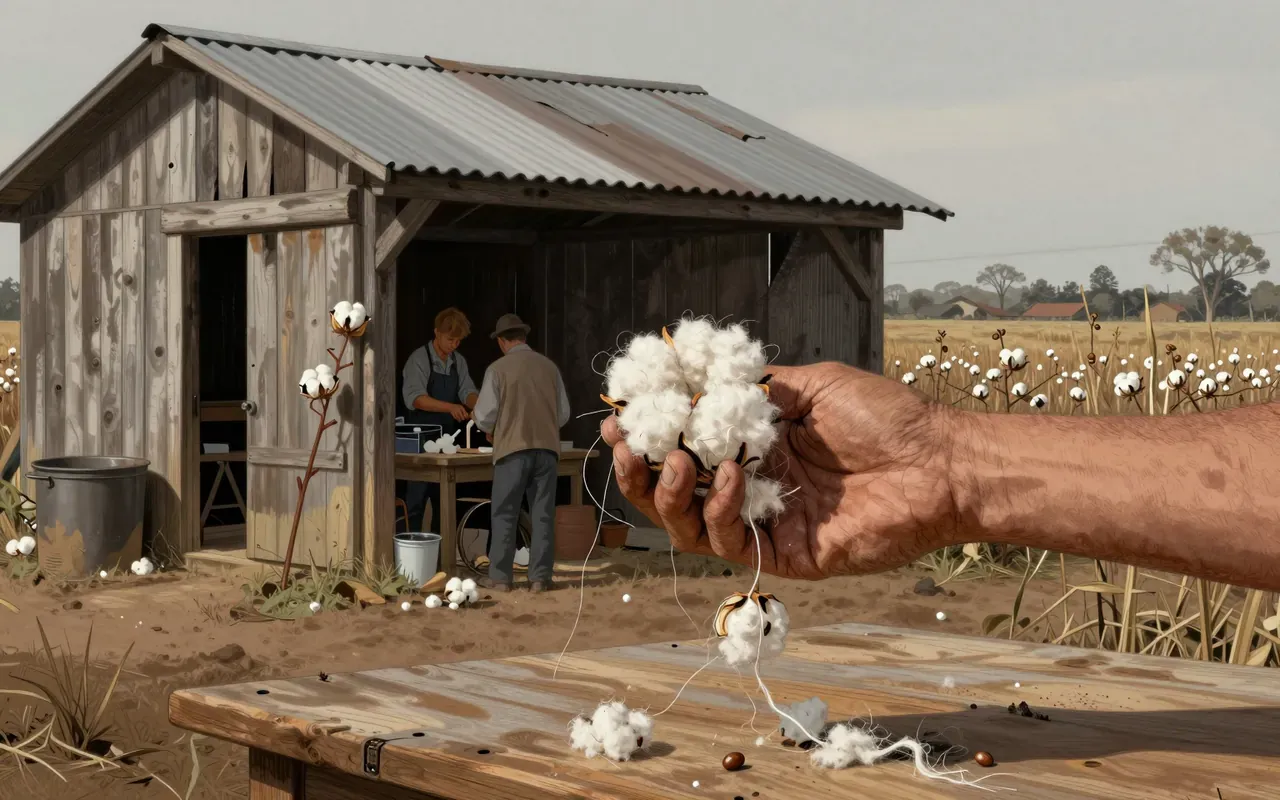
CottonCotton is a naturally occurring, soft, fluffy staple fiber derived from the bolls of Gossypium plants—shrubs native to tropical and subtropical regions across the Americas, Africa (including Egypt), and India. It is nearly pure cellulose, with minor waxes, fats, pectins, and water, and its bolls aid seed dispersal. Domesticated independently in both Old and New Worlds, cotton has been used for textiles since prehistoric times, with archaeological evidence from Peru (7th–6th millennia BC) and Pakistan (6th millennium BC). It is most commonly spun into yarn or thread to produce soft, breathable, durable fabrics.
9:48
DistressingDistressing is a surface-altering technique used on furniture and instruments to mimic age. It relies on controlled destruction of finishes — sanding, stripping, chiselling — to reveal substrate and layer history. It works best on solid pine. It does not occur on garments. It signals curated history, not lived time.
10:34
Dover Street MarketDover Street Market is a retail institution founded in 2004 by Rei Kawakubo and Adrian Joffe on Dover Street in Mayfair, London. It was conceived as a curated, art-integrated space inspired by Kensington Market, defined by Kawakubo’s phrase 'beautiful chaos'. It stocks Comme des Garçons and other selected brands, collaborates with Frieze Art Fair, Michael Hoppen Gallery and ICA, and relocated in 2016 to the former Burberry building on Haymarket.
Up next in Fashion

Top hat

· 9:22

The top hat didn’t crown elegance—it enforced hierarchy with millimetres of silk.

9:22