fashionbriefs
10:54in productionCh. 1 · San Sebastián, 1917/ 10:54 · ceiling 15 min
Houses & movements

Balenciaga

Balenciaga didn’t design clothes — it redesigned the woman’s body, then refused to let the industry copy it on its own terms.

Balenciaga is not a brand. It is a method. A resistance. A recalibration of the female form between 1917 and 1959 — anchored in Spain, executed in Paris, and defined by what it refused as much as what it built.

Chapters & takeaways4
  1. 1:11
    San Sebastián, 1917

    Balenciaga began in Spain — not Paris — and carried Renaissance discipline into modern construction.

  2. 2:52
    No Sketches, Only Structure

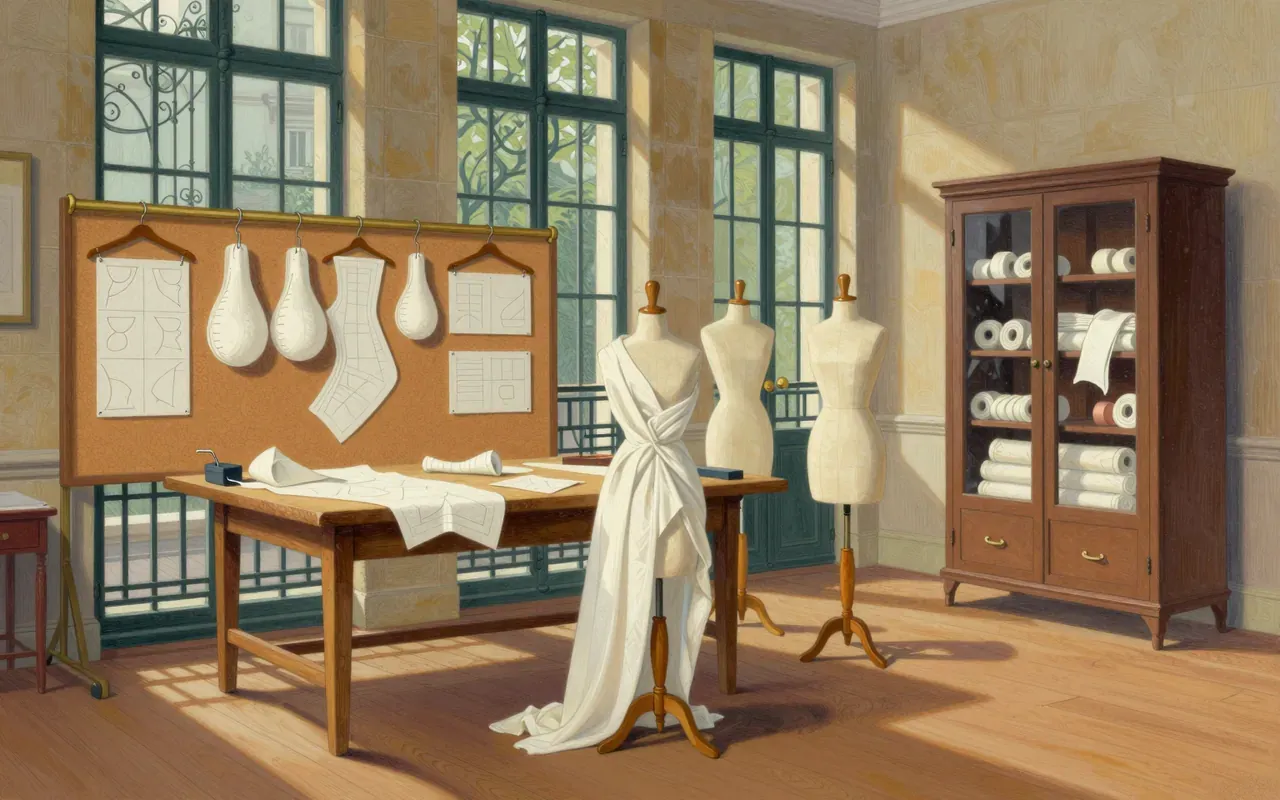
    He built garments by touch, not sketch — turning fabric into architecture before cutting a single thread.

  3. 4:22
    The Waist Was Removed

    Between 1951 and 1959, he erased the waist, flattened the shoulder line, and repositioned the body’s centre of gravity — twice.

  4. 6:42
    Rules Were Ignored

    He showed press one day before delivery and never joined the Chambre Syndicale — choosing authority over alliance.

Worth your time?

Yes. Wear the whole thing.

4.5/ 5
What works
  • as a blueprint
  • as a rebuke
  • as a precedent
What does not
  • iconic
  • groundbreaking
  • seminal
  • timeless
Wear it if
  • designers
  • historians of construction
  • anyone who thinks fashion begins with a sketch
Skip it if
  • logophiles
  • streetwear collectors
  • retail trend forecasters
The written brief1 min read

What the thing is

Balenciaga is a haute couture house founded in 1917 in San Sebastián. It is defined by anti-sketch methodology, radical silhouette engineering, and institutional noncompliance — not branding, not logos, not spectacle.

Where it came from

It came from Spain: San Sebastián first, then Madrid and Barcelona. Its Paris house opened in 1937 on Avenue George V with Spanish Renaissance–influenced designs — a geographic and aesthetic pivot, not a rupture.

What it gets right

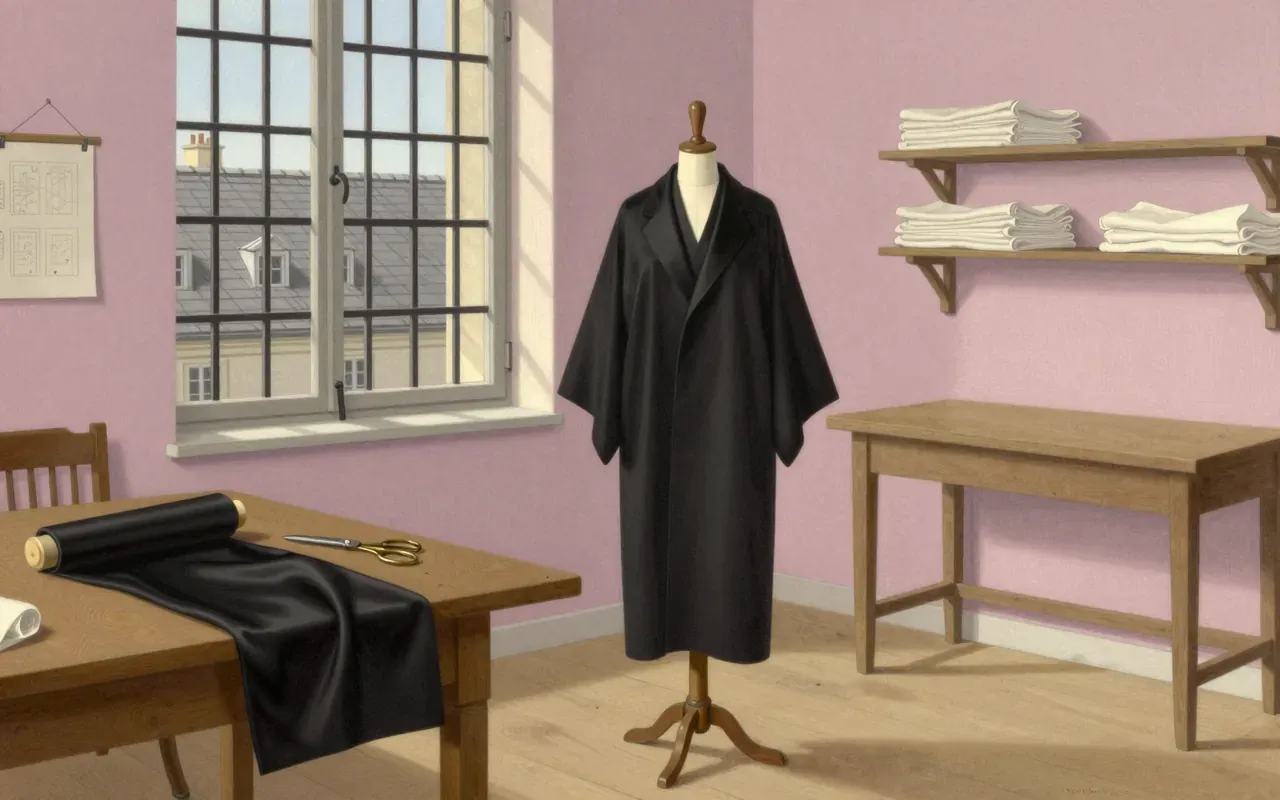
Balenciaga got the body right. He removed the waist. He broadened shoulders. He raised hems. He cut coats like kimonos. He made fabric dictate form. Every silhouette shift between 1951 and 1959 was deliberate, physical, and built — not drawn.

What it gets wrong

Balenciaga got timing wrong for the industry. His 1957 press-show-one-day-before-retail rule broke norms but could not stop dilution. The ‘typical’ 1950s dress was already a watered-down version of his work — proof that control over construction did not extend to control over dissemination.

Why it matters now

It matters now because Balenciaga’s refusal to join the Chambre Syndicale, his rejection of preparatory sketches, and his insistence on fabric-led construction prefigure today’s debates about authorship, speed, and authenticity in fashion — without invoking them.

Is it worth your time

Yes. Balenciaga’s 1917 founding marks the origin of a structural rebellion in fashion — one that still shapes how clothes are conceived, constructed, and timed.
Same rail · Houses & movements4 of 61
8:35
10 Corso Como10 Corso Como is a Milan-based cultural retail institution founded in 1990 by Carla Sozzani, evolving from an art gallery and bookshop into a multidisciplinary complex integrating art, fashion, design, cuisine, and hospitality; it expanded internationally starting in 2002 with locations in Tokyo, Seoul, and Shanghai, all bearing design input from Kris Ruhs, and underwent ownership transitions in 2017 and 2020 while retaining Sozzani’s artistic direction.
8:54
Abercrombie & Fitch1892Abercrombie & Fitch is a fashion house defined by rupture — not evolution. Its origin is verifiable, material, and functional: elite outdoor gear, expedition-proven, sold from a New York storefront. Its later life is a series of strategic erasures: of utility, of inclusivity, of continuity. It trades on nostalgia without replicating its source. Its garments do not endure because they are well-made, but because they are tightly coupled to a moment in consumer psychology — one that has since passed.
10:13
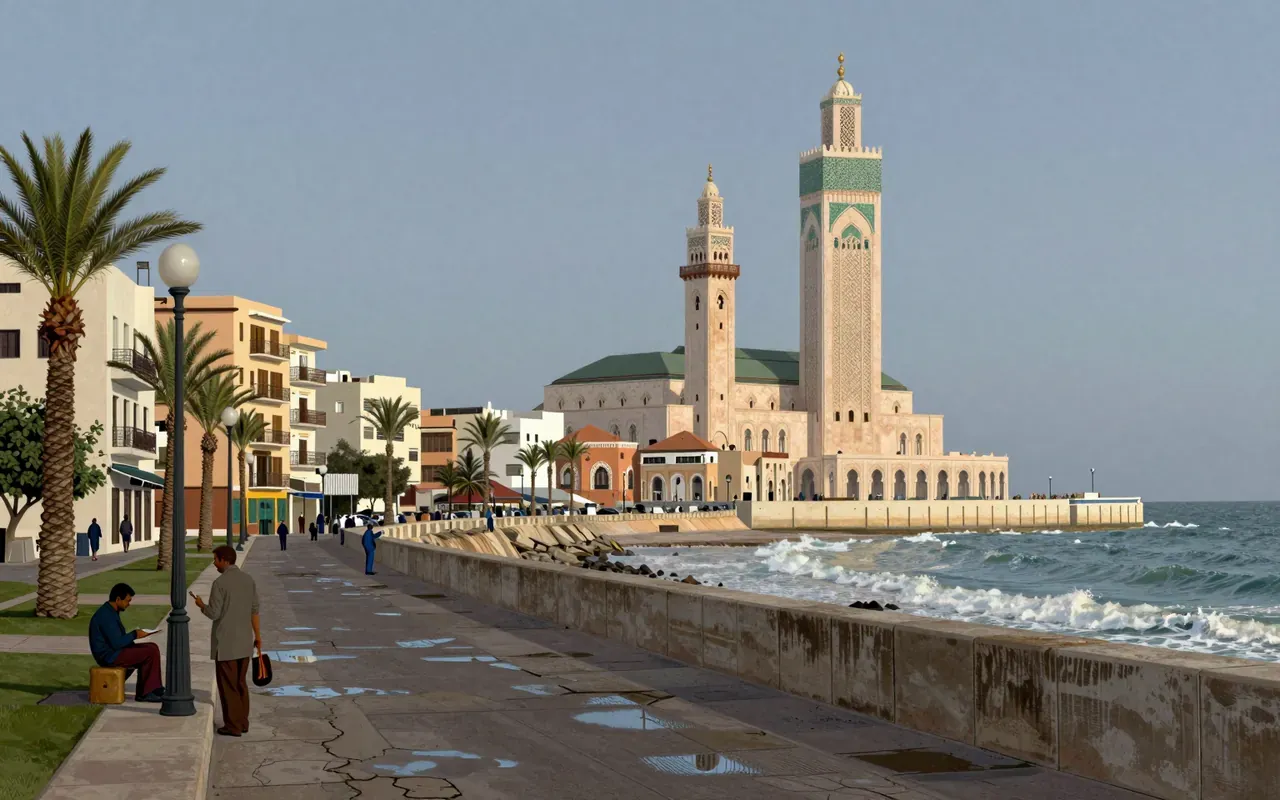
CasablancaCasablanca is a city. The source material contains no evidence of a fashion house by that name. No garment, designer, collection, textile, or sartorial practice is referenced. All claims pertain to geography, finance, industry, and infrastructure.
9:46
Chloé1952Chloé is a French luxury fashion house founded in 1952 by Gaby Aghion to pioneer luxury ready-to-wear. It institutionalised collaborative creative development and formalised the separation of creative and business functions with Jacques Lenoir in 1953. Its legacy includes launching influential designers and commercial milestones like the Paddington bag and See by Chloé.
Up next in Fashion

Calvin Klein

Calvin Klein · 9:50

Calvin Klein didn’t invent minimalism—he weaponised it for retail.

9:50