fashionbriefs
9:07in productionCh. 1 · Sweaters First/ 9:07 · ceiling 15 min
Knitwear · Ready-to-wear

Benetton Group

1965

Benetton didn’t sell sweaters — it sold advertising dressed as clothing.

Benetton Group is a fashion house defined by contradiction: a knitwear origin that became an advertising vehicle; a global presence hollowed out by financial failure and ethical withdrawal; a brand that named unity while failing to unify its values with its operations.

Chapters & takeaways5
  1. 1:02
    Sweaters First

    It began as a family-run knitwear operation in northern Italy — not a media brand.

  2. 1:54
    Iconic Then Invisible

    Its peak cultural power lasted twelve years — then evaporated from global rankings.

  3. 3:09
    Collapse in Real Time

    Two massive losses in seven years triggered over 400 store closures — more than half already executed.

  4. 4:32
    Private Until Broken

    It left the stock exchange in 2012 — then kept operating without public accountability until crisis forced internal blame.

  5. 6:17
    Colours Without Consistency

    Its 'United Colors' identity was grafted on — not baked in — and never extended to its supply chain or leadership.

Worth your time?

No. The brief is enough.

2/ 5
What works
  • vertical-integration-in-knitwear
  • colour-as-commercial-language
  • advertising-as-product-identity
What does not
  • supply-chain-ethics
  • transparency
  • cultural-relevance-after-2000
Wear it if
  • price-sensitive-knitwear-buyers
  • retail-history-students
Skip it if
  • ethically-motivated-consumers
  • longevity-focused-wardrobe-builders
The written brief1 min read

What the garment is and where it came from

Benetton Group is an Italian global fashion brand founded in 1965 in Ponzano Veneto. Its first garment was a hand-knitted sweater sold from its first store in Belluno.

How it works, in terms someone would actually use

Benetton Group sells ready-to-wear knitwear and casual garments through owned and franchised stores. It operates globally, with a retail footprint shrinking rapidly since 2024.

What it gets right

It built a vertically integrated knitwear business from scratch in Ponzano Veneto. It scaled distribution across Europe by 1968. It made colour-blocking a commercial language before it was a trend.

What it does not

It does not control its supply chain ethics. It did not exit Russia after the 2022 invasion. It does not disclose mulesing alternatives. It does not meet basic sustainability benchmarks — earning an ‘F’ from Yale for inaction.

What it changed

Benetton changed how fashion brands used advertising: it replaced product shots with staged social provocation, making the campaign the garment’s primary identity.

Who it is for, and who it is not

It is for consumers who prioritise low-cost, high-colour, machine-washable knitwear — not for those seeking transparency, durability, ethical sourcing or cultural relevance beyond the 1990s.

Is it worth your time

No. Its financial losses, ethical failures, and structural retreat from public markets and physical retail make it a cautionary case — not a functional wardrobe or investment reference.
Same rail · Knitwear4 of 12
8:50
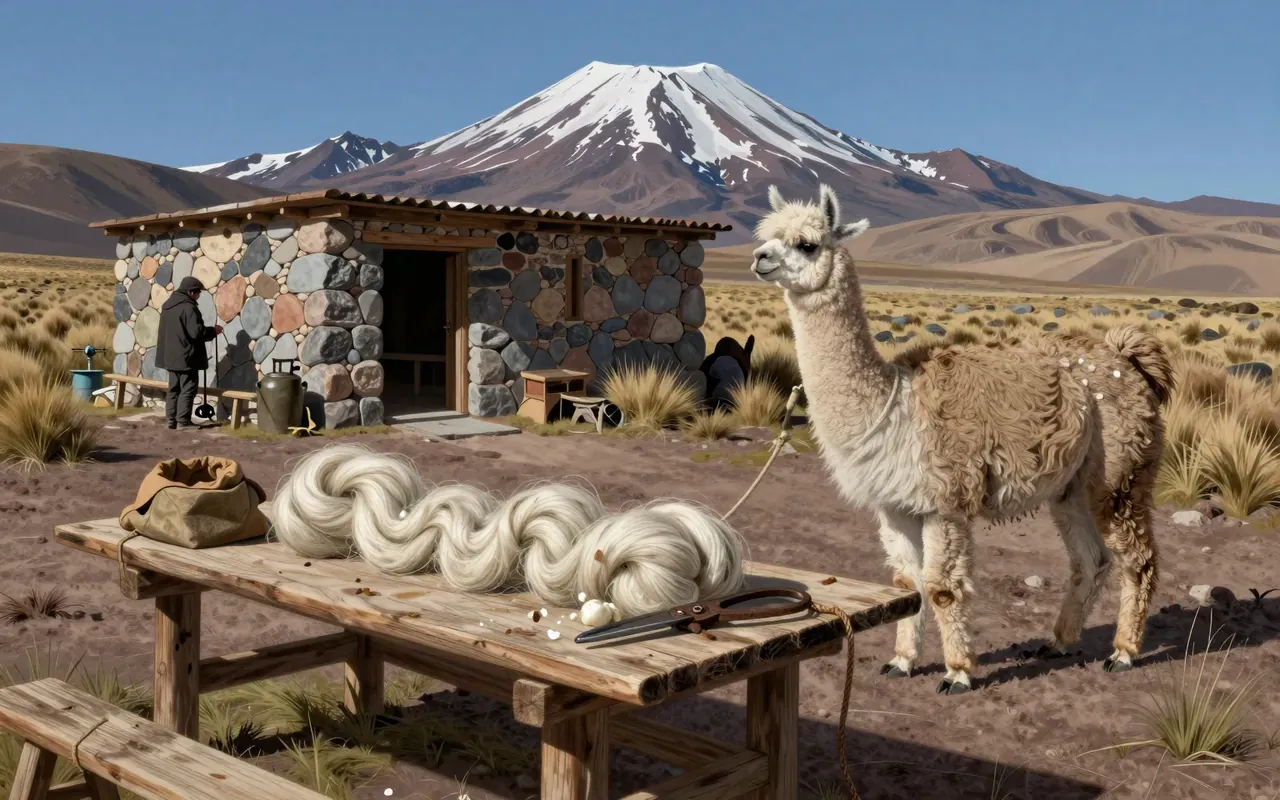
AlpacaAlpaca is a fibre, not a garment. Its value lies in origin (Peru), species (Vicugna pacos), and structure (Suri locks vs. Huacaya bundles). It offers natural insulation and flame resistance but gives no garment instructions — no cut, no weight, no finish. Its authority is zoological and geographical, not sartorial.
8:36
Brunello Cucinelli (brand)1978Brunello Cucinelli is an Italian luxury fashion brand founded in 1978, focused initially on artisanal women's knitwear in coloured cashmere. It operates entirely in Italy, primarily in Umbria, with ethical principles of 'humanistic capitalism' guiding its production, workplace standards, and profit distribution — including donating 20% of profits to charity.
10:44
Cashmere woolCashmere is a goat-fibre textile with documented hygroscopic and thermoregulatory function. Its name derives from Kashmir via 19th-century European trade. China and Mongolia are top producers; Afghanistan ranks third (2019). Both undercoat and guard hair are harvested — the former for apparel, the latter for non-apparel use. Mislabeling and environmental degradation are verified consequences of current production.
9:37
Ganni2000Ganni is a Danish contemporary ready-to-wear fashion brand founded in 2000 as a line of cashmere apparel. It gained recognition as a designer label in the late 2010s under Nicolaj and Ditte Reffstrup. In 2009, the Reffstrups took over the company with Ditte as creative director and Nicolaj as CEO. Harper's Bazaar described Ganni as positioned between fast-fashion retail and haute couture. Ganni is one of the top 20 best-selling brands on Net-a-Porter.
Up next in Fashion

Boglioli

1974 · 9:36

Tailoring without scaffolding: Boglioli’s jacket dyes its way out of tradition.

9:36