10:29 in production Ch. 1 · Two boots, not one / 10:29 · ceiling 15 min
A boot built to stop cowboys from being dragged became a uniform for people who’ve never mounted a horse.
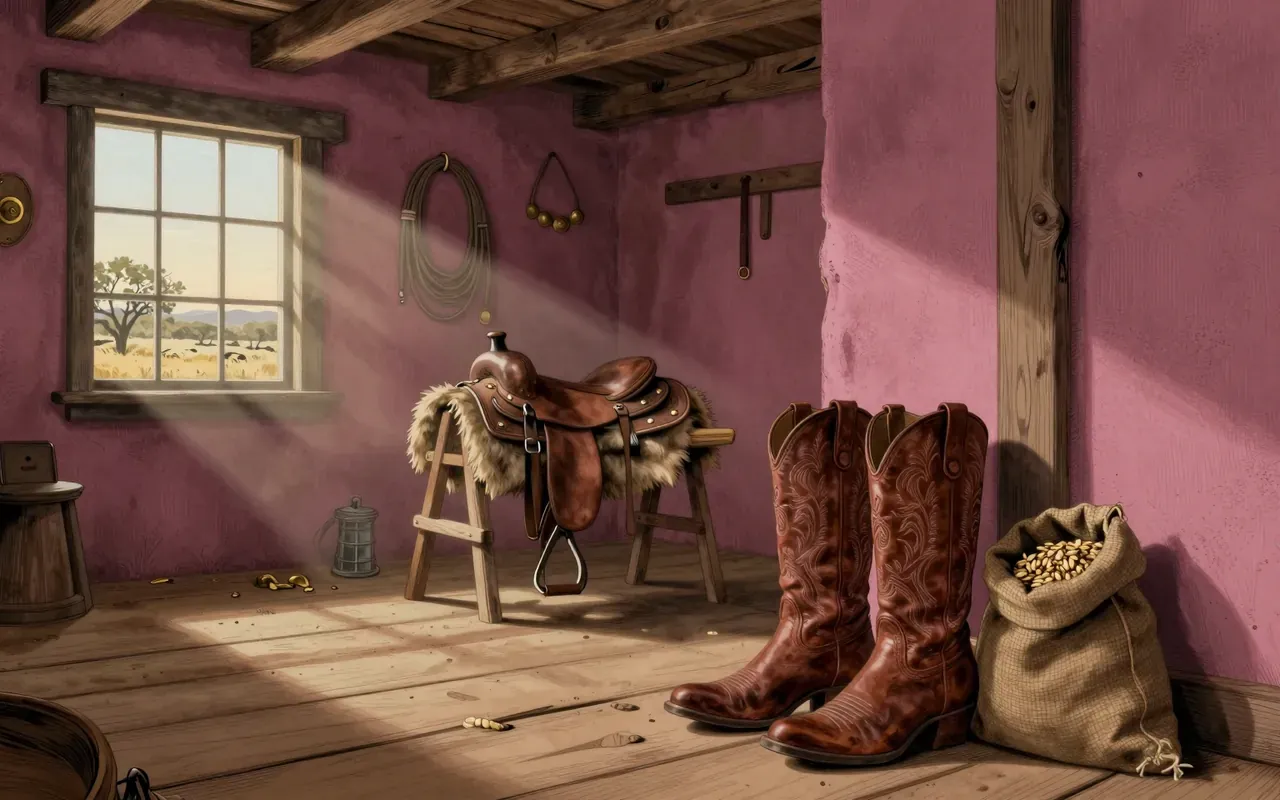
A functional riding boot with slick leather soles, tall shafts, and angled or squared heels. Historically worn by cowboys. Originated from Spanish-influenced vaquero traditions in the Americas, adapted by 19th-century American ranchers—especially in Texas. Two basic styles: western (tall shaft, angled heel >1 inch) and roper (short shaft, low squared heel <1 inch). Slick sole enabled easy stirrup insertion and removal. Tall heel minimised risk of foot sliding forward through stirrup. Tall shaft held boot in place without lacing. Tall shaft, loose fit, and no lacing helped prevent dragging by allowing foot to pull free.
Chapters & takeaways 4
0:53 Two boots, not one
Cowboy boots are not one style—they’re two: western and roper, each solving different riding problems.
2:37 Safety first, style second
The slick sole and tall heel weren’t for swagger—they kept feet in stirrups and out of fatal jams.
4:27 Designed to let go
No lacing, loose fit, tall shaft—every feature helped the foot pull free if the rider fell.
6:27 Heel height is doctrine
The classic western boot’s angled heel is over one inch; the roper’s squared heel is under one inch.
Worth your time?
Yes. Wear the whole thing. 4 / 5
What works as a case study in functional design as evidence of how regional tools become national symbols What does not iconic timeless groundbreaking masterpiece Wear it if designers historians of labour riders Skip it if casual wearers seeking comfort urban pedestrians The written brief 1 min read
What the thing is
A functional riding boot with slick leather soles, tall shafts, and angled or squared heels.
Where it came from
Spanish-influenced vaquero traditions in the Americas, adapted by 19th-century American ranchers—especially in Texas.
What it gets right
It solves three riding problems at once: stirrup insertion, foot retention in the saddle, and emergency foot release if unseated.
What it gets wrong
It assumes all riders need tall shafts and high heels—ignoring terrain, climate, gendered labour, and non-ranching uses.
Why it matters now
It reveals how safety engineering becomes aesthetic dogma—and how that dogma gets exported as cultural authority.
Is it worth your time
Yes—if you care about how utility shapes form, or how a tool designed to prevent dragging became a symbol of control.
Same rail · Footwear 4 of 33
Adidas Campus The Adidas Campus is a 1970s-origin basketball shoe, originally named Tournament, renamed Campus in the 1980s. It transitioned to lifestyle use. Its thicker design—bigger sole, bigger upper, wider side stripes, plainer toe box—made it more comfortable and wider-fitting than contemporaries like the Samba and Gazelle. The Campus 80s is the official reissue retaining original aesthetics. Adidas SL 72 The Adidas SL 72 is a 1972 running shoe designed for lightness and casual use. It introduced the trefoil logo to footwear. Its construction—nylon upper, suede overlays, EVA midsole, rubber toe guard—serves one purpose: to run fast, not far. 9:24
Asics 1949 Asics is a Japanese sportswear company headquartered in Kobe, founded officially on September 1, 1949, as Onitsuka Shokai by Kihachiro Onitsuka. Its first product was a basketball shoe released in 1950. It merged with two other firms in 1977 to become ASICS Corporation. Its name derives from the Latin phrase 'anima sana in corpore sano', rendered as 'a sound mind in a sound body'. It conducts sports-science research and product development through the ASICS Institute of Sport Science in Kobe. The crossed-stripe Mexico Line design was introduced in 1966 as a visual identifier. Performance lines include GEL-KAYANO (1993), METASPEED (2021), and NIMBUS MIRAI (2024). Celine (brand) 1945 Celine (brand) is a French luxury fashion house founded in 1945 in Paris as a made-to-measure children's shoe business; it repositioned in 1960 toward ready-to-wear for elite Parisian women and specialized in artisanal leather goods, gaining renown for leather quality in the 1960s; it underwent logo redesign in 1973, partial acquisition by Bernard Arnault in 1987, and full integration into LVMH in 1996.