fashionbriefs
8:42in productionCh. 1 · County, not colour/ 8:42 · ceiling 15 min
Tailoring · Workwear

Donegal tweed

Donegal tweed is not a place—it’s a punctuation mark in wool.

Donegal tweed is a plain-weave wool fabric manufactured in County Donegal, Ireland. It evolved into its modern form in the 1880s. It was originally handwoven from local materials for caps, suits and vests.

Chapters & takeaways4
  1. 0:47
    County, not colour

    Donegal tweed is defined by where it is made—not just how it looks.

  2. 2:19
    Machine-woven, not machine-perfect

    Mechanisation didn’t erase its character—it scaled its irregularity.

  3. 3:39
    Scatter is the signal

    The heathered effect is its signature—and its most widely copied lie.

  4. 5:13
    Looms before logos

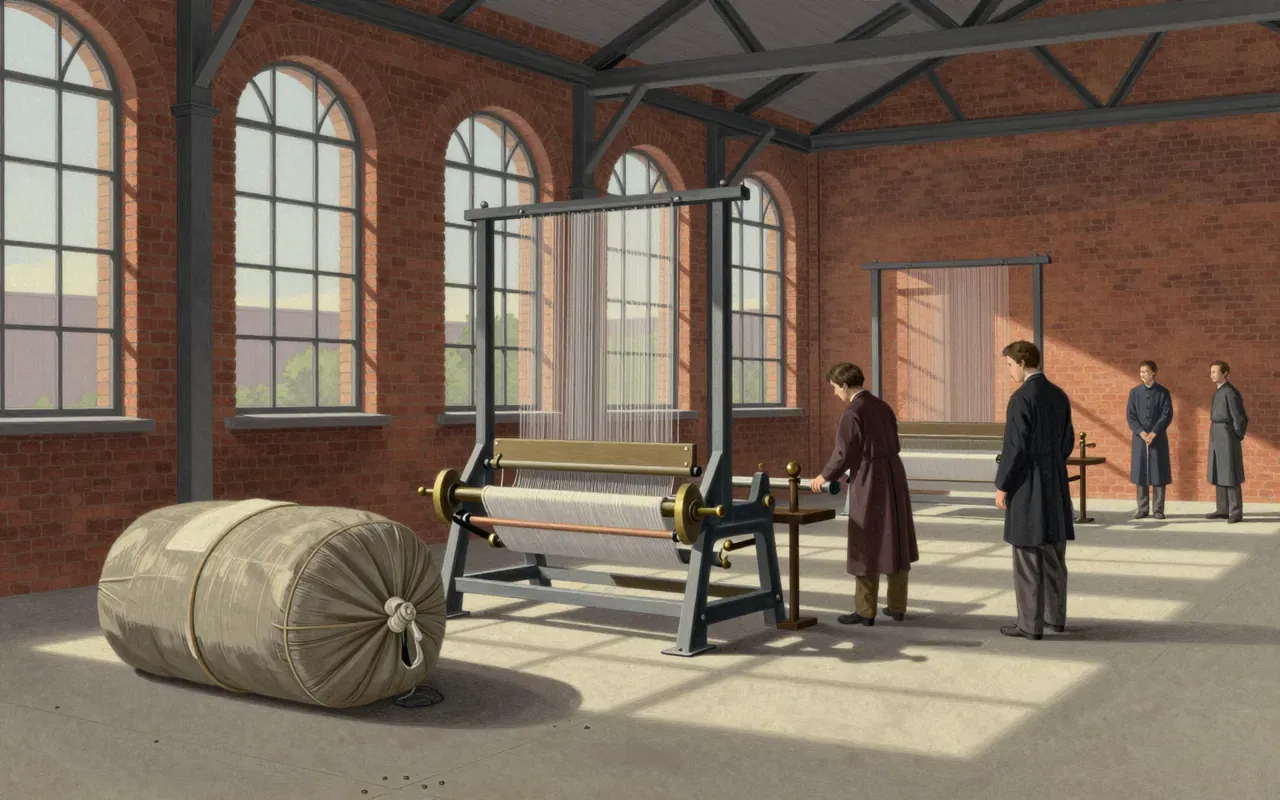
    Its production model—from homestead looms to Magee’s 1866 foundation—built infrastructure before identity.

Worth your time?

Yes. Wear the whole thing.

4.5/ 5
What works
  • as a weather-resistant, textured outer layer
  • the plain-weave structure holds shape without stiffness
  • the irregularly placed coloured yarns break up light and hide wear
What does not
  • drape tightly
  • suppress texture
  • standardise colour placement
  • eliminate slubs or variations in yarn thickness
Wear it if
  • people who want cloth with visible making—irregular, rooted, resistant to polish
  • those who prioritise uniformity, minimalism or low-maintenance care
Skip it if
  • those who prioritise uniformity, minimalism or low-maintenance care
The written brief1 min read

What the garment is and where it came from

Donegal tweed is a plain-weave wool fabric manufactured in County Donegal, Ireland. It evolved into its modern form in the 1880s. It was originally handwoven from local materials for caps, suits and vests.

How it works, in terms someone would actually use

It works as a weather-resistant, textured outer layer. The plain-weave structure holds shape without stiffness. The irregularly placed coloured yarns break up light and hide wear.

What it gets right

It gets right the balance of structure and spontaneity. The plain weave anchors the cloth. The scattered yarns prevent monotony. The local material origin grounds its authenticity.

What it does not

It does not drape tightly. It does not suppress texture. It does not standardise colour placement. It does not eliminate slubs or variations in yarn thickness.

What it changed

It changed how tweed communicates place. Donegal tweed made provenance a visual trait: the heathered effect became shorthand for Irish rural industry, even when woven elsewhere.

Who it is for, and who it is not

It is for people who want cloth with visible making—irregular, rooted, resistant to polish. It is not for those who prioritise uniformity, minimalism or low-maintenance care.

Is it worth your time

Yes—if you need a cloth that signals craft without demanding ceremony. No—if you require precision drape, seasonal lightness or machine-wash convenience.
Same rail · Tailoring4 of 20
9:11
Gieves & Hawkes1771Gieves & Hawkes is a London-based bespoke men's tailor founded in 1771, originally serving the British Army and Royal Navy—and by extension the royal family—through military and ceremonial tailoring. It established itself on Savile Row after acquiring No. 1 in 1912, partly due to its longstanding association with explorers. In 1974, Gieves Ltd merged with Hawkes & Co., adopting the current name and securing the freehold. It pioneered ready-to-wear suits on Savile Row in the 1920s and appointed the first female head cutter there in 2009. Ownership passed through several entities—including Trinity Ltd. and Frasers Group—following financial restructuring.
7:50
Hedi SlimaneHedi Slimane’s 'skinny' silhouette is a garment system built on subtraction: less fabric, less ease, less margin. It emerged in Dior Homme’s Black Tie collection for autumn-winter 2000–01. It functions by compressing the body’s horizontal planes and amplifying vertical continuity. It gets right the authority of austerity—but fails where bodies deviate from its narrow ideal. It changed menswear’s grammar from volume to vector. It is for those who see clothing as calibration, not camouflage. It is worth your time only if you accept that elegance begins where comfort ends.
9:16
Zegna1910Zegna is a vertical wool system — not a fashion house in the conventional sense. Its garments are calibrated for endurance, not expression.
8:33
Azzedine AlaïaAzzedine Alaïa’s garment is a Paris-based ready-to-wear line launched in 1980. It uses leather and inventive knits. Its defining features are tight fit, curve-accenting seaming, and, from the early 1990s, corselets and bust wiring. Construction draws from study of Vionnet and Balenciaga garments. It relies on cut and body revelation over colour.
Up next in Fashion

Dover Street Market

· 10:34

Retail as authored chaos—not neutral platform, not boutique, not department store.

10:34