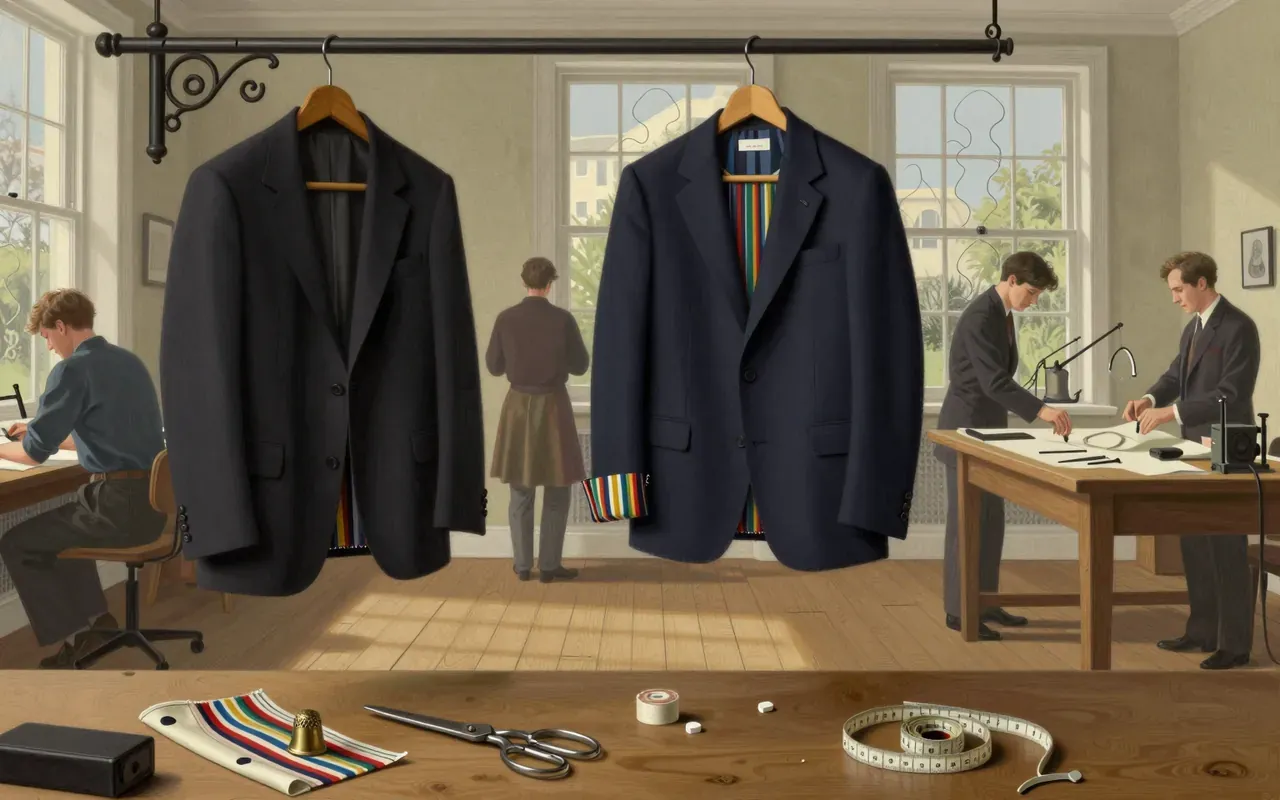
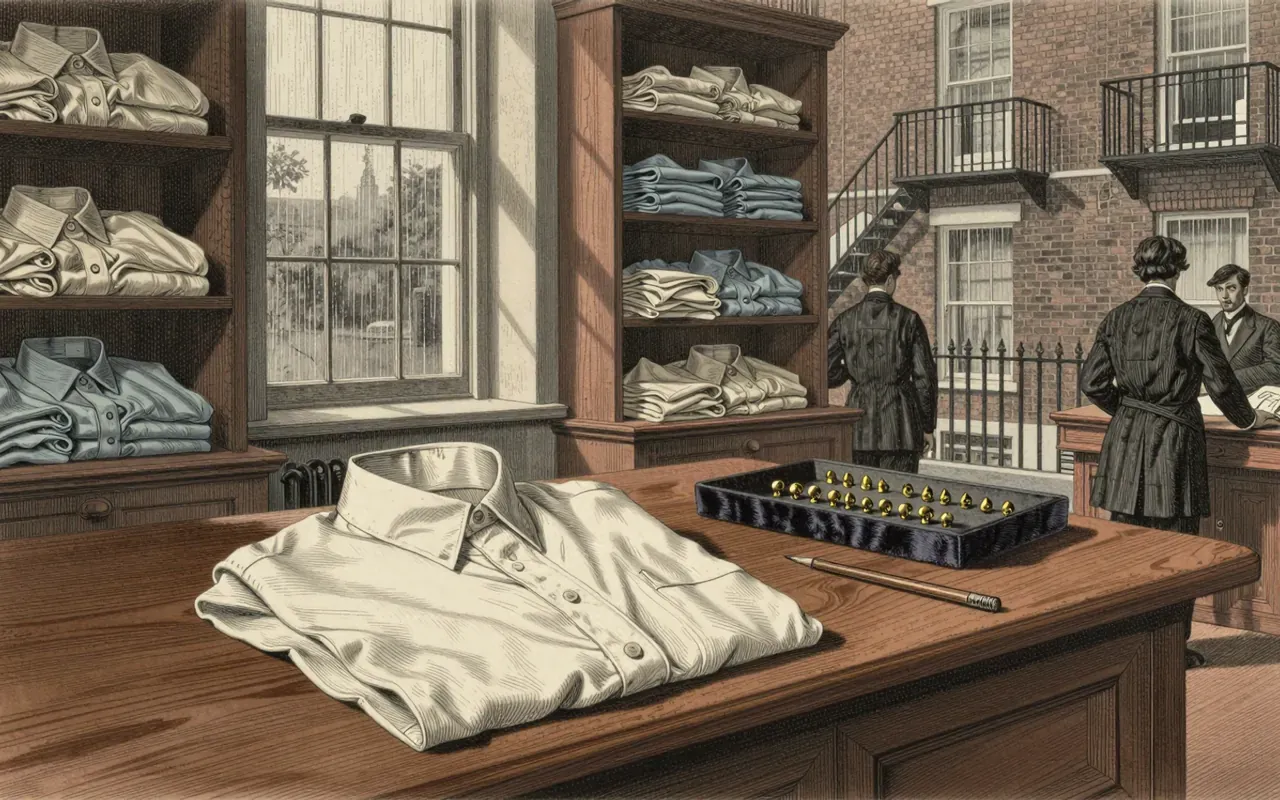
8:45YesBrooks BrothersBrooks Brothers didn’t invent American style—it built its wardrobe like a factory: precise, repeatable, and indifferent to the body.
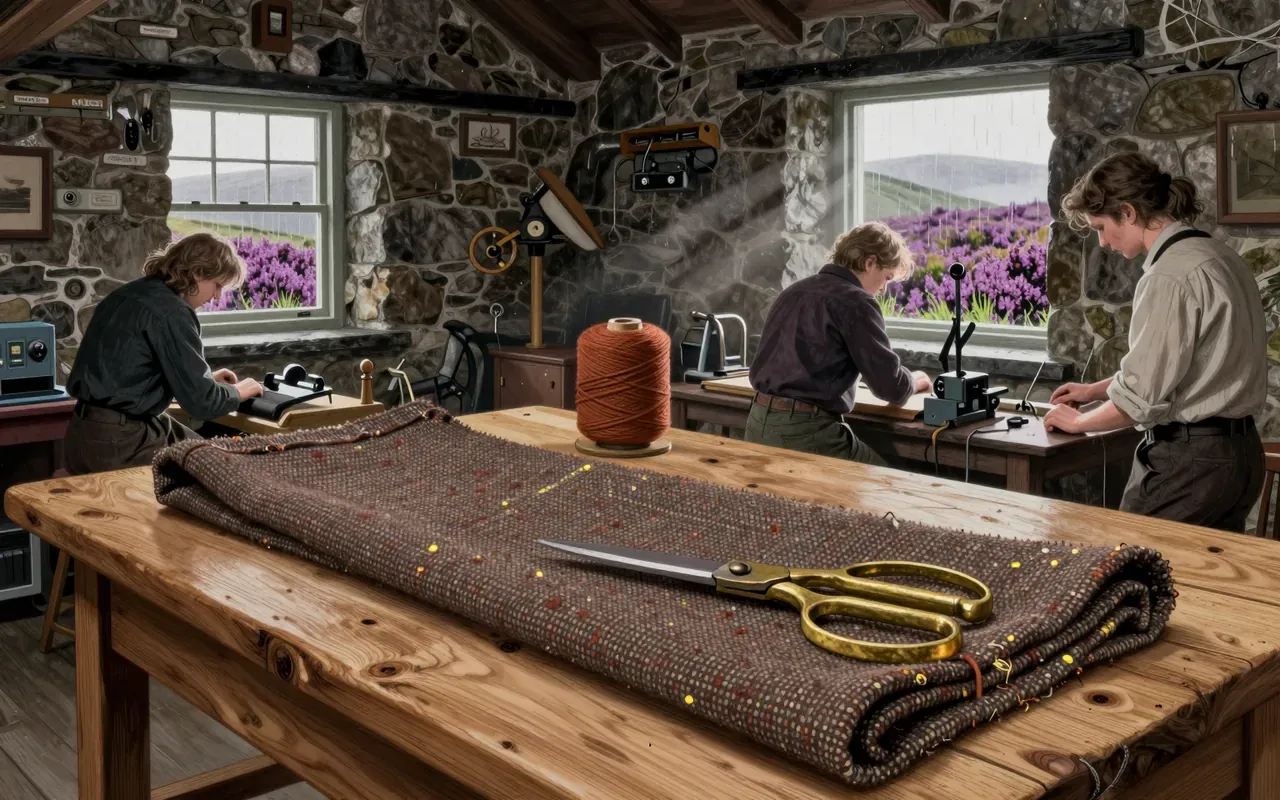
9:10YesDonegal tweedDonegal tweed is not Irish wool — it’s a label borrowed from a place, then detached from it.
9:22YesHelmut Lang (fashion brand)Minimalism was never about less—it was about removing everything until only the cut, the line, and the fabric’s behaviour remained.
9:18YesIvy League (clothes)Ivy League clothing was not rebellion—it was recalibration: sportswear stripped of sport, tailoring stripped of tension, class stripped of ceremony.
10:35YesKim Jones (designer)Kim Jones doesn’t design clothes—he designs permission slips for cultural borrowing.
10:05YesPierre CardinCardin didn’t dress bodies—he dressed ideas, and they still don’t fit comfortably.
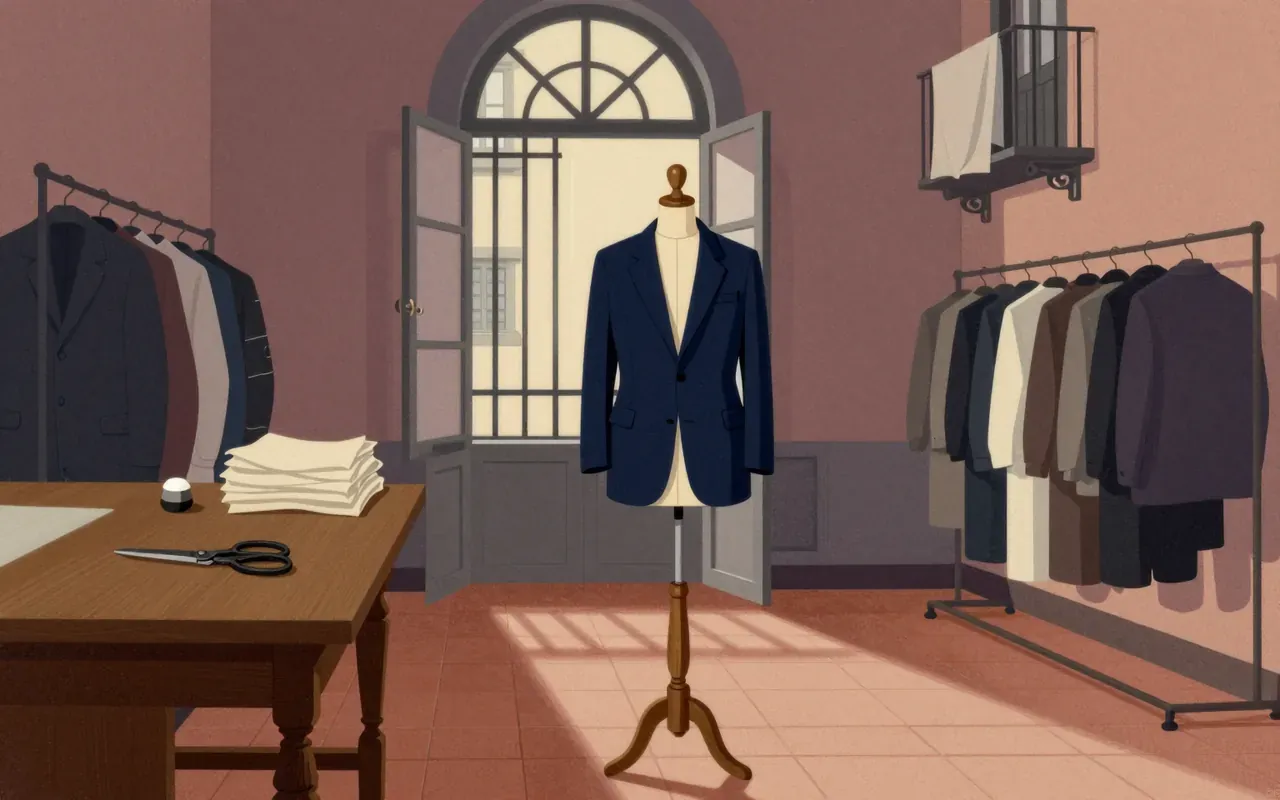
7:48YesRubinacciRubinacci invented the unstructured jacket not as rebellion—but as precision for real life.
9:11YesGieves & HawkesSavile Row’s oldest uniform-maker doesn’t sell style—it sells sanctioned authority.
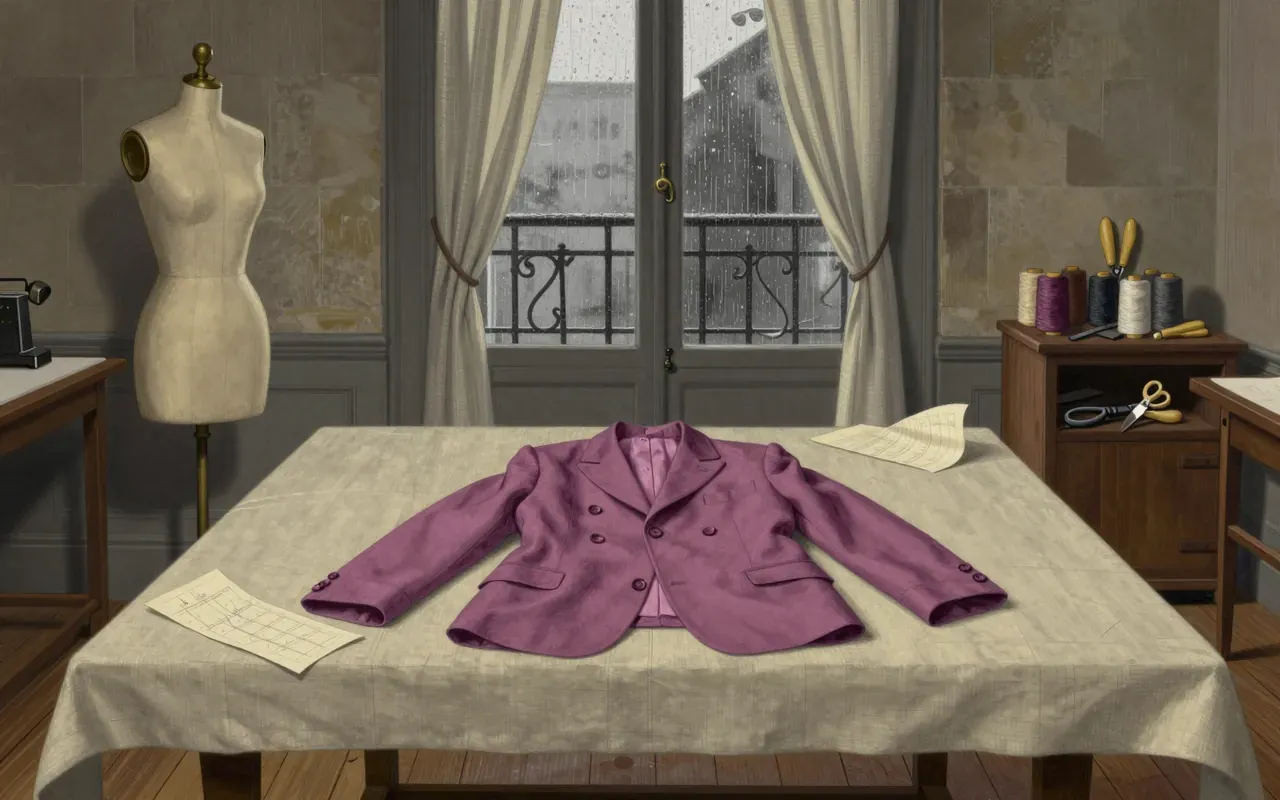
9:12YesMade-to-measureMade-to-measure is not bespoke—it’s pattern-based compromise dressed as custom.
10:14YesNino CerrutiCerruti didn’t make suits for men. He made suits for men who had to hold a room—and a camera’s attention—without saying a word.
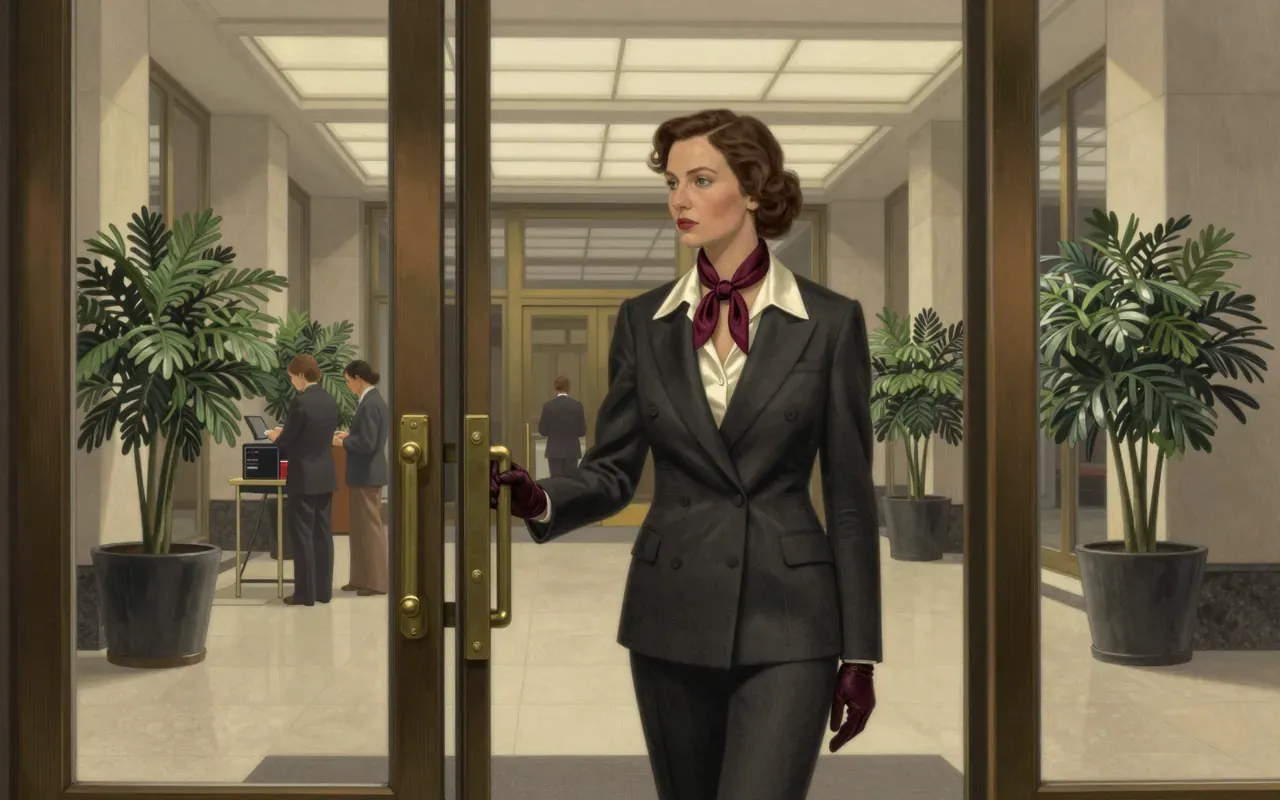
8:56YesPower dressingPower dressing wasn’t about looking powerful — it was about looking unassailable in a system that refused to see women as authoritative unless they dressed like men, then added pearls to prove they weren’t.
9:17YesTurnbull & AsserA collar and a cuff — not a brand, not a suit, but two fixed points of British menswear discipline.
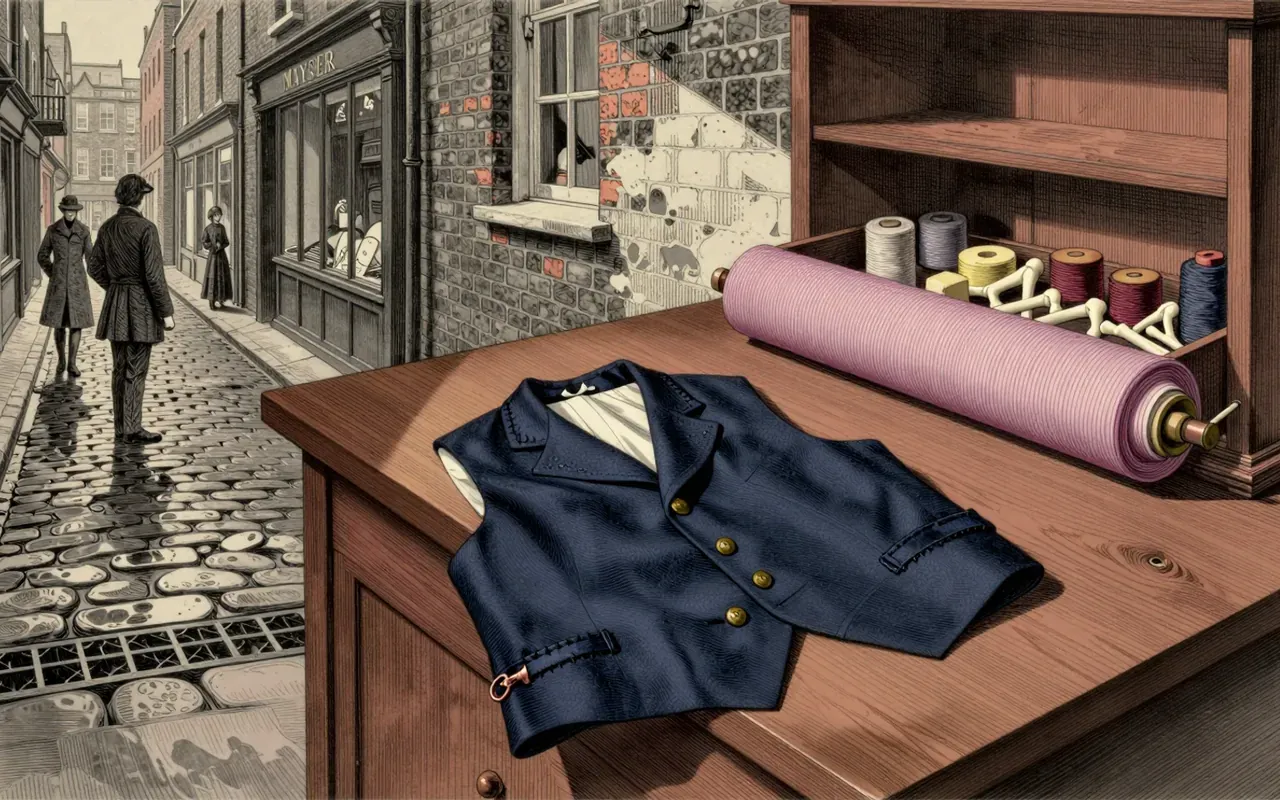
8:10YesThe WaistcoatA waistcoat with two shortened bands proves love is often a lie told in stitches.
10:26YesSavile RowSavile Row didn’t invent bespoke—it weaponised it, then lost the war over its meaning.