What the garment is and where it came from
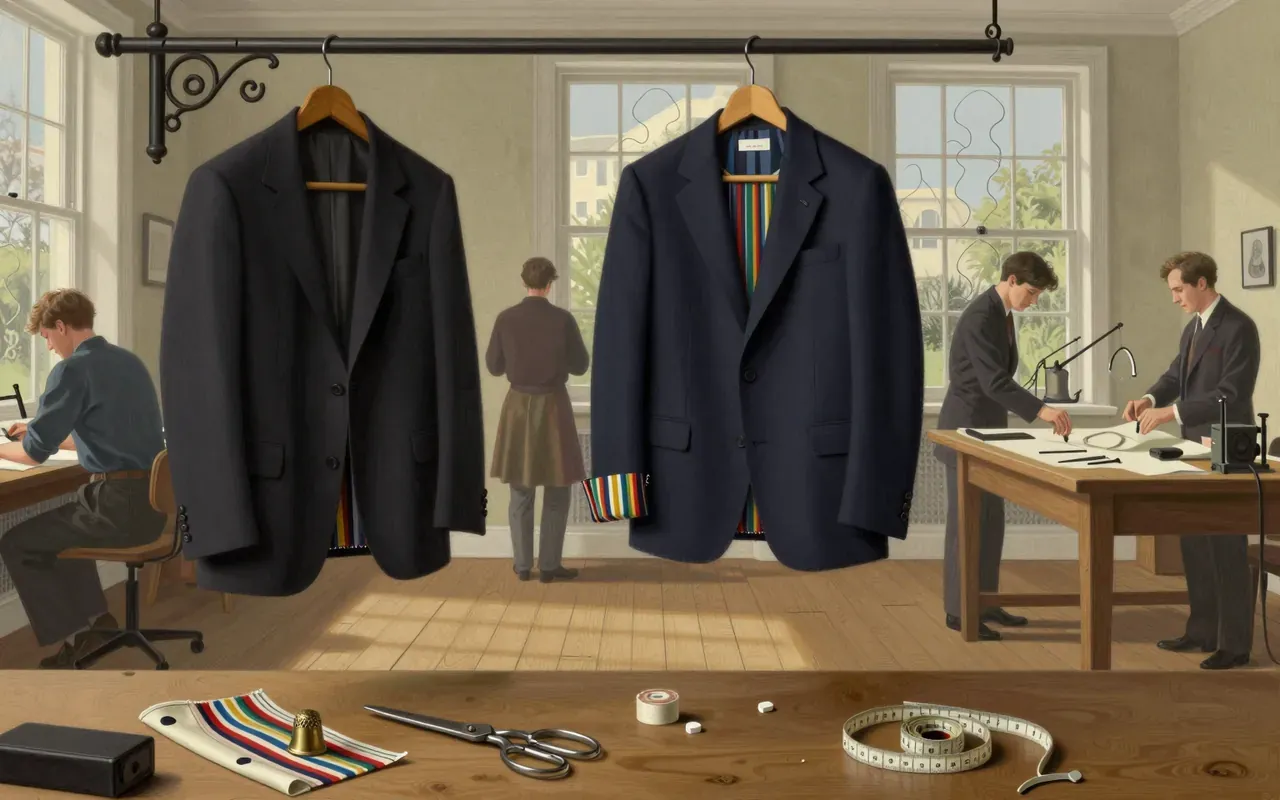
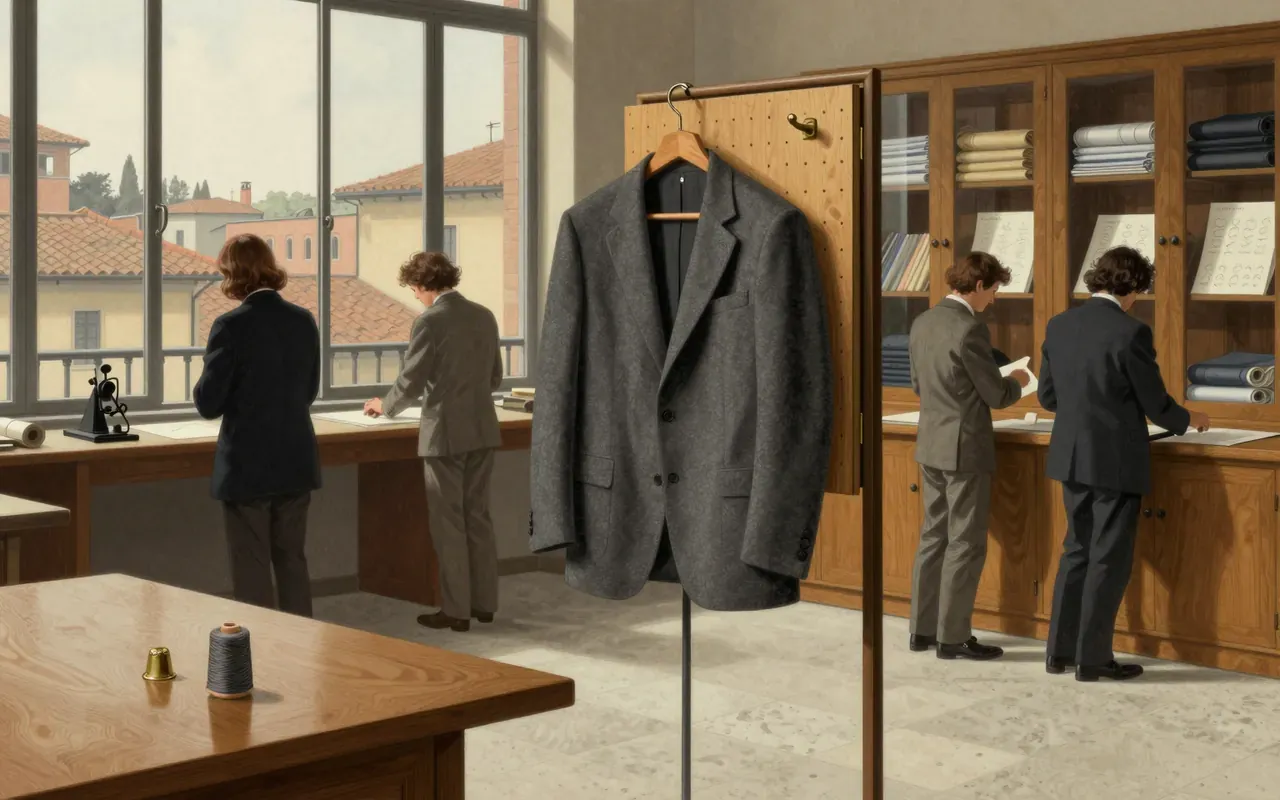
A ready-to-wear suit. Born in Milan in 1975. Developed from Armani’s work at Cerruti 1881. Defined by unlined jackets, soft shoulders, fluid lapels and unstructured sleeves.
How it works, in terms someone would actually use
The garment hangs loose but controlled. It moves with the body without clinging or constraining. It is built for walking, sitting, speaking — not posing.
What it gets right
The deconstructed silhouette absorbs motion. The minimalist cut removes distraction. The ready-to-wear production delivers consistency without sacrifice — because the 1978 GFT agreement enforced designer oversight at scale.
What it does not
It does not assert craft through visible seamwork, topstitching or lining detail. It does not rely on historical reference or sartorial dogma. It does not flatter the body’s outline — it repositions attention elsewhere.
What it changed
Armani shifted tailoring from ceremony to comportment. He replaced structure with suspension. He made the suit a vehicle for presence, not posture.
Who it is for, and who it is not
It is for people who wear suits as instruments of engagement — diplomats, actors, editors, lawyers — not uniforms of rank. It is not for those who require visual proof of construction, or who equate stiffness with seriousness.
Is it worth your time
Yes — if you need clothing that signals authority without rigidity, and elegance without ornament.