fashionbriefs
9:36in productionCh. 1 · Desert infrastructure/ 9:36 · ceiling 15 min
Garments

Boubou (clothing)

The boubou is not heritage—it’s a garment forged in desert trade, weaponised by empire, and repurposed by colonisers.

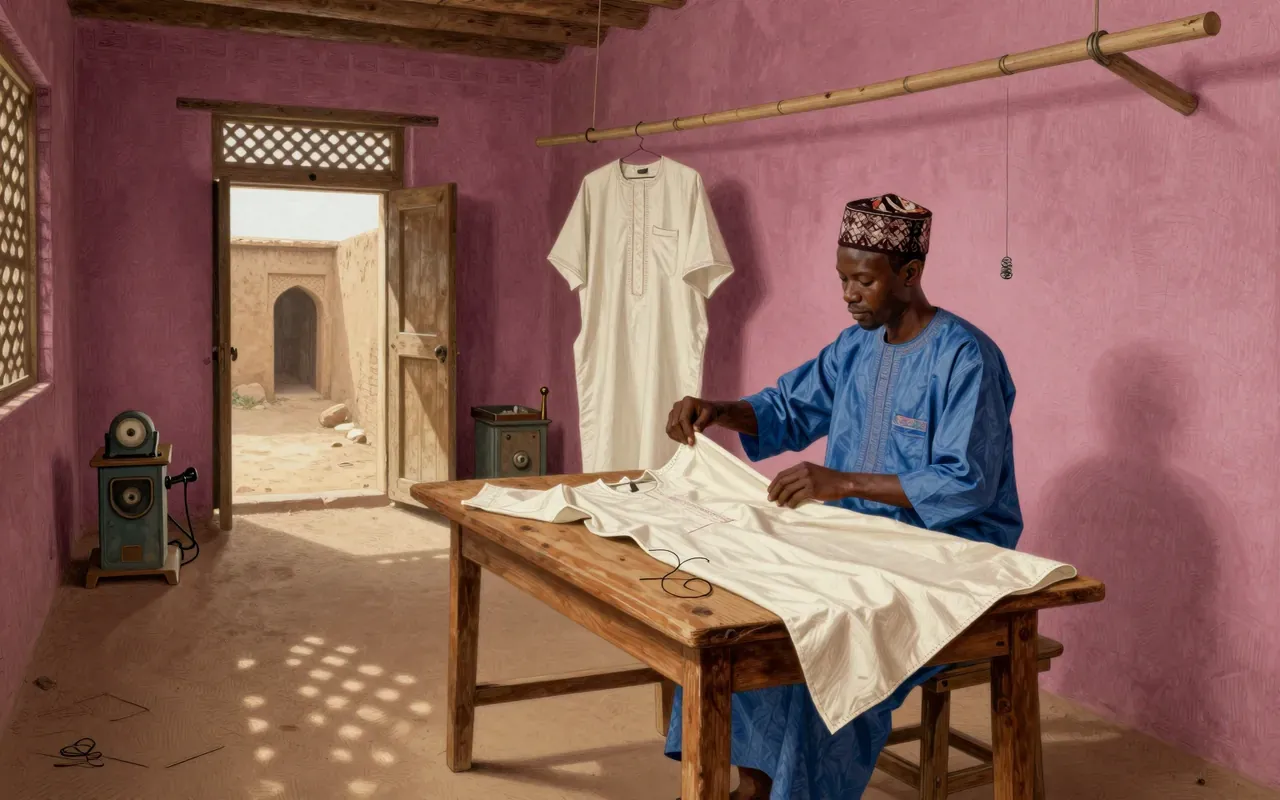
The boubou is a West African robe that originated as functional desert attire among Wolof, Mande, Songhai-Zarma, Hausa, Kanuri and Toubou traders. It was adopted by ruling elites in 12th–14th century empires as a status marker, then spread widely through Islamic expansion, Fulani Jihads and French and British colonisation. It signals elite identity and Islamic affiliation—but excludes non-Islamised groups and earlier regional garments like the dashiki or Senegalese kaftan. Its history maps trade routes, imperial hierarchy and colonial intervention—not timeless tradition.

Chapters & takeaways4
  1. 1:01
    Desert infrastructure

    It began as functional desert wear for Wolof, Mande, Hausa, Kanuri and others—not as ritual, but as survival.

  2. 2:39
    Status before scripture

    Mali’s 12th-century nobles and Songhai’s 14th-century elites wore it to distinguish themselves from dashiki-wearing commoners.

  3. 4:07
    Religion on the move

    By the 1400s, Kanuri preachers and Hausa traders carried it deep into Muslim West Africa—making it synonymous with Islamisation.

  4. 5:40
    Colonial and jihadist acceleration

    French and British rule—and the Fulani Jihads—pushed it into less-Islamised areas, accelerating its spread beyond its original cultural bounds.

Worth your time?

Yes. Wear the whole thing.

4.5/ 5
What works
  • as evidence of trans-Saharan mobility
  • as a tool of elite distinction
  • as a vector of religious and political change
What does not
  • represent African unity
  • originate in a single ethnic group
  • predate Islamic influence in the region
Wear it if
  • Islamised Sahelian and Saharan peoples
  • West African Muslim elites
  • post-jihad and colonial-era urban populations
Skip it if
  • non-Muslim West Africans before the 1400s
  • forest-dwelling communities prior to 15th-century Islamic expansion
  • those who wore dashiki or kaftan as primary formal wear
The written brief1 min read

What the thing is

A flowing, wide-sleeved robe worn across West Africa—and later North Africa—by Islamised Sahelian and Saharan peoples.

Where it came from

It emerged among Wolof, Mande, Songhai-Zarma, Hausa, Kanuri, and Toubou trans-Saharan traders. The nobility of 12th–13th-century Mali, 14th-century Hausa Bakwai, and Songhai Empires adopted it as a status symbol.

What it gets right

It protects the body from desert extremes: scorching sun by day, freezing cold by night. It signals Islamic identity and elite status across empires. It moves with trade and conquest—not as ornament, but as evidence.

What it gets wrong

It does not represent ‘African tradition’ as a monolith. It excludes non-Islamised groups, forest-dwellers before the 1400s, and those who wore sleeveless smocks or Senegalese kaftans instead.

Why it matters now

It reveals how colonialism and jihad reshaped dress far beyond religion—displacing older garments, standardising Islamic visibility, and turning regional attire into a pan-West African marker of authority and piety.

Is it worth your time

Yes—if you care about how clothing encodes power, trade, and religious change in West Africa. It is not a costume. It is infrastructure.
Same rail · Garments4 of 66
10:13
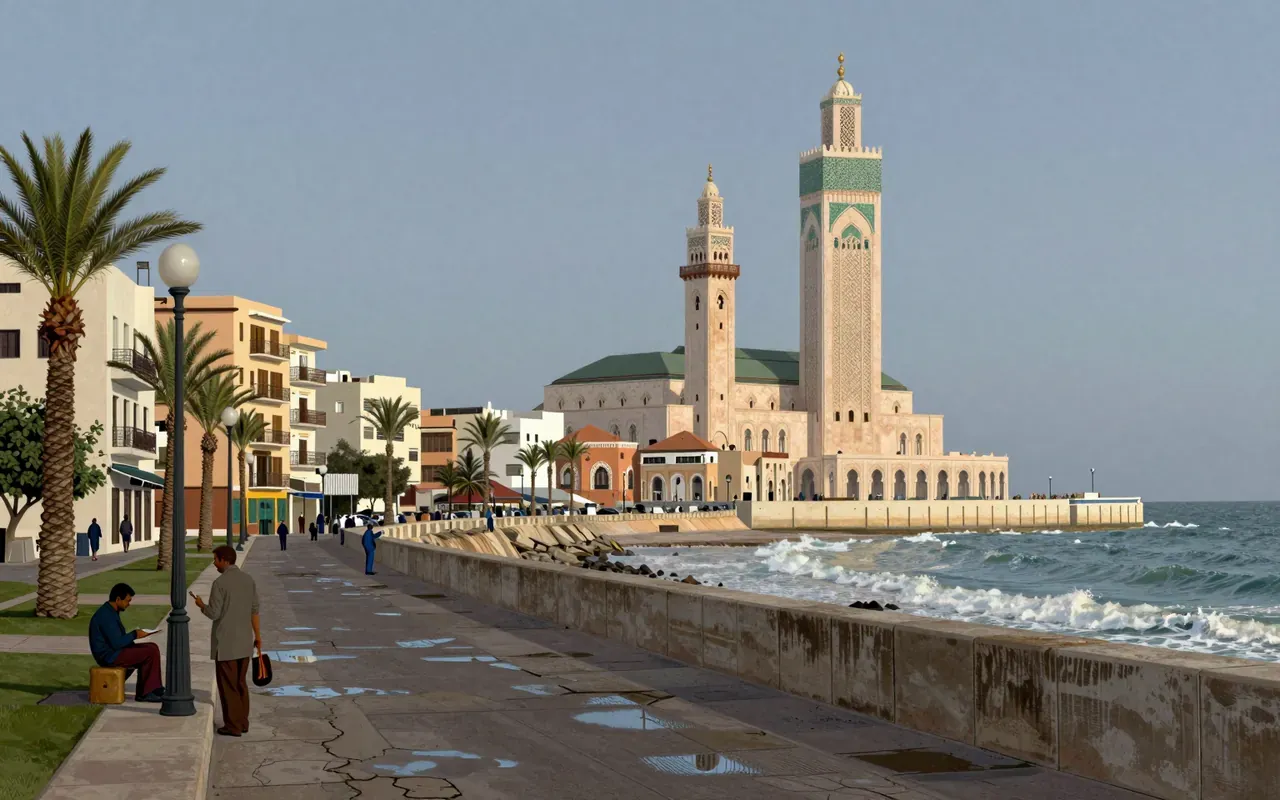
CasablancaCasablanca is a city. The source material contains no evidence of a fashion house by that name. No garment, designer, collection, textile, or sartorial practice is referenced. All claims pertain to geography, finance, industry, and infrastructure.
9:05
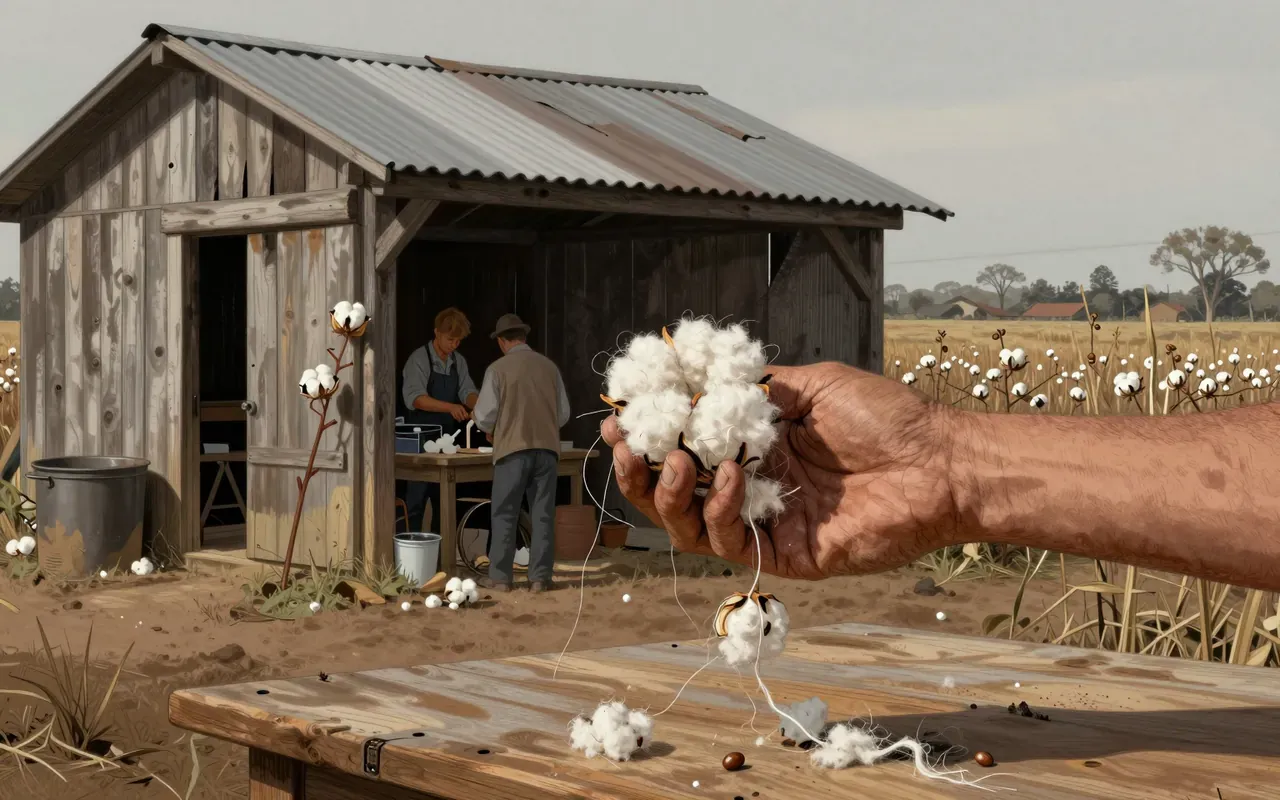
CottonCotton is a naturally occurring, soft, fluffy staple fiber derived from the bolls of Gossypium plants—shrubs native to tropical and subtropical regions across the Americas, Africa (including Egypt), and India. It is nearly pure cellulose, with minor waxes, fats, pectins, and water, and its bolls aid seed dispersal. Domesticated independently in both Old and New Worlds, cotton has been used for textiles since prehistoric times, with archaeological evidence from Peru (7th–6th millennia BC) and Pakistan (6th millennium BC). It is most commonly spun into yarn or thread to produce soft, breathable, durable fabrics.
9:48
DistressingDistressing is a surface-altering technique used on furniture and instruments to mimic age. It relies on controlled destruction of finishes — sanding, stripping, chiselling — to reveal substrate and layer history. It works best on solid pine. It does not occur on garments. It signals curated history, not lived time.
10:34
Dover Street MarketDover Street Market is a retail institution founded in 2004 by Rei Kawakubo and Adrian Joffe on Dover Street in Mayfair, London. It was conceived as a curated, art-integrated space inspired by Kensington Market, defined by Kawakubo’s phrase 'beautiful chaos'. It stocks Comme des Garçons and other selected brands, collaborates with Frieze Art Fair, Michael Hoppen Gallery and ICA, and relocated in 2016 to the former Burberry building on Haymarket.
Up next in Fashion

Bowler hat

1850 · 8:49

A hat built to survive branches became a symbol of class—then a tool of colonial displacement.

8:49