fashionbriefs
10:22in productionCh. 1 · What it is/ 10:22 · ceiling 15 min
Garments

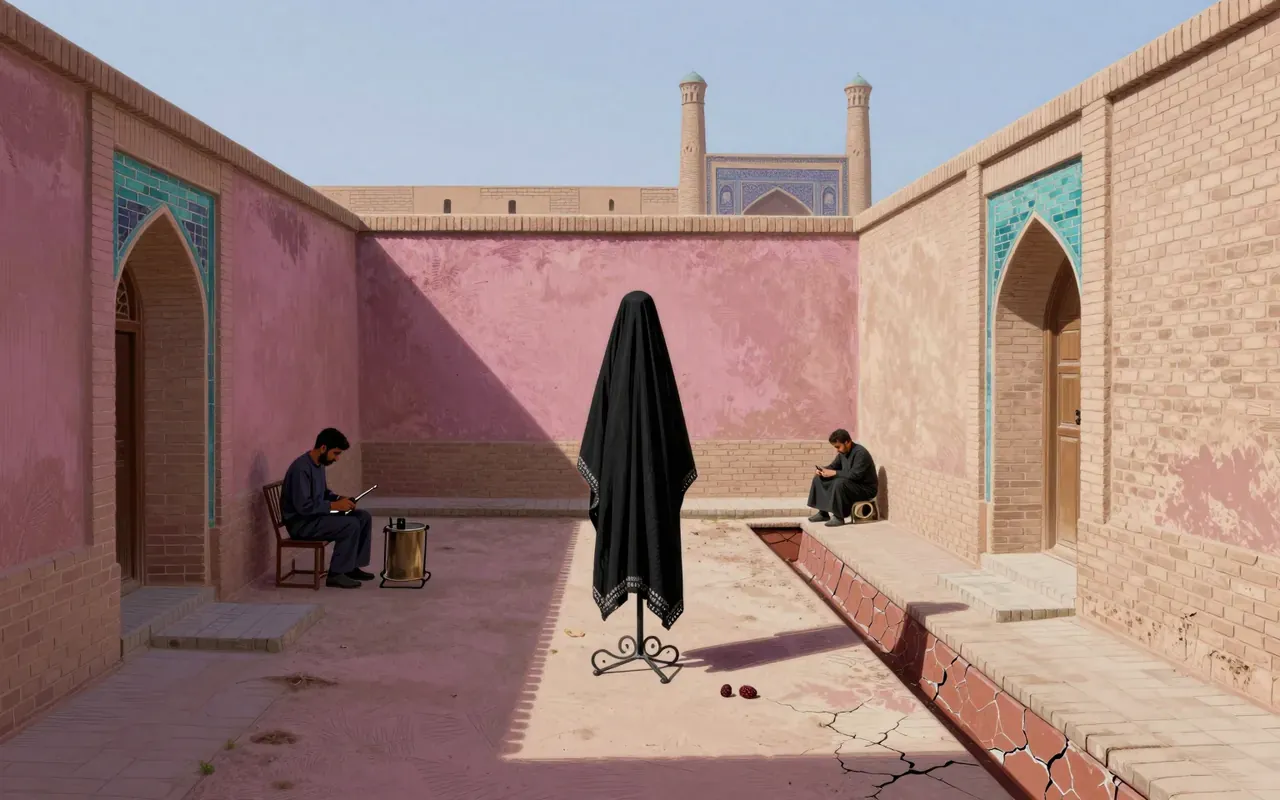
Burqa

A garment that proves modesty has never been exclusively Muslim—and never required the face to disappear.

The burqa is not Islamic in origin. It is not mandated by Islam. It was worn by Christians and Muslims alike—as status dress, not scripture. Its modern politicisation erases that history.

Chapters & takeaways4
  1. 0:52
    What it is

    The burqa is a full-body-and-face-covering garment worn by some Muslim women.

  2. 2:34
    Where it came from

    Face veiling began long before Islam—in Byzantium, Persia, Arabia, and ancient Israel—and crossed faith lines for centuries.

  3. 4:06
    What it gets right

    Christian and Muslim women in Egypt wore it side by side—not as doctrine, but as elite custom.

  4. 6:12
    What it gets wrong

    Most Islamic scholars have never held face veiling to be obligatory—Quranic verses on modesty do not mandate it.

Worth your time?

Yes. Wear the whole thing.

4/ 5
What works
  • as a corrective to ahistorical claims
  • as evidence of shared sartorial practice across faiths
  • as a challenge to monolithic readings of religious dress
What does not
  • define a movement
  • influence a named artist
  • start a trend
  • displace a dominant norm
Wear it if
  • policy-makers
  • students of religious history
  • journalists covering dress codes
Skip it if
  • readers seeking spiritual guidance
  • fashion designers looking for new silhouettes
  • activists building campaigns
The written brief1 min read

What the thing is

The burqa is a full-body-and-face-covering outer garment worn by some Muslim women. It is also known as harabah.

Where it came from

Face veiling predates Islam. It appeared in the Byzantine Empire, Persia, Arabia, and ancient Israel—and was worn by Oriental Orthodox Christian women and 19th-century Egyptian Christian and Muslim elites.

What it gets right

It affirms women’s agency across centuries and faiths. Face veiling was chosen, not imposed, by Byzantine elites, Oriental Orthodox Christians, and 19th-century Egyptian women of both faiths.

What it gets wrong

It falsely presents face veiling as an Islamic requirement. Most Islamic scholars—historically and today—reject that interpretation of Quranic verses 24:31 and 33:59.

Why it matters now

Because it is routinely misread as a symbol of religious compulsion, when its history shows it as a marker of class, custom, and cross-faith continuity—making current debates about bans and rights historically illiterate.

Is it worth your time

Yes—if you want to understand how a garment became a lightning rod for assumptions about religion, gender, and control.
Same rail · Garments4 of 66
10:13
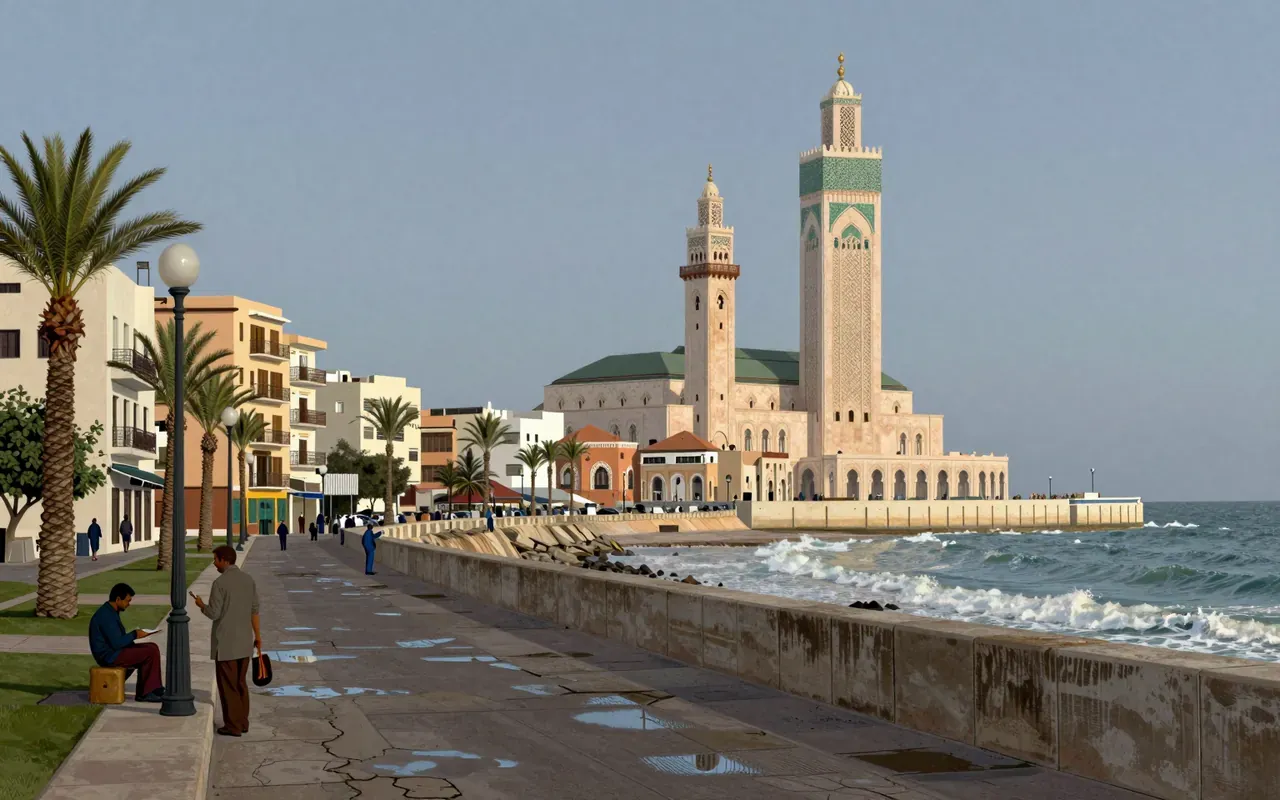
CasablancaCasablanca is a city. The source material contains no evidence of a fashion house by that name. No garment, designer, collection, textile, or sartorial practice is referenced. All claims pertain to geography, finance, industry, and infrastructure.
9:05
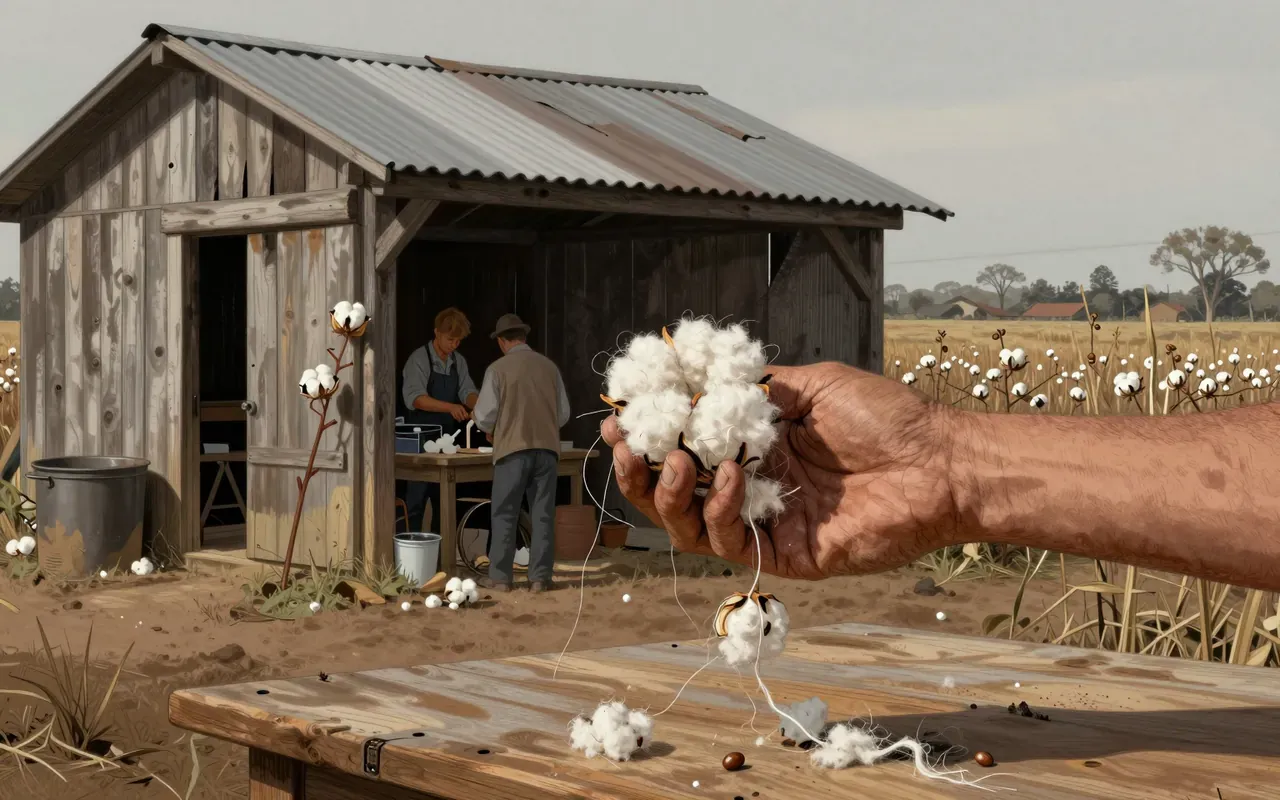
CottonCotton is a naturally occurring, soft, fluffy staple fiber derived from the bolls of Gossypium plants—shrubs native to tropical and subtropical regions across the Americas, Africa (including Egypt), and India. It is nearly pure cellulose, with minor waxes, fats, pectins, and water, and its bolls aid seed dispersal. Domesticated independently in both Old and New Worlds, cotton has been used for textiles since prehistoric times, with archaeological evidence from Peru (7th–6th millennia BC) and Pakistan (6th millennium BC). It is most commonly spun into yarn or thread to produce soft, breathable, durable fabrics.
9:48
DistressingDistressing is a surface-altering technique used on furniture and instruments to mimic age. It relies on controlled destruction of finishes — sanding, stripping, chiselling — to reveal substrate and layer history. It works best on solid pine. It does not occur on garments. It signals curated history, not lived time.
10:34
Dover Street MarketDover Street Market is a retail institution founded in 2004 by Rei Kawakubo and Adrian Joffe on Dover Street in Mayfair, London. It was conceived as a curated, art-integrated space inspired by Kensington Market, defined by Kawakubo’s phrase 'beautiful chaos'. It stocks Comme des Garçons and other selected brands, collaborates with Frieze Art Fair, Michael Hoppen Gallery and ICA, and relocated in 2016 to the former Burberry building on Haymarket.
Up next in Fashion

Bustle

· 9:22

The bustle wasn’t fashion—it was engineering for gravity.

9:22